
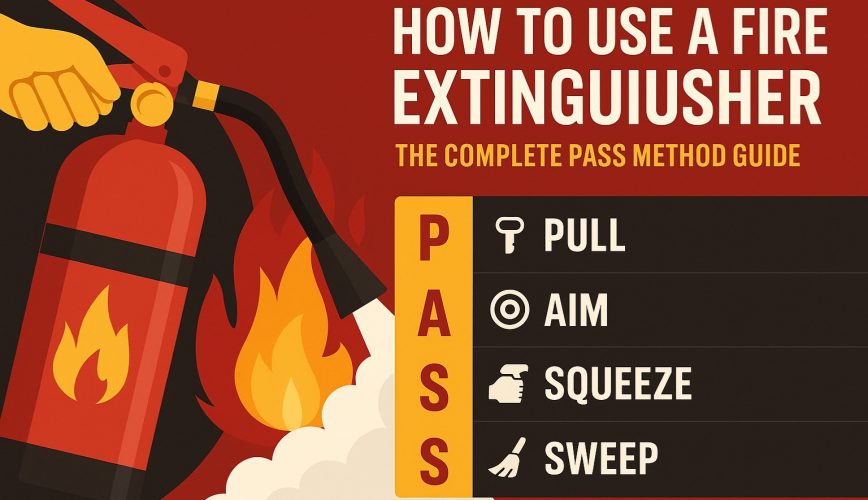
Knowing how to use a fire extinguisher properly saves lives and property. Yet most NYC property managers can’t remember the last time they practiced the PASS method.
This guide provides step-by-step instructions for operating a portable fire extinguisher safely. You’ll learn which extinguisher fights which fire, when to evacuate instead, and how to meet FDNY compliance requirements. Our same-day fire extinguisher inspection service ensures your equipment stays ready for emergencies.
Key Takeaways
- PASS Method: Pull pin, Aim at base, Squeeze handle, Sweep side to side
- 6-8 feet: Maintain this distance for safe, effective fire suppression
- Fire Classes: Match your extinguisher type (A, B, C, K) to the fire
- Monthly Inspections: Required visual checks prevent violations
- Annual FDNY Tags: Professional certification keeps you compliant
- When NOT to Fight: Fire larger than you, smoke-filled room, no escape route
Understanding Fire Types Before You Fight
Not all fires burn the same way, and using the wrong extinguisher can transform a manageable situation into a catastrophe. Before pulling that pin, you must identify what’s burning.
The Five Classes of Fire
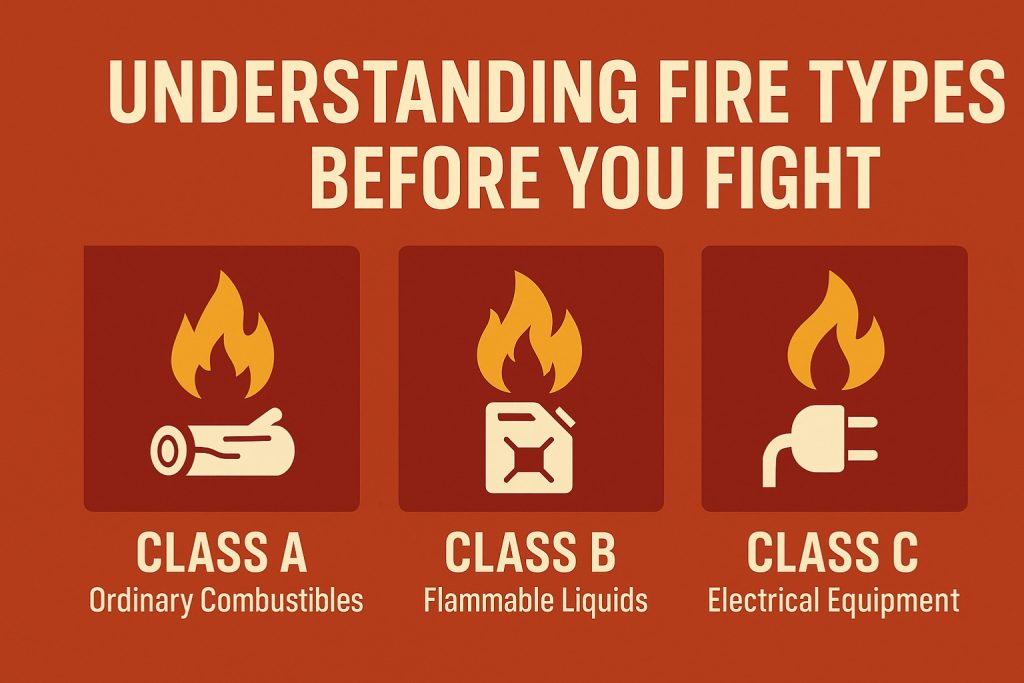
Class A fires involve ordinary combustibles like wood, paper, cloth, and plastics. These represent the most common fires in homes and offices. Your standard ABC extinguisher handles these effectively.
Class B fires feed on flammable liquids including gasoline, oil, paint, and solvents. Never use water on these – it spreads the flames.
Class C fires involve energized electrical equipment. Think faulty wiring, overloaded outlets, or appliance malfunctions. The electricity adds deadly shock risk to the fire danger.
Class D fires consume combustible metals like magnesium or titanium. These rarely occur in residential or standard commercial settings.
Class K fires – the newest classification – involve cooking oils and greases. Every NYC restaurant kitchen needs a Class K extinguisher to meet fire code requirements.
Understanding these different types of fire extinguishers ensures you grab the right tool when seconds count. Using the wrong type doesn’t just fail to suppress the fire – it can accelerate the blaze or create additional hazards.
Pre-Fire Safety: Your First Line of Defense
Before discussing the PASS method, let’s establish when you should and shouldn’t attempt firefighting. Your safety always comes first.
When to Fight vs. When to Flee
Only attempt fire suppression when:
- The fire is smaller than you are
- You have a clear escape route behind you
- The room isn’t filling with smoke
- You’ve already called 911 or activated the fire alarm
- You have the correct type of extinguisher
Evacuate immediately if:
- The fire has spread beyond its origin point
- Smoke obscures your vision
- Heat forces you back
- Your extinguisher empties without controlling the fire
- You feel unsafe for any reason
Remember: no property is worth your life. When in doubt, get out.
Essential Pre-Use Inspection
Before any emergency strikes, perform these quick checks monthly:
- Pressure gauge – Needle must point to the green zone
- Pin and tamper seal – Both intact and undamaged
- Hose and nozzle – No cracks, blockages, or damage
- Inspection tag – Current and signed by certified technician
- Mounting – Secure and at proper height (no higher than 5 feet)
NYC properties face violations for expired or improperly maintained extinguishers. Our FDNY-certified fire extinguisher inspection service ensures compliance and readiness.
The PASS Method: Your Four-Step Fire Fighting System
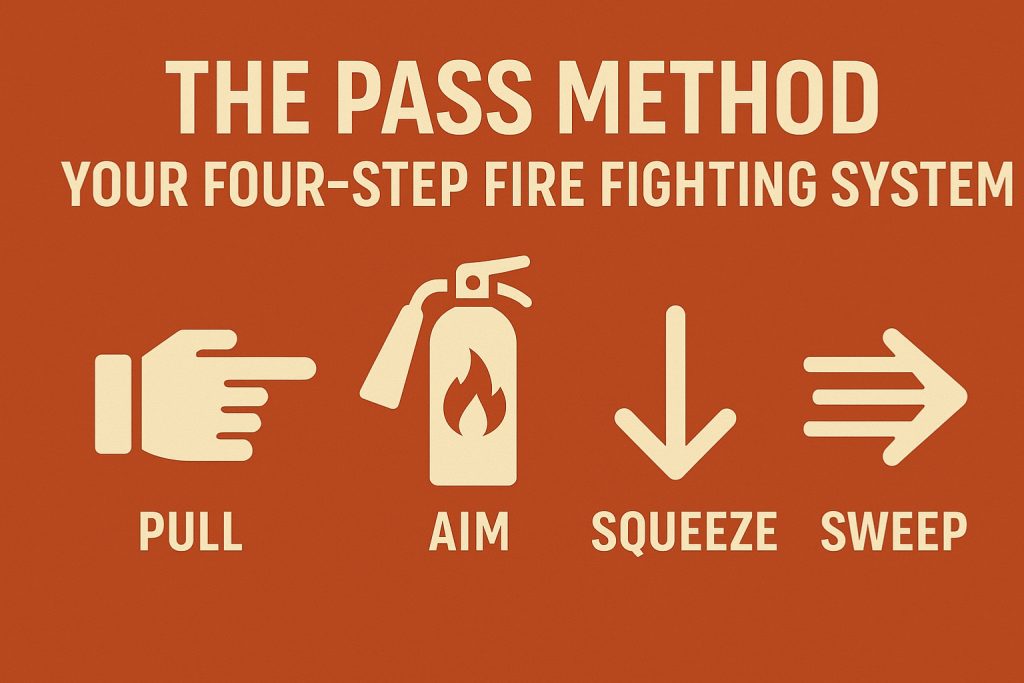
The PASS technique transforms panic into purposeful action. This proven method, endorsed by OSHA and the NFPA, breaks fire suppression into four manageable steps.
P – Pull the Pin
Locate the pin at the extinguisher’s top, secured by a plastic tamper seal. Grip the extinguisher firmly with one hand and pull the pin straight out with the other. The pin prevents accidental discharge during transport and storage.
Pro tip: Test your extinguisher immediately after pulling the pin by giving a quick squeeze while aiming away from people. This confirms it’s operational before approaching the fire.
A – Aim Low at the Base
This step trips up most people. Your instinct screams “aim at the flames,” but that’s wrong. Always aim at the base of the fire where the fuel source burns. The flames are just hot gases – attacking them wastes your extinguishing agent.
Stand 6-8 feet from the fire. Any closer risks burns; any farther reduces effectiveness. Position yourself with your back to your escape route.
S – Squeeze the Handle
Squeeze the operating lever slowly and evenly. This releases the extinguishing agent through the hose or nozzle. Control your squeeze – a steady stream works better than erratic bursts.
Most portable extinguishers empty in 10-20 seconds. That’s not much time, so make every second count with controlled, purposeful discharge.
S – Sweep Side to Side
Sweep the nozzle or hose from side to side at the fire’s base. Start at the edge nearest you and push the fire away, working systematically across the burning area. Maintain your sweeping motion until the fire appears completely out.
Watch for re-ignition. Just because flames disappear doesn’t mean the fire’s dead. Keep the extinguisher ready and observe the area for several minutes.
Advanced Techniques for Maximum Effectiveness
Beyond the basic PASS method, professional firefighters use these techniques for optimal results:
The Approach Method
Never rush directly at a fire. Approach at a 45-degree angle, keeping your escape route clear. This position gives you better visibility and safer positioning.
Teamwork Tactics
When multiple people and extinguishers are available, coordinate your attack. Start from opposite sides and sweep toward the middle, trapping the fire between converging streams.
Outdoor Considerations
Wind changes everything outdoors. Always approach from upwind to avoid smoke and heat blowback. The wind can also carry your extinguishing agent away, so move closer than usual – about 3-4 feet.
Vertical Fire Fighting
For fires climbing walls or drapes, start at the bottom and work upward. Gravity helps your extinguishing agent flow down, creating a barrier against re-ignition.
Common Mistakes That Make Fires Worse
Even with good intentions, these errors can escalate a manageable fire into a major emergency:
Aiming too high – Attacking flames instead of the fuel source wastes your agent and time. The fire continues burning at its base while you spray uselessly at the top.
Standing too close – Heat and smoke can overcome you quickly. Maintain that 6-8 foot distance for safety and effectiveness.
Giving up too soon – Fires often flare up during suppression before dying. Don’t stop at the first sign of success. Empty the entire extinguisher if needed.
Using water on grease fires – This creates a fireball as water instantly vaporizes, spreading burning oil everywhere. Keep a Class K extinguisher in any kitchen.
Turning your back – Never assume a fire is out. Watch the area for several minutes. Many fires reignite from hidden embers or hot spots.
NYC-Specific Fire Code Requirements
New York City enforces strict fire safety regulations that exceed national standards. Property owners and managers must understand these local requirements to avoid violations and protect occupants.
FDNY Extinguisher Regulations
Every commercial property needs:
- One extinguisher per 2,500 square feet
- Maximum 75-foot travel distance to any extinguisher
- Minimum 4-pound capacity for each unit
- Annual professional inspections with FDNY tags
- Monthly visual checks documented in writing
Residential buildings require extinguishers in:
- Boiler rooms
- Compactor rooms
- Storage areas exceeding 200 square feet
- Each floor within 10 feet of standpipes
Local Law 26 Compliance
This critical regulation requires all commercial cooking operations to maintain Class K extinguishers within 30 feet of cooking equipment. Violations trigger immediate fines and potential closure.
Required Signage and Mounting
FDNY mandates specific signage above each extinguisher:
- Red background with white letters
- “FIRE EXTINGUISHER” in 1-inch letters minimum
- Arrow pointing to extinguisher location
- Mounting height between 3.5 and 5 feet
Non-compliance results in violations during FDNY inspections. Our same-day fire code violation removal service corrects these issues fast, preventing fines and ensuring safety.
Inspection and Tagging Timeline
NYC requires:
- Monthly – Visual inspection by property staff
- Annually – Professional inspection with new FDNY tag
- 6 Years – Internal maintenance examination
- 12 Years – Hydrostatic pressure testing
Missing these deadlines means violations, fines, and increased liability. We provide same-day inspection and tagging throughout all five boroughs.
Professional Fire Extinguisher Maintenance
A fire extinguisher only works when properly maintained. Regular service ensures reliability when seconds count.
Monthly Visual Inspections
Property managers should check:
- Pressure gauge remains in green
- No visible damage or corrosion
- Pin and seal intact
- Clear access – nothing blocking approach
- Instruction label legible and facing outward
Document each inspection in a log book. FDNY reviews these records during inspections.
Annual Professional Service
Certified technicians must:
- Verify proper pressure and weight
- Check for internal corrosion or damage
- Replace o-rings and seals as needed
- Update inspection tags
- Document service in detail
When to Replace vs. Recharge
Recharge after:
- Any use, even partial discharge
- Pressure drops below green zone
- Annual inspection reveals low agent levels
Replace when:
- Damaged beyond repair
- Obsolete model no longer supported
- Hydrostatic test failure
- Manufacture date exceeds 20 years
Our flat-rate service includes evaluation and honest recommendations. We’ll recharge when possible and replace only when necessary.
Training Your Team for Emergency Response
Knowledge without practice breeds dangerous overconfidence. Regular training transforms information into life-saving muscle memory.
Effective Training Components
Comprehensive programs include:
- Classroom instruction on fire types and extinguisher selection
- Hands-on PASS method practice
- Live fire suppression exercises (with professional supervision)
- Evacuation procedure reviews
- Emergency communication protocols
Building-Specific Considerations
Every property has unique challenges:
- High-rises need stairwell pressurization training
- Restaurants require kitchen-specific suppression techniques
- Warehouses must address high-rack storage fires
- Schools need age-appropriate student evacuation plans
We customize training to your property’s specific risks and requirements.
Documentation and Compliance
OSHA requires employers to train workers on:
- Fire hazards in their work area
- Proper extinguisher selection
- PASS technique execution
- When to evacuate instead of fight
Document all training with:
- Date and duration
- Attendee signatures
- Topics covered
- Instructor credentials
This documentation proves compliance during inspections and liability claims.
Video and Virtual Training Options
Modern technology enhances traditional fire safety education without replacing hands-on practice.
Effective Video Training Elements
Quality programs feature:
- Real fire scenarios, not animations
- Multiple camera angles showing proper technique
- Common mistake demonstrations
- Slow-motion PASS method breakdown
- Industry-specific scenarios
Virtual Reality Applications
VR training offers:
- Risk-free practice opportunities
- Realistic smoke and heat effects
- Immediate feedback on technique
- Unlimited scenario repetition
- Measurable performance metrics
While technology helps, nothing replaces handling an actual extinguisher. Combine virtual and physical training for optimal results.
Post-Fire Procedures: After the Smoke Clears
Successfully suppressing a fire is just the beginning. Your actions afterward determine whether the danger truly passed.
Immediate Steps
- Maintain watch – Observe the area for 30 minutes minimum
- Ventilate safely – Open windows and doors if possible
- Call authorities – Even extinguished fires require fire department verification
- Document everything – Photos, witness statements, and timeline
- Secure the scene – Prevent re-entry until cleared
Professional Assessment
Never assume complete extinguishment. Hidden hot spots can reignite hours later. Professional thermal imaging reveals threats invisible to the eye.
Insurance and Reporting
Document for insurance:
- Fire origin and cause
- Suppression actions taken
- Extinguisher serial numbers used
- Witness contact information
- Property damage extent
Proper documentation accelerates claims and protects against liability.
Accessibility and Special Needs Considerations
Fire safety must protect everyone, regardless of physical abilities.
ADA Compliance
Ensure extinguishers remain accessible:
- Clear 36-inch approach path
- Mounting height accommodates wheelchair users
- Handles operable with one hand
- Maximum 5 pounds pull force
Special Population Training
Customize training for:
- Elderly residents – Lighter weight extinguishers, simplified instructions
- Non-English speakers – Multilingual signage and training materials
- Mobility impaired – Evacuation assistance protocols
- Hearing impaired – Visual alarm integration
Creating inclusive fire safety plans protects all occupants and reduces liability.
Cost Considerations and ROI
Investing in proper fire protection delivers returns far exceeding the expense.
True Cost Analysis
Consider total expenses:
- Initial extinguisher purchase
- Professional installation
- Annual inspections and tagging
- Periodic recharging or replacement
- Employee training programs
- Compliance documentation
Compare against potential losses:
- Property damage (average $35,000 per incident)
- Business interruption costs
- Liability claims
- FDNY violations and fines
- Insurance premium increases
Flat-Rate Advantages
Our transparent pricing eliminates surprises:
- No hidden fees
- No hourly charges
- No travel costs
- Bundle services for savings
- Same price, 24/7 emergency service
Budget confidently with predictable fire safety costs.
Frequently Asked Questions
How do you use the PASS method for fire extinguishers?
The PASS method breaks fire fighting into four simple steps: Pull the pin to unlock the extinguisher, Aim the nozzle at the base of the fire (not the flames), Squeeze the handle to discharge the agent, and Sweep from side to side until the fire is completely out. Practice this sequence regularly so muscle memory takes over during emergencies. Remember to stand 6-8 feet away and keep your back to an escape route.
What are the 5 types of fire extinguishers?
The five types match the five fire classes: Class A extinguishers fight ordinary combustibles like wood and paper, Class B handles flammable liquids, Class C tackles electrical fires, Class D suppresses metal fires, and Class K specifically targets kitchen grease and oil fires. Most NYC properties need ABC multipurpose extinguishers, while restaurants require additional Class K units. Using the wrong type can spread fires or create new hazards.
When should you NOT use a fire extinguisher?
Never attempt fire suppression when the fire exceeds your height, smoke fills the room, you lack a clear escape route, or you feel unsafe. Also avoid fighting fires if you don’t have the correct extinguisher type, the building’s alarm hasn’t been activated, or the fire involves explosive materials. Your safety always outweighs property protection – when in doubt, evacuate and call 911.
How often should fire extinguishers be inspected in NYC?
NYC requires monthly visual inspections by property staff, documented in writing. Professional FDNY-certified inspections must occur annually, with new tags applied. Every six years, extinguishers need internal maintenance, and hydrostatic testing happens at year 12. Missing any deadline results in violations and fines. Our same-day inspection service ensures continuous compliance across all five boroughs.
What is the proper distance to stand when using a fire extinguisher?
Maintain 6-8 feet between you and the fire for optimal safety and effectiveness. This distance protects you from intense heat while keeping you close enough for the extinguishing agent to reach the fire’s base. Move closer only for outdoor fires where wind disperses the agent. If heat forces you back beyond 8 feet, the fire is too large to fight safely – evacuate immediately.
Take Action Today: Protect Your Property and People
Fire emergencies strike without warning. Your preparation today determines tomorrow’s outcome. Don’t wait for disaster to reveal gaps in your fire protection plan.
Schedule Your Free Fire Extinguisher Training Today – Call (718) 852-2762
Our FDNY-certified technicians provide comprehensive on-site training tailored to your property’s unique needs. We’ll ensure every team member can confidently operate an extinguisher using proper PASS technique.
For immediate assistance with inspections, violations, or emergency service, we’re available 24/7 across all five boroughs. Same-day service, flat-rate pricing, and decades of NYC fire safety expertise – that’s the A&J difference.
Get Same-Day FDNY Inspection & Tagging Service
Don’t let expired tags or missing inspections put your property at risk. Call now for professional service that ensures compliance and safety.
Download Our Free Fire Safety Inspection Checklist
Stay ahead of violations with our comprehensive monthly inspection guide. Protect your property, avoid fines, and sleep better knowing you’re prepared.
Remember: knowing how to use a fire extinguisher properly is just the beginning. Professional maintenance, regular training, and strict compliance create comprehensive fire protection. Trust the experts who’ve protected NYC properties since 2016.
A&J Fire Extinguisher – Your Safety, Our Priority