Proper fire extinguisher placement can mean the difference between a minor incident and a catastrophic fire. Whether you manage a commercial building in Brooklyn or own a small business in NYC, understanding fire extinguisher placement requirements is essential for compliance and safety. At A&J Fire, we help property owners meet fire extinguisher installation standards in Brooklyn and stay code-compliant. Call us at (718) 852-2762 for professional guidance.
Key Takeaways
- **NFPA 10 governs placement:** The National Fire Protection Association sets the standard for portable fire extinguisher distribution, spacing, and mounting.
- **Maximum travel distance is 75 feet** for Class A hazards and ranges from 50 to 100 feet depending on the hazard class.
- **Mounting height matters:** Extinguishers weighing over 40 pounds must be installed with the handle no higher than 3 feet from the floor.
- **OSHA requires access:** Extinguishers must be unobstructed, visible, and within reach at all times.
- **Professional inspection is mandatory:** Annual inspections by a certified technician keep your placement compliant.
Why Fire Extinguisher Placement Matters
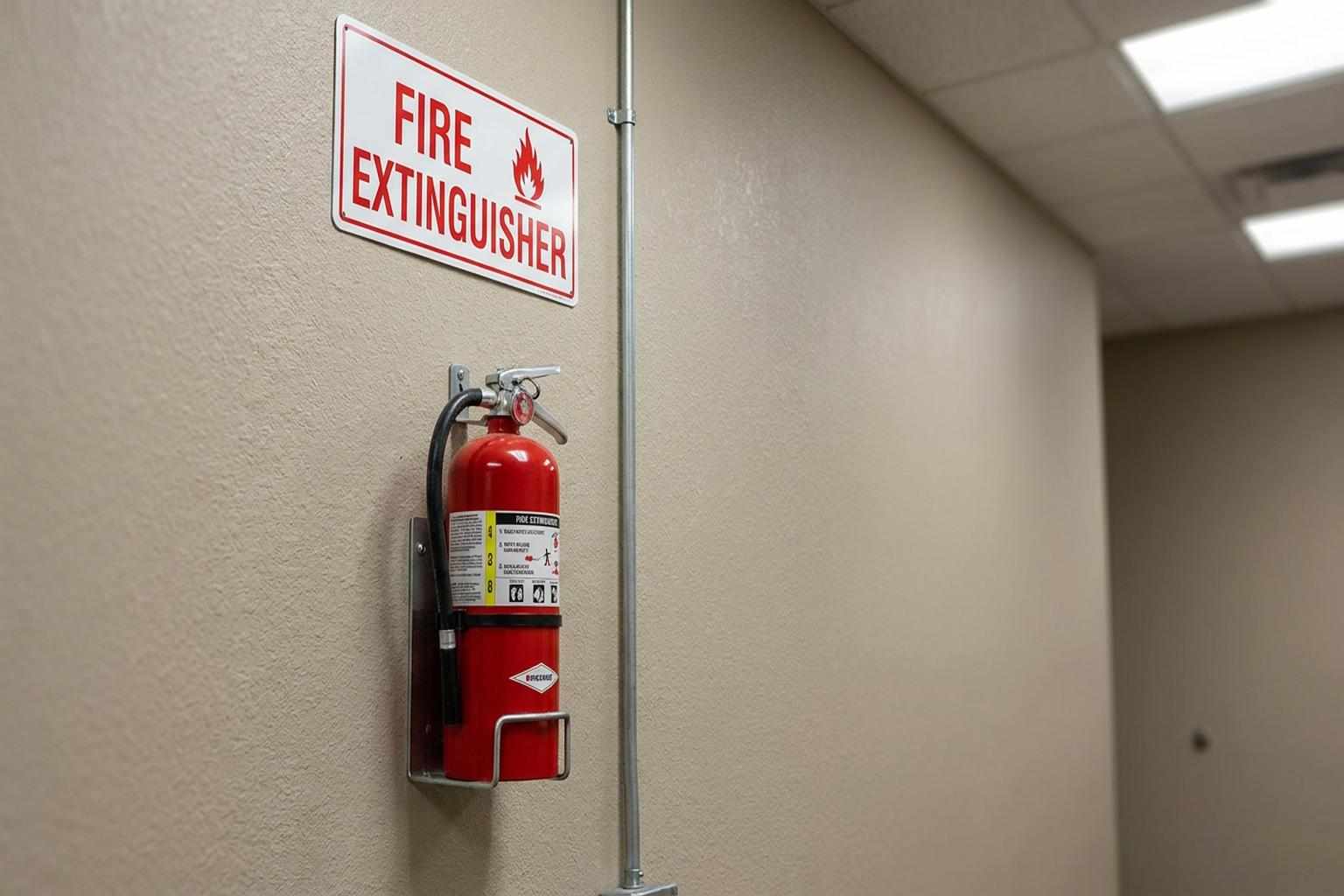
A fire extinguisher mounted in the wrong location is useless during an emergency. If employees cannot reach a portable fire extinguisher within seconds, a small fire can grow out of control. The proper placement of fire extinguishers saves lives and protects property.
Fire code violations related to extinguisher placement are among the most common citations issued by fire inspectors. Buildings that fail to meet NFPA 10 placement requirements face fines, insurance issues, and increased liability. In commercial buildings, the placement of fire extinguishers must account for hazard type, floor area, and travel distance.
A kitchen requires different extinguisher placement than a warehouse or office space. Understanding the specific requirements for your property ensures that you have the right extinguisher in the right location when seconds count. Our fire safety compliance services help businesses navigate these requirements.
NFPA 10 Standards for Fire Extinguisher Placement
NFPA 10 is the primary code governing portable fire extinguisher placement in the United States. This standard defines how many extinguishers a building needs, where they must be located, and how far apart they can be spaced.
The code classifies fire hazards into three categories: light hazard, ordinary hazard, and extra hazard. Each classification has different extinguisher distribution and spacing requirements. Light hazard areas include offices and classrooms. Ordinary hazard areas include retail spaces and dining establishments. Extra hazard areas include manufacturing floors and chemical storage rooms.
NFPA 10 also specifies the minimum extinguisher rating for each hazard class. A light hazard area requires a minimum 2A rated extinguisher, while an extra hazard area may require a 4A or higher rating. The extinguisher distribution must provide coverage across the entire floor area with no gaps.
Tip: Always check both NFPA 10 and your local fire code. NYC has additional requirements under Local Law 157 that may exceed national standards. Contact us at (718) 852-2762 for a compliance assessment.
OSHA Fire Extinguisher Placement Requirements
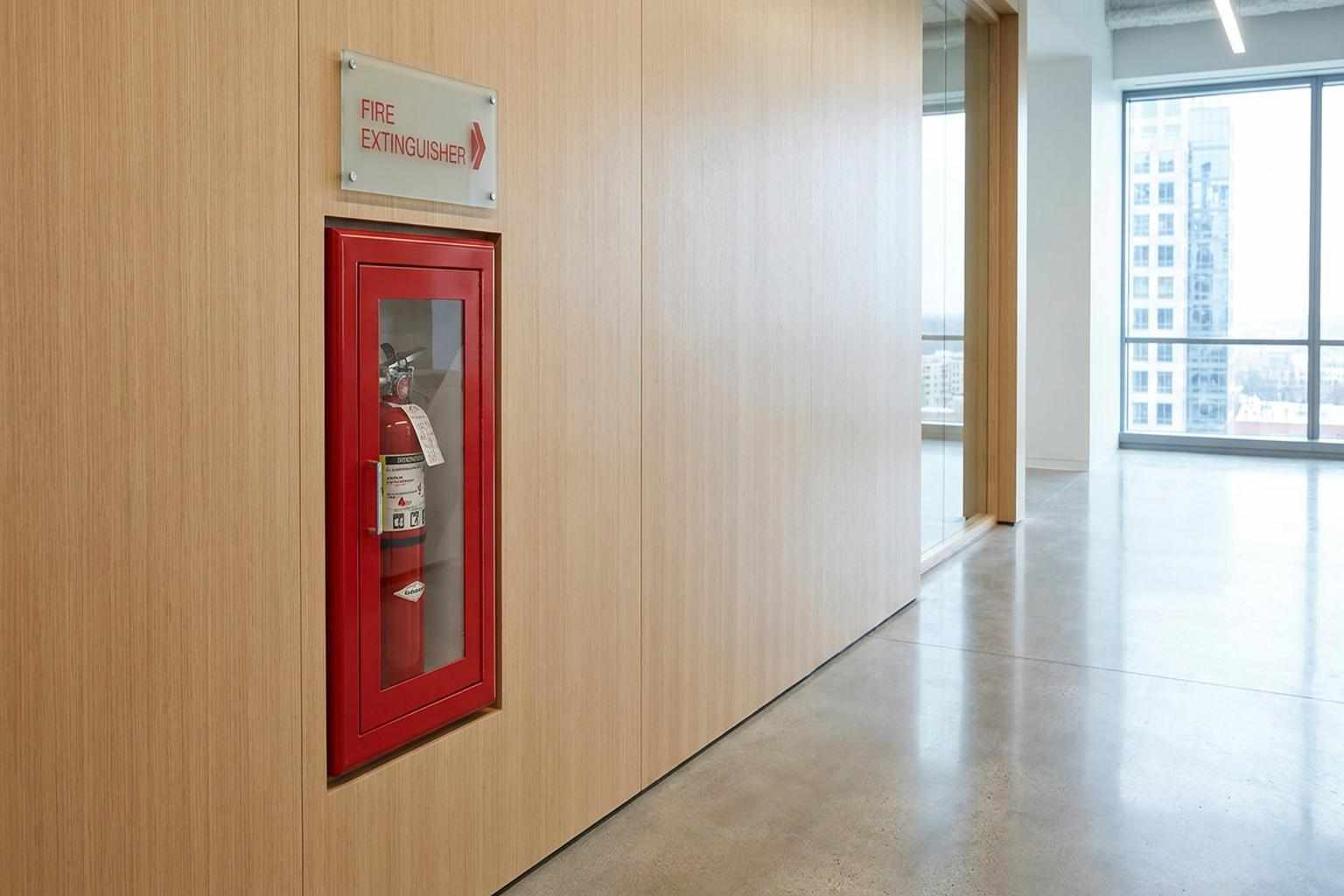
OSHA enforces workplace fire safety under 29 CFR 1910.157. The requirements focus on accessibility. Extinguishers must be mounted, located, and identified so they are readily accessible without risk of injury.
Portable extinguishers must be available within 75 feet of travel distance for Class A hazards. For Class B hazards, the maximum is 50 feet. These requirements ensure employees can reach an extinguisher quickly.
Employers must ensure extinguishers are not blocked by equipment, furniture, or storage. The path must remain clear at all times. If an extinguisher is moved for maintenance, a replacement must be provided.
Annual inspection by a qualified professional is required. Our fire extinguisher inspection services ensure compliance with OSHA and NFPA standards. Learn more about OSHA fire extinguisher requirements on our dedicated page.
Maximum Travel Distance Requirements by Hazard Class
Travel distance is the maximum distance an employee must walk to reach the nearest fire extinguisher. NFPA and OSHA set specific limits based on the fire hazard class present.
| Hazard Class | Extinguisher Rating | Max Travel Distance |
|---|---|---|
| Light Hazard (Class A) | 2A minimum | 75 feet |
| Ordinary Hazard (Class A) | 2A minimum | 75 feet |
| Extra Hazard (Class A) | 4A minimum | 75 feet |
| Class B (Low Hazard) | 10B minimum | 50 feet |
| Class B (High Hazard) | 20B minimum | 50 feet |
| Class C | Matches A or B class | Same as A or B |
The travel distance is measured along the actual path a person would walk, not as a straight line. Walls, partitions, and equipment all affect the real travel path. If a single extinguisher cannot cover the entire floor area within the maximum travel distance, additional units must be installed.
Mounting Height and Accessibility Standards
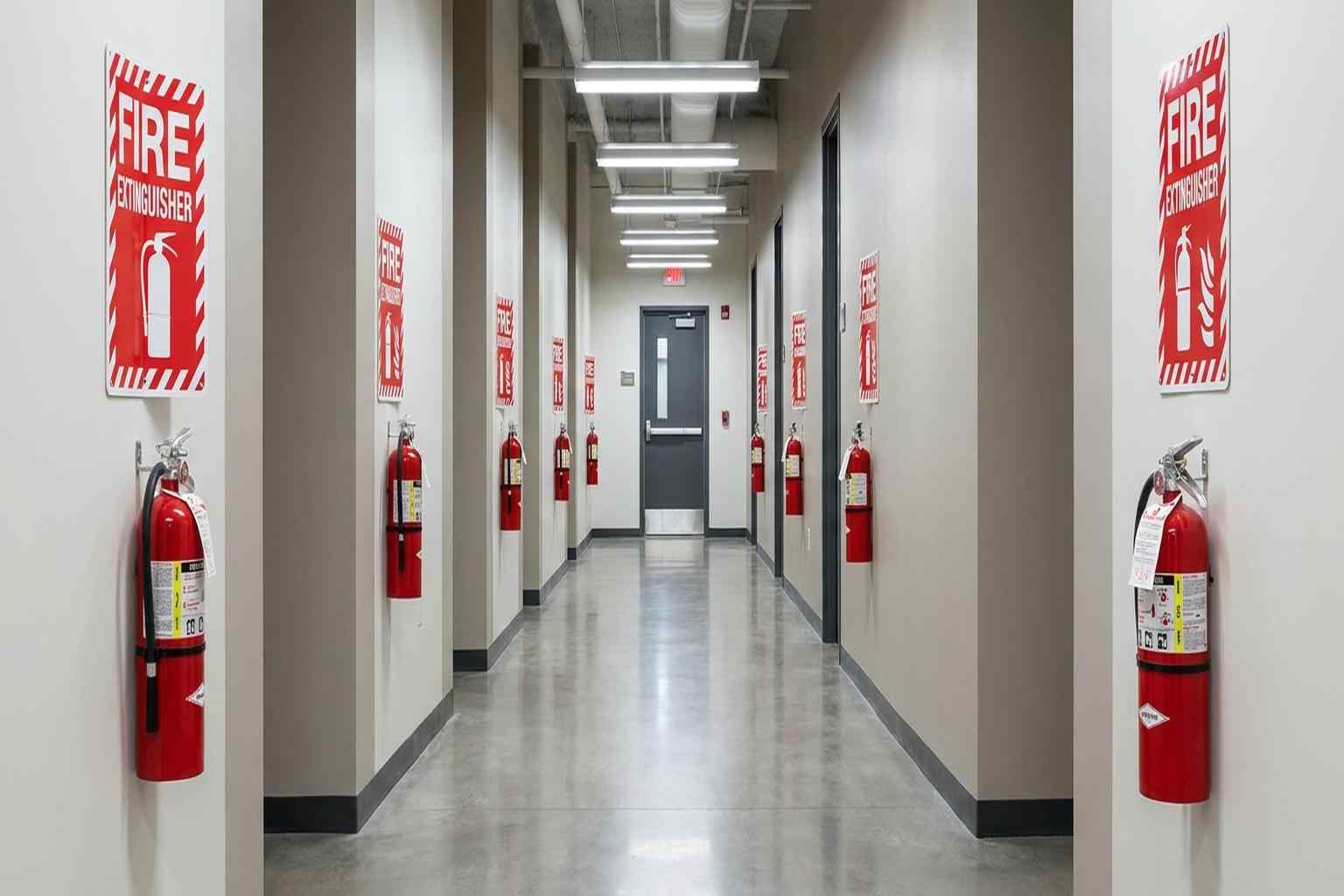
Fire extinguisher mounting height is regulated by NFPA 10 and OSHA. The mounting requirements depend on the weight of the extinguisher. Extinguishers weighing 40 pounds or less must be installed with the carrying handle no more than 5 feet above the floor. Extinguishers weighing more than 40 pounds must have the handle no more than 3 feet from the floor.
All extinguishers must be wall mounted using approved brackets or cabinets. The mounting bracket must securely hold the extinguisher and allow for quick release during an emergency. Floor stands are acceptable in some locations where wall mounting is not possible.
Warning: Never place a fire extinguisher on the floor without a proper stand or bracket. An unsecured extinguisher can be knocked over, damaged, or pushed out of reach during an emergency.
Accessibility extends beyond mounting height. The area around each extinguisher must be free of obstructions. Nothing should block the line of sight to the extinguisher. In commercial buildings, keep storage, furniture, and equipment at least 3 feet away from each unit. Our fire extinguisher mounting height guide covers these requirements in detail.
Placement Requirements for Commercial Buildings
Commercial buildings face the strictest fire extinguisher placement requirements. The extinguisher distribution must cover every area based on the hazard classification of each space. In NYC, commercial properties must also comply with Local Law 157, which adds additional placement and inspection requirements.
Key placement locations in commercial buildings:
- **Near exit doors:** Extinguishers near exits are visible and accessible during evacuation. This ensures anyone fighting a fire has an escape route.
- **In corridors:** Hallways require extinguishers spaced to keep travel distance within code limits.
- **Near hazard areas:** Kitchens, mechanical rooms, electrical panels, and chemical storage areas need extinguishers rated for the specific fire class.
- **At each floor level:** Every floor of a multi-story building must have its own extinguishers.
The type of extinguisher must match the hazard. A Class K extinguisher is required in commercial kitchens. An ABC fire extinguisher is the standard for most office and retail spaces. Electrical rooms need Class C extinguishers that use non-conductive agents.
Common Fire Extinguisher Placement Mistakes
Even well-intentioned property owners make mistakes when placing fire extinguishers. These errors can result in code violations and leave a building unprotected during a fire emergency.
The most common placement mistakes:
- **Hiding extinguishers behind furniture:** An extinguisher that cannot be seen cannot be used. Visibility is as important as accessibility.
- **Installing the wrong type:** Using a water extinguisher near electrical equipment is dangerous and violates code.
- **Exceeding maximum travel distance:** Adding walls or rearranging a floor plan without reassessing placement creates coverage gaps.
- **Failing to account for hazard changes:** When a space changes from office to storage, the hazard class changes and so must the extinguisher rating.
- **Mounting too high or too low:** Incorrect mounting height makes extinguishers difficult to reach.
- **Blocking access with storage:** Boxes and equipment piled in front of an extinguisher render it useless.
Regular inspections catch these issues before an inspector does. Schedule your commercial fire extinguisher inspection with A&J Fire at (718) 852-2762.
Fire Extinguisher Signage and Visibility Requirements
Fire extinguisher signage is required by both NFPA 10 and OSHA. The purpose is to ensure anyone in the building can quickly locate the nearest extinguisher, even in low visibility conditions.
Signage requirements:
- **Wall signs:** A sign must be mounted above or adjacent to each unit, visible from a distance.
- **Visibility markers:** In large spaces, floor decals or projecting signs help identify extinguisher locations from multiple angles.
- **Accessibility markings:** Extinguishers in cabinets must have the cabinet clearly marked. The door must open easily without tools.
The fire extinguisher sign must use contrasting colors and be readable from a distance. Red is the standard color. Photoluminescent signs that glow in the dark are recommended for areas that may lose power.
Fire inspectors check for proper signage during building inspections. Missing or damaged signs are a common citation that is easy to avoid. Keep replacement signs on hand and replace faded signage immediately.