Every business that keeps portable fire extinguishers on site must meet fire extinguisher inspection requirements set by OSHA and NFPA 10. Skip them and you face failed fire inspections, OSHA citations, and liability exposure if a fire ever breaks out. As a Brooklyn fire protection company that has performed certified [fire extinguisher inspections](https://anjfire.com/fire-extinguisher-inspections/) since 1948, [A&J Fire](https://anjfire.com/) breaks down exactly what the codes require and how often each check must happen.
Key Takeaways
- Monthly visual inspections are mandatory - OSHA 1910.157(e)(2) requires portable extinguishers to be visually inspected monthly
- Annual maintenance is a deeper check - NFPA 10 requires a professional examination by a certified technician every 12 months
- Internal maintenance every 6 years - stored pressure dry chemical units need a teardown and internal examination at 6 years
- Hydrostatic testing every 5 or 12 years - depending on extinguisher type, cylinders must be pressure tested
- Documentation is required - every inspection must be recorded with a dated tag, label, or electronic log
What Are Fire Extinguisher Inspection Requirements?
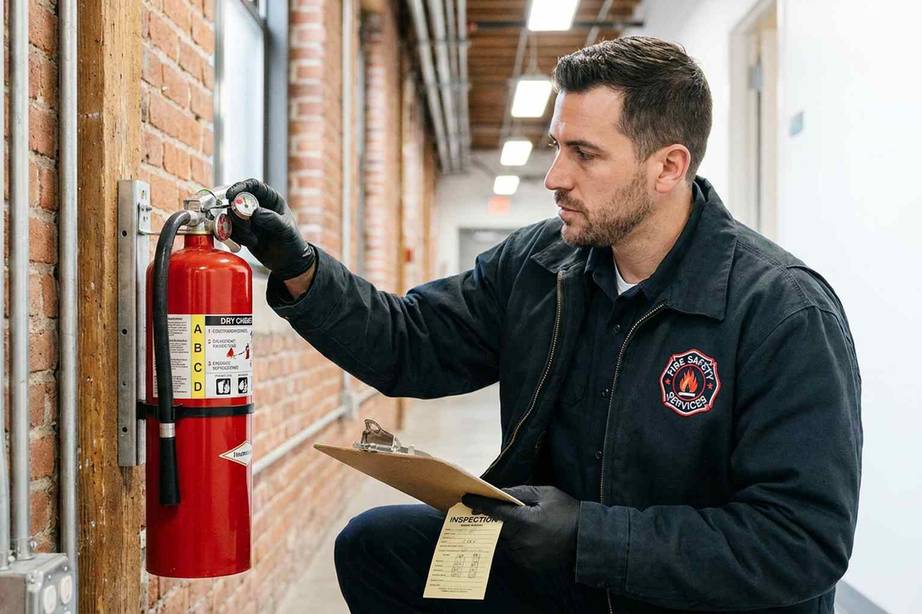
Fire extinguisher inspection requirements are the scheduled checks that keep portable extinguishers ready for use. Two authorities control them: OSHA 29 CFR 1910.157 for workplaces and NFPA 10, the Standard for Portable Fire Extinguishers, for the technical details. Local fire codes, including the FDNY rules that apply in New York City, layer additional obligations on top.
Inspection and maintenance are not the same thing:
- Inspection is a quick visual check that the extinguisher is in its designated location, unobstructed, charged, and undamaged
- Maintenance is a thorough examination of the mechanical parts, agent, and cylinder performed by a certified technician
- Hydrostatic testing is a pressure test of the cylinder itself to verify the vessel can still safely hold its charge
Confusing the three is the most common compliance mistake we see. A monthly visual check never replaces the annual maintenance visit, and neither replaces a hydrostatic test.
Monthly Visual Inspection Requirements
OSHA requires that portable fire extinguishers be visually inspected on a monthly basis. The rule is simple: an extinguisher that a panicked employee cannot find, reach, or use in a fire is worthless no matter how well it was serviced last year.
A compliant monthly visual check confirms six things, and any trained staff member can perform it after a brief walkthrough with your service vendor. Call (718) 852-2762 if you want your team set up with a documented monthly program:
- The extinguisher sits in its designated location and is not blocked by furniture, boxes, or equipment
- The mounting bracket or cabinet holds the unit securely
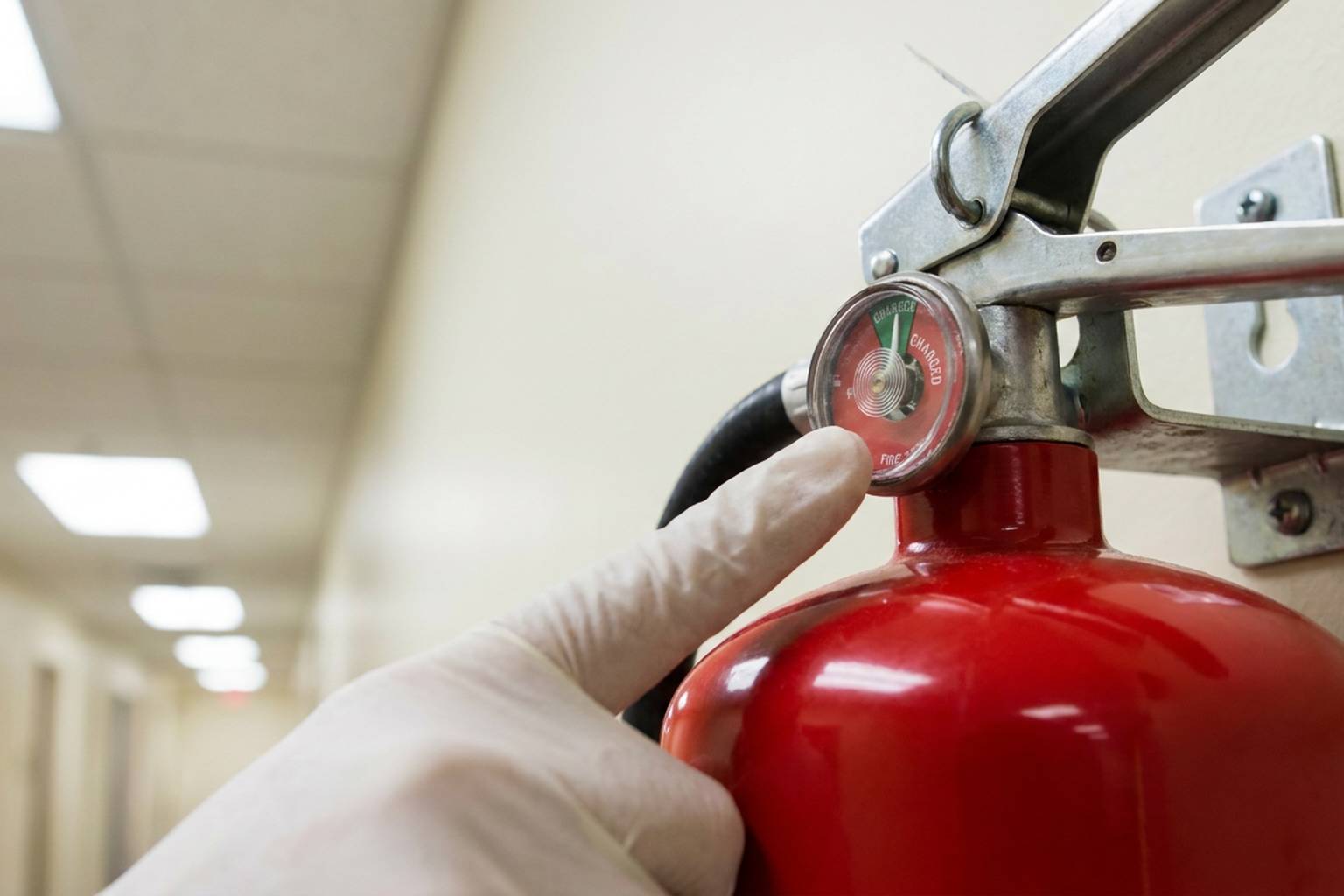
- The pressure gauge reads in the green zone
- The safety pin and tamper seal are intact
- The nozzle, horn, or hose shows no clogs, cracks, or damage
- The label is legible and the last service tag is current
NFPA 10 lets the monthly check be performed by any trained person in the building. Many NYC property managers assign it to building superintendents as part of their rounds. If the extinguisher fails any point on the visual check, it must be pulled from service immediately and replaced or repaired the same day. A missing or damaged unit that stays on the wall is worse than no unit at all, because occupants will trust it in an emergency. Our fire extinguisher inspection checklist walks through each step in detail.
Annual Maintenance Requirements
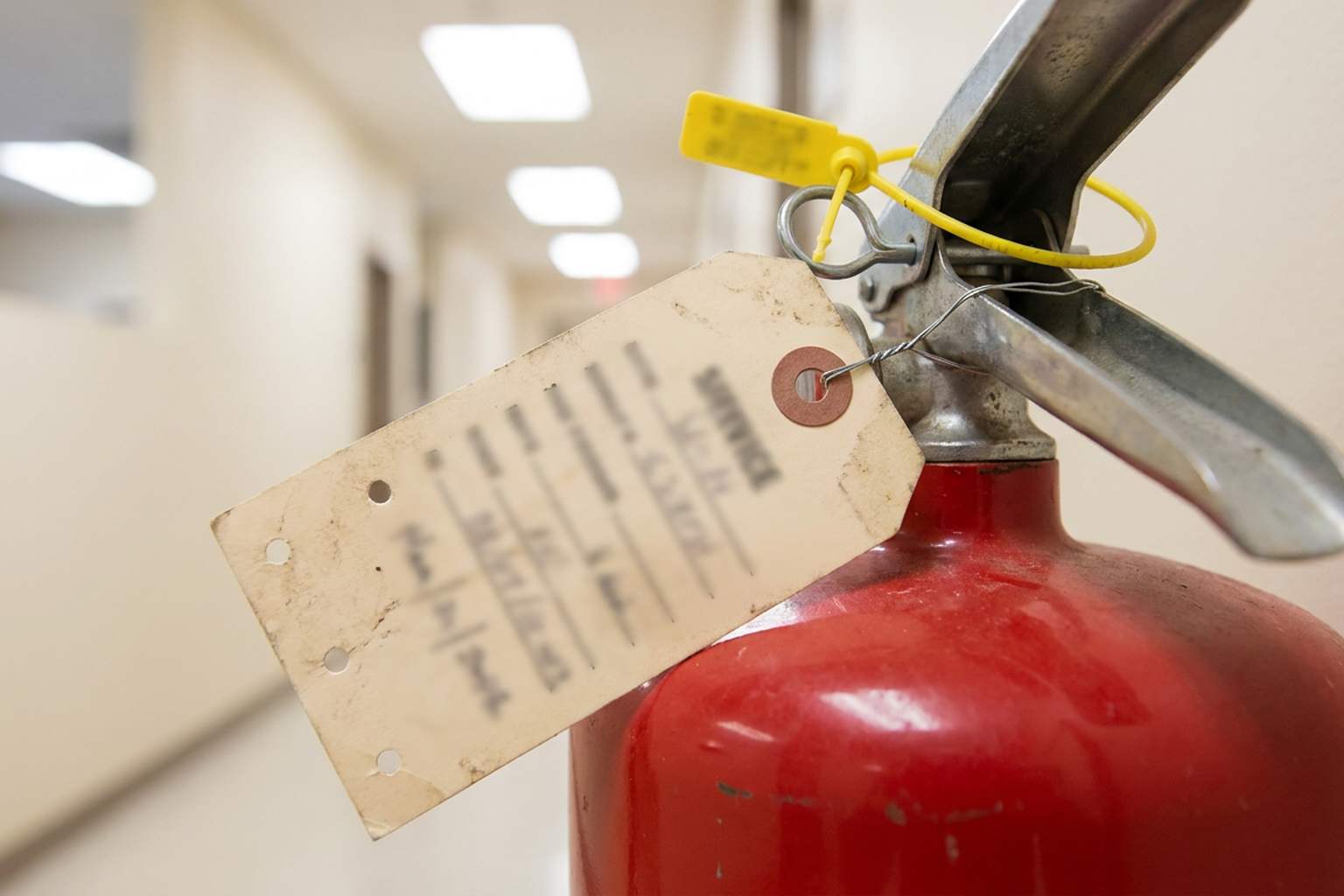
NFPA 10 requires a full maintenance inspection of every portable extinguisher at least once per calendar year. This is the check that gets documented with the service tag most building managers recognize. An annual certification is what fire inspectors, insurance carriers, and the FDNY actually look for.
During annual maintenance, a certified technician:
- Verifies the correct extinguisher type and class for the hazard in that area
- Weighs the cylinder or checks the pressure to confirm full charge
- Checks the internal condition where applicable, including agent level and siphon tube
- Inspects the valve, handle, lever, and spring mechanism for wear or corrosion
- Confirms the hose, nozzle, and thread connections are clear and undamaged
- Replaces the tamper seal, dates the tag, and records the service
In New York City, annual service must be performed by a certified extinguisher company and tagged with a current year seal. An out of date tag is one of the most common Local Law 157 violations issued to building owners. If your building operates in the city, make sure your inspection vendor files the required FDNY paperwork and gives you a copy of the filed report for your records. Commercial buildings across the boroughs schedule annual service in blocks by floor or tenant area so a single visit covers every unit at once. If any unit fails the annual check, the technician should offer a replacement on the spot rather than leaving a wall bracket empty for weeks. That gap is exactly what fire inspectors flag during a surprise audit.
Internal Examination and Six Year Maintenance
Stored pressure dry chemical extinguishers require an internal examination every six years. The six year maintenance rule exists because dry chemical agent cakes, settles, and absorbs moisture over time, which can render the unit useless even when the gauge still reads green.
Six year maintenance involves:
- Complete teardown of the valve assembly and internal components
- Full internal examination of the cylinder for corrosion, pitting, or lining damage
- Replacement of all seals, gaskets, and O-rings
- Refill with fresh agent and recharge with nitrogen
- New tamper seal and documentation of the internal examination
Note that carbon dioxide and nitrogen cartridge units follow a different path. CO2 cylinders skip the six year teardown and go straight to hydrostatic testing every five years. A certified technician can confirm which schedule applies to each unit on your wall. Our recharge service includes the full six year teardown for qualifying extinguishers.
Hydrostatic Testing Requirements
Hydrostatic testing pressure-tests the cylinder itself. NFPA 10 sets the interval by extinguisher type, and the schedule matters because a corroded cylinder can rupture during a fire.
| Extinguisher Type | Test Interval | Notes |
|---|---|---|
| Stored pressure dry chemical (ABC, BC) | 12 years | Paired with 6 year internal maintenance |
| Carbon dioxide (CO2) | 5 years | High pressure cylinder, no six year teardown |
| Water, foam, and loaded stream | 5 years | Shell tested at service pressure |
| Wet chemical (Class K) | 5 years | Standard for kitchen hood systems |
| Halotron and clean agent | 12 years | Follows stored pressure schedule |
Cylinders that fail the hydrostatic test must be destroyed or requalified per DOT rules. For a deeper look at the process, see our guide to fire extinguisher hydrostatic testing. You can read the technical standard at nfpa.org and the OSHA text at osha.gov.
OSHA vs NFPA 10: Who Requires What
Business owners often ask which rule actually applies to their building. The short answer is both. OSHA sets the baseline for employee safety in the workplace, while NFPA 10 is the consensus standard that fire marshals, insurers, and local codes enforce.
| Requirement | OSHA 1910.157 | NFPA 10 |
|---|---|---|
| Monthly visual inspection | ✅ Required | ✅ Required |
| Annual maintenance | Implied (must be maintained in operable condition) | ✅ Required |
| Six year internal examination | Not specified | ✅ Required for stored pressure dry chemical |
| Hydrostatic testing | ✅ Required intervals | ✅ Required with type specific intervals |
| Written documentation | Kept at least 1 year | Tag, label, or electronic record |
| Employee training | ✅ Required annually | Referenced |
OSHA also requires annual fire extinguisher training for any employee expected to use one. We cover the workplace rules in our OSHA fire extinguisher requirements guide.
Extinguisher Placement and Travel Distance
Inspection requirements assume the extinguisher is in the right place to begin with. NFPA 10 limits the maximum travel distance to an extinguisher based on the hazard class:
- Class A hazards: 75 feet maximum travel distance
- Class B hazards: 30 to 50 feet depending on unit rating
- Class C hazards: based on the surrounding Class A or B hazard
- Class K hazards: within 30 feet of cooking appliances
The extinguisher must also be mounted so the top is no more than 5 feet above the floor for units under 40 pounds. An extinguisher mounted too high, hidden behind a door, or buried in a storage room fails inspection even if it was serviced yesterday. See our placement requirements guide for mounting height and spacing rules.
⚠️ Warning: Never block an extinguisher or fire the employee who reports a missing unit. OSHA protects workers who raise fire safety concerns, and a blocked extinguisher is a citable violation on the spot.
Recordkeeping and Tags
Every check must leave a record. OSHA 1910.157(e)(3) requires the dates of inspections be recorded and kept at least one year after the last entry. NFPA 10 accepts a durable tag attached to the extinguisher, a label on the shell, an inspection checklist kept on file, or an electronic bar code system.
A compliant record answers four questions:
- When was the extinguisher last inspected and serviced
- Who performed the work
- What deficiency, if any, was found
- What corrective action was taken
Digital systems are increasingly popular in large NYC commercial buildings because they prevent lost tags and let property managers pull compliance history instantly. Whether paper or electronic, records must be produced on demand during a fire inspection. Missing records are treated the same as a missing extinguisher.
Consequences of Skipping Inspections
The penalties compound fast for lapsed extinguisher compliance:
- OSHA citations: serious violations start around $1,000 to $16,000 per violation depending on gravity
- FDNY violations: NYC buildings face fines and possible hearing orders for expired inspection tags
- Insurance exposure: carriers can deny or reduce fire claims where safety equipment was not maintained
- Liability in lawsuits: a fire injury lawsuit gets much harder to defend with an out of date extinguisher in evidence
- Business closure: repeated violations can trigger vacate orders in severe cases
The cost of a compliance program is a fraction of any one of those outcomes. For NYC building owners, Local Law 157 compliance is not optional and the FDNY audit cycle does not wait. Most facility managers put a compliance calendar on the wall and schedule the year in one call to (718) 852-2762 so nothing lapses.
How A&J Fire Keeps Your Building Compliant
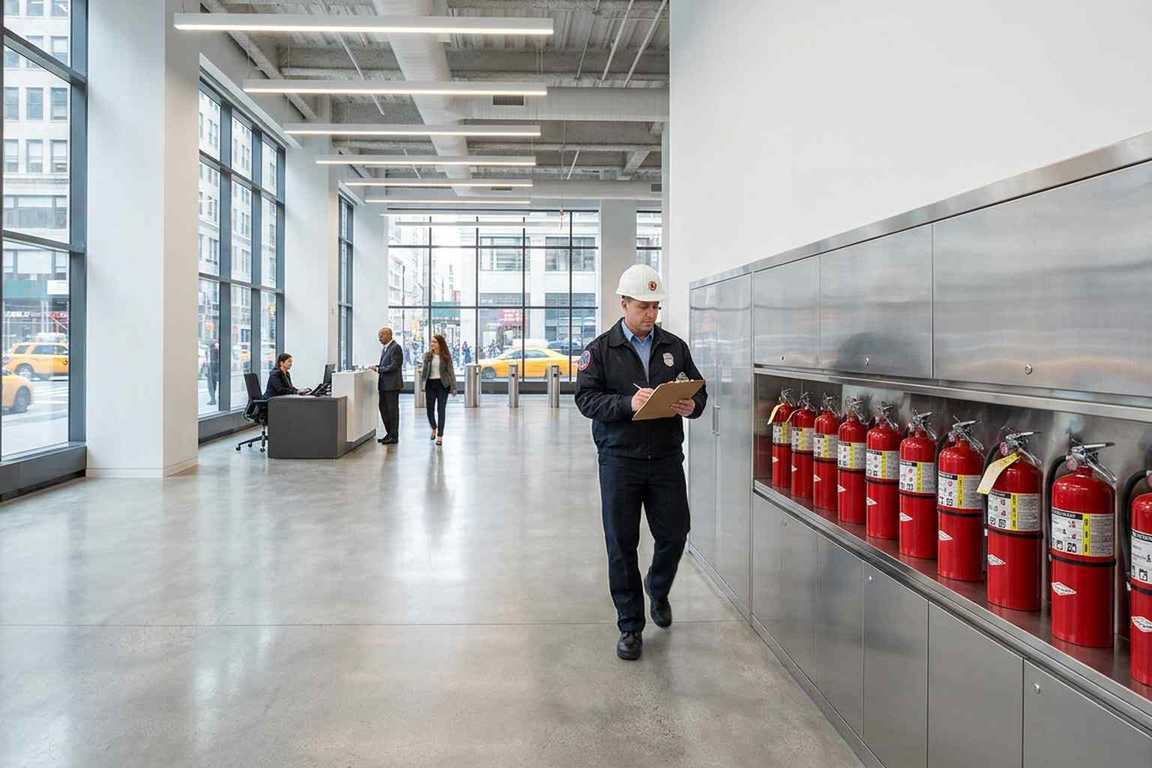
A&J Fire Extinguisher Corp has kept Brooklyn buildings compliant since 1948. We service commercial and residential buildings across NYC with certified technicians who handle every layer of the schedule: monthly visual programs, annual maintenance with tagging, six year internal examination, hydrostatic testing, and FDNY filings.
Our compliance service includes:
- A building survey to map every extinguisher, its class, and its required schedule
- Monthly site visits or a self inspection program with training for your staff
- Annual certification tags installed on every unit
- Hydrostatic testing transport and requalification for expired cylinders
- Consolidated records for FDNY audits and insurance reviews
Call (718) 852-2762 to schedule service or ask about our fire extinguisher inspection service. A technician can usually be on site within a day anywhere in the five boroughs.