Fire extinguisher hydrostatic testing pressurizes the cylinder beyond its normal service pressure to verify structural integrity. NFPA 10 mandates this test at set intervals based on extinguisher type, and skipping it risks OSHA citations and cylinder failure during an emergency. A&J Fire Extinguisher provides hydrostatic testing and fire extinguisher inspections for businesses across Brooklyn and the New York metro area. Call (718) 852-2762 to schedule service.
Key Takeaways
- Hydrostatic testing pressurizes cylinders above service pressure to confirm they can hold their rated pressure safely
- NFPA 10 sets the intervals - every 5 years for CO2 and wet chemical, every 12 years for dry chemical
- Only certified facilities can perform the test - it requires calibrated equipment and trained technicians
- Failed cylinders must be condemned and destroyed - any leak, deformation, or rupture means removal from service
- Testing costs $25 to $75 per unit - far less than OSHA fines up to $16,131 per violation
What Is Hydrostatic Testing?
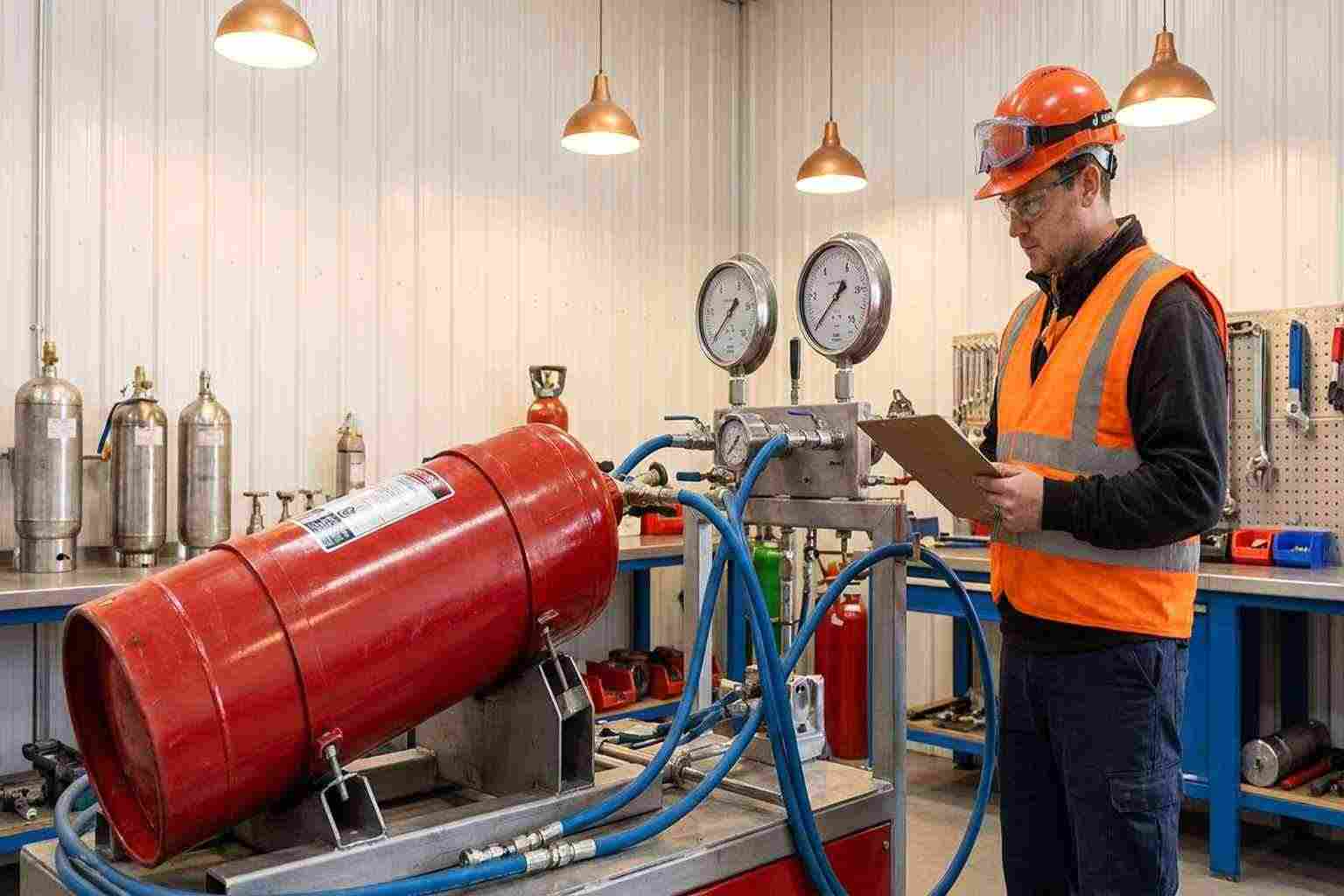
Hydrostatic testing fills the extinguisher cylinder with water and pressurizes it above the normal operating level. The test confirms the cylinder maintains structural integrity under stress. If the cylinder leaks, deforms, or ruptures, it fails and must be permanently removed from service.
Test pressure is roughly 1.5 to 2 times the operating pressure. This safety margin ensures the cylinder can handle repeated charge and discharge cycles safely. NFPA 10 mandates testing at specific intervals. Building owners who skip testing face OSHA fines and liability exposure.
When Does Your Extinguisher Need Testing?
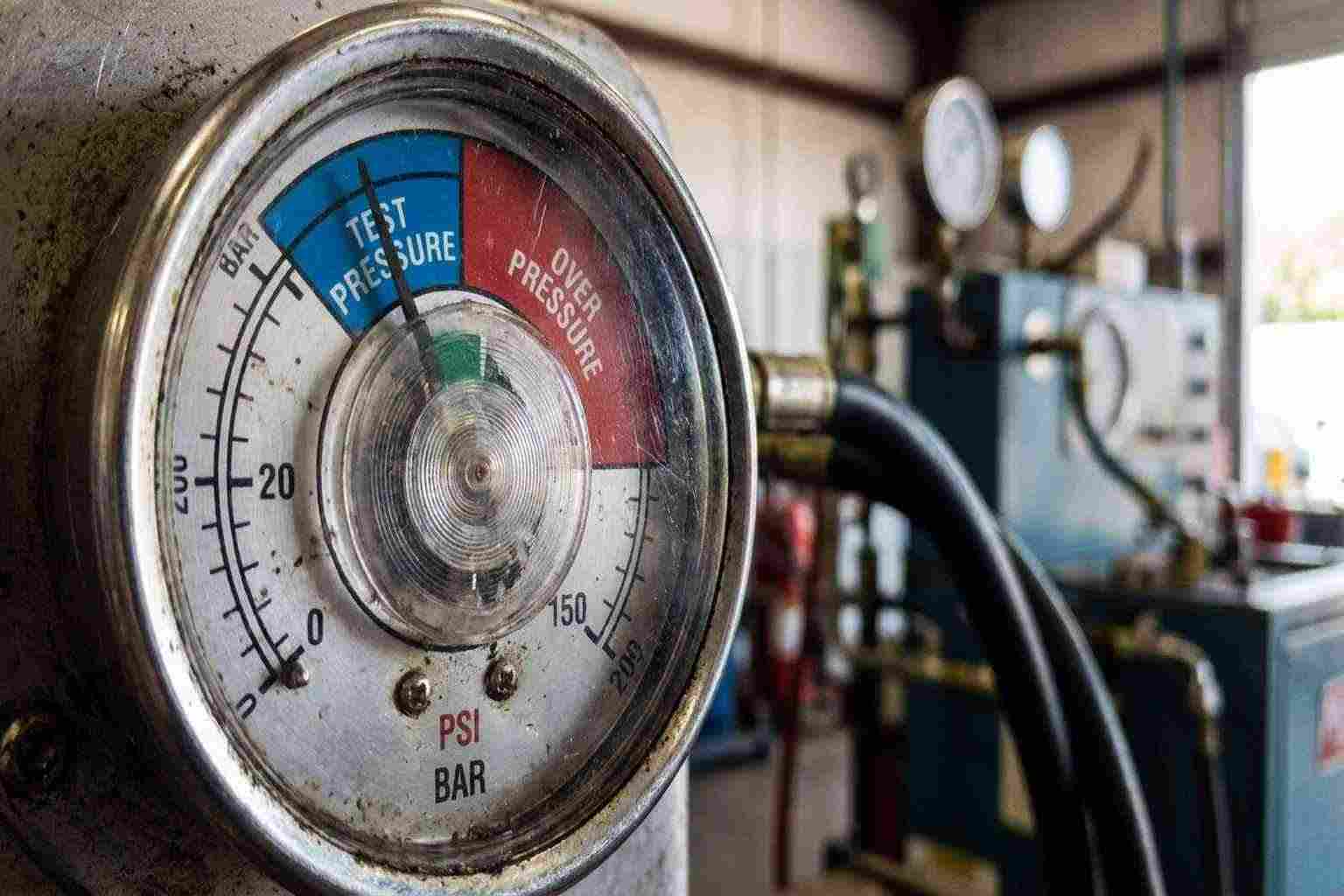
NFPA 10 sets the testing schedule by extinguisher type:
| Extinguisher Type | Test Interval |
|---|---|
| CO2 (carbon dioxide) | Every 5 years |
| Stored pressure water / foam | Every 5 years |
| Dry chemical (stored pressure) | Every 12 years |
| Dry chemical (cartridge-operated) | Every 12 years |
| Wet chemical (Class K) | Every 5 years |
CO2 cylinders operate at approximately 850 psi, requiring more frequent testing. The 12-year interval for dry chemical units applies only if they pass their 6-year examination. Corrosion or damage during any inspection can trigger earlier testing.
The Testing Process Step by Step
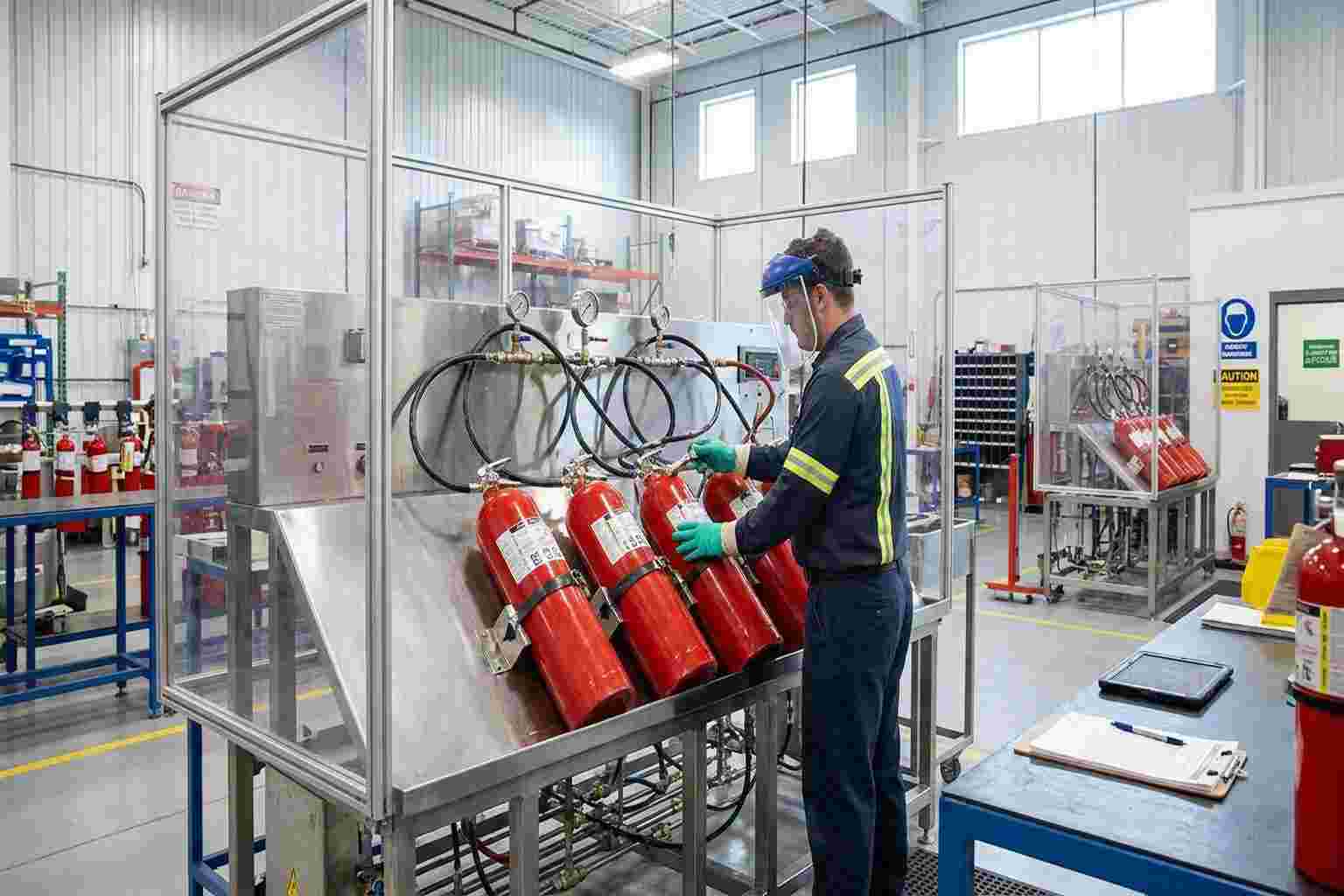
A certified technician follows this procedure:
Visual Inspection
The technician checks for deep dents, rust, welding repairs, or thread damage on the valve opening. Any of these conditions means the extinguisher fails without proceeding to the pressure test.
Discharge and Empty
The extinguisher is safely discharged and the valve assembly removed. All contents are emptied - powder for dry chemical units, gas for CO2.
Internal Examination
Using a light source, the technician inspects the cylinder interior for corrosion, pitting, or liner damage that could compromise wall thickness. Damage below safe limits means the cylinder fails.
Pressure Test
The cylinder is filled with water and pressurized to 1.5 to 2 times the service pressure for 30 to 60 seconds. Any pressure drop indicates a leak. Any visible deformation means the cylinder cannot hold its rated pressure.
Reassembly and Recharge
Passing cylinders are dried, reassembled, and recharged. The technician stamps or labels the cylinder with the test date.
How Much Does Hydrostatic Testing Cost?
Most businesses pay $25 to $75 per unit for standard portable extinguishers. CO2 units cost more due to higher test pressures. Larger cylinders require more time and equipment. Facilities often offer volume discounts for 10 or more units. If an extinguisher fails, you pay for testing plus a replacement unit. Still, this is far less than an OSHA citation. Call (718) 852-2762 for a quote.
What Happens When an Extinguisher Fails?
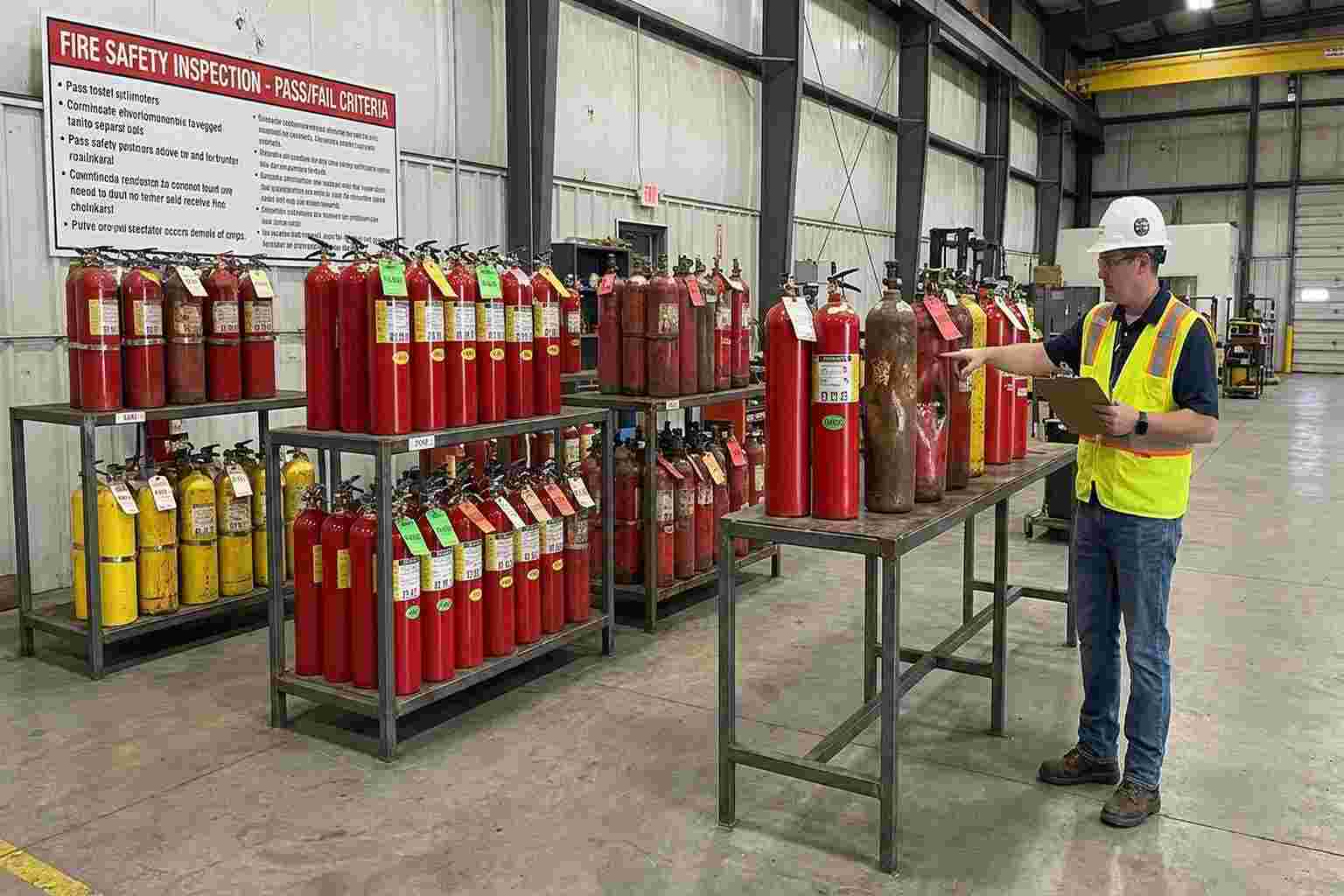
A failed test means the cylinder is condemned. The technician renders it unusable by drilling a hole or crushing it. Common failure causes include corrosion thinning the wall, dents or gouges, thread damage, leaking during the pressure hold, and permanent deformation. A&J Fire Extinguisher carries replacement inventory and can install a new fire extinguisher in the same visit.
Who Can Perform Hydrostatic Testing?
Only facilities with certified pressure testing equipment, trained technicians, proper safety enclosures, and documentation capabilities can conduct testing. A&J Fire Extinguisher coordinates the entire process for Brooklyn and NYC clients - pickup through testing to reinstallation.
Inspections vs Hydrostatic Testing
| Monthly Inspection | Annual Maintenance | Hydrostatic Testing | |
|---|---|---|---|
| Frequency | Every 30 days | Once per year | Every 5 or 12 years |
| Who performs | Building staff | Certified technician | Certified testing facility |
| What it checks | Location, gauge, damage | Internal condition, agent | Cylinder integrity under pressure |
| Duration | 2-3 minutes | 15-30 minutes | 30-60 minutes |
Monthly inspections catch surface problems, but only hydrostatic testing verifies the cylinder can safely contain its rated pressure. Skipping testing means trusting that years of pressurization have not weakened the walls.
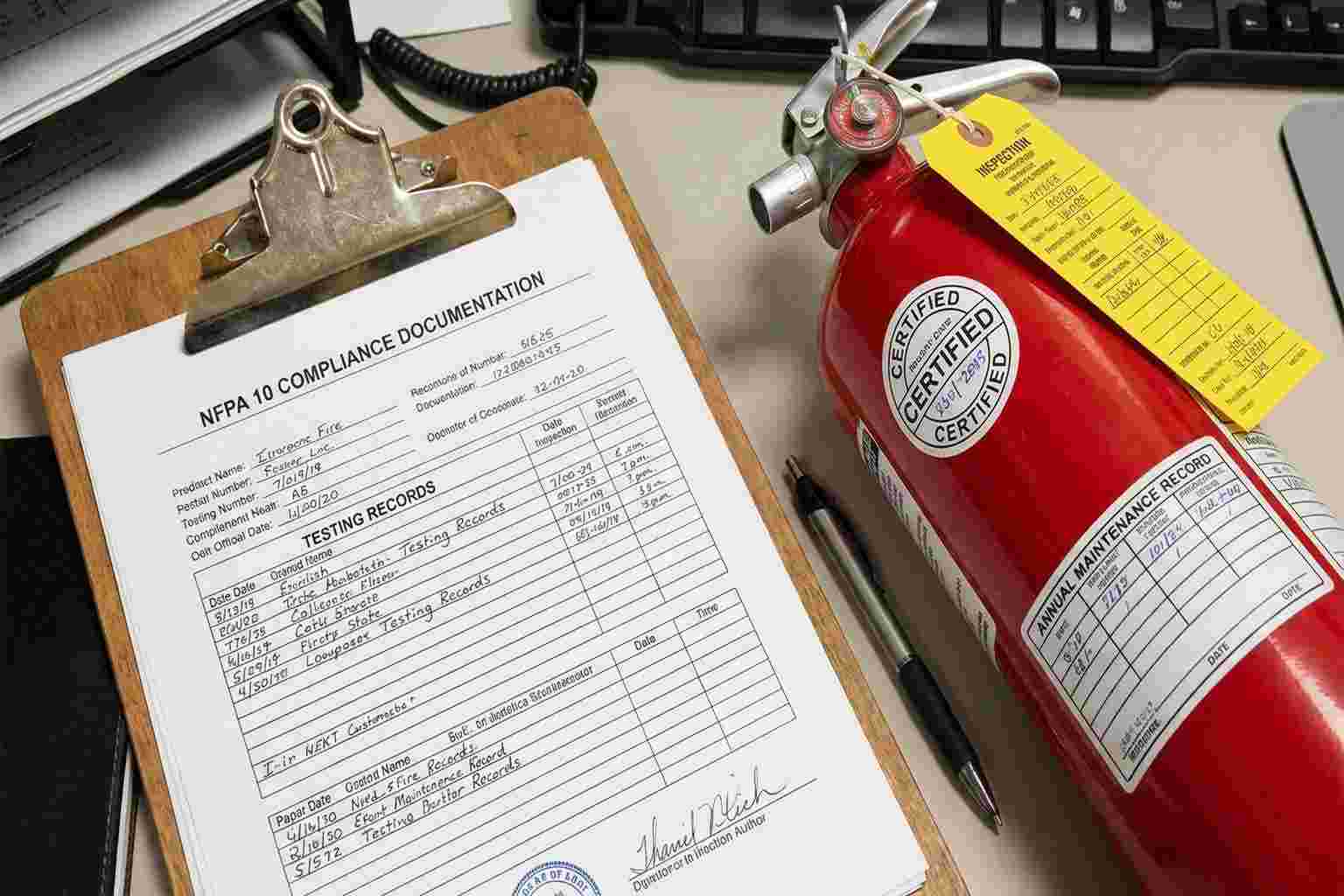
OSHA and NFPA Compliance
OSHA regulation 29 CFR 1910.157(e) requires employers to hydrostatically test extinguishers at NFPA 10 intervals. Key compliance points:
- Records: Every test must document the date, test pressure, and results
- Marking: Tested cylinders must bear the test date stamp or label
- Failed units: Must be removed and destroyed immediately
- Schedule: Refer to NFPA 10 Table 8.2.1 for the complete interval schedule
Facilities that cannot produce testing records during an OSHA inspection face citations. Maintaining a complete testing log for every extinguisher on site is the simplest path to compliance. Hydrostatic testing is part of a broader maintenance program - see our guide to fire extinguisher inspection costs for full pricing details. If a unit fails hydrostatic testing, fire extinguisher replacement is the next step to stay compliant. Testing intervals depend on how long fire extinguishers last - different types have different testing schedules.
Need Hydrostatic Testing?
A&J Fire Extinguisher coordinates the entire process for Brooklyn and NYC businesses.
(718) 852-2762Schedule Testing Today