Key Takeaways
- Dry chemical is the most versatile extinguisher type - ABC units handle Class A, B, and C fires in one device
- Two agent types: ABC and BC - Monoammonium phosphate (ABC) vs sodium bicarbonate (BC)
- NYC fire code requires ABC units for most commercial building occupancies
- NFPA 10 requires monthly inspections and annual professional maintenance
- Recharge after any use - even a partial discharge requires professional service
- A&J Fire provides FDNY-certified service across all 5 NYC boroughs
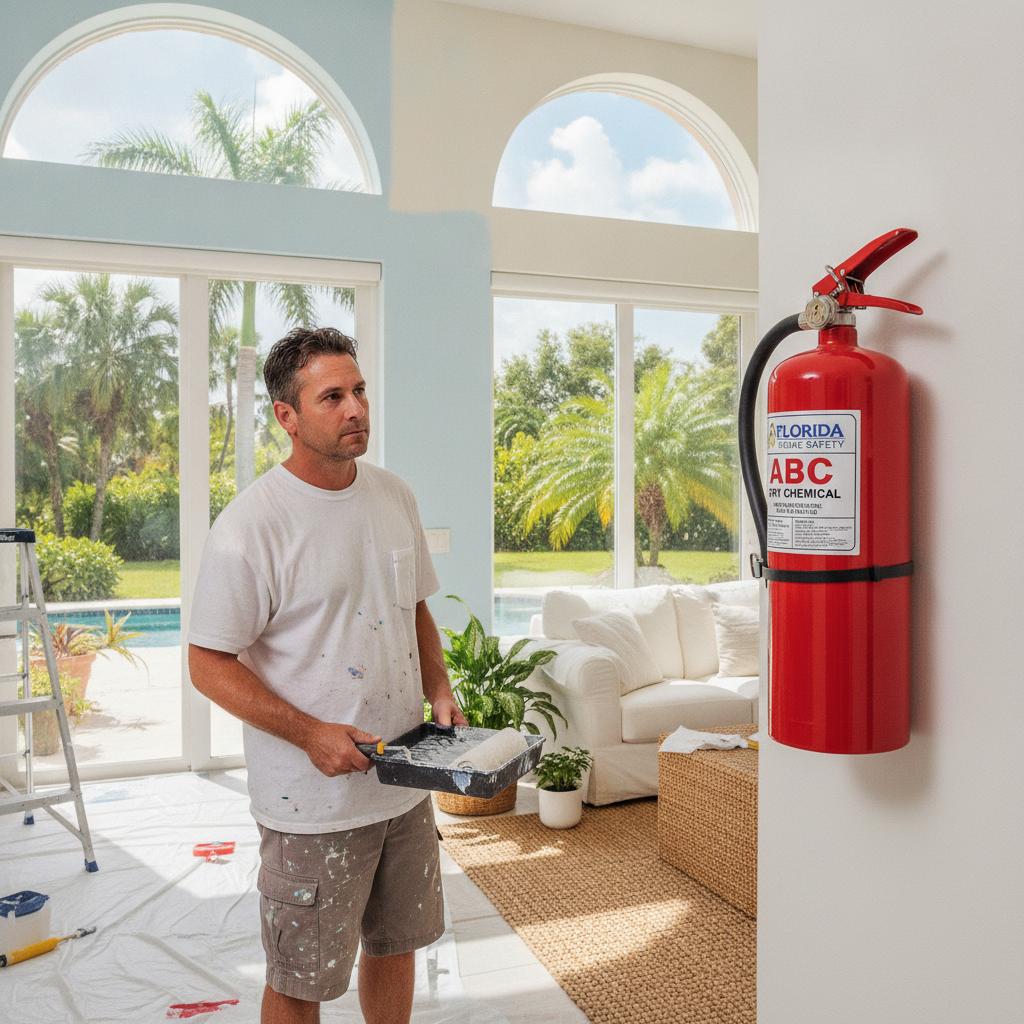
When it comes to fire protection, dry chemical fire extinguishers are the workhorses of commercial safety. These versatile devices handle multiple fire classes and provide reliable protection for businesses across NYC. At A&J Fire Extinguisher, we supply, install, inspect, and recharge dry chemical extinguishers for properties in Brooklyn, Queens, Manhattan, and beyond.
If you manage a building in NYC, you need extinguishers that meet FDNY and NFPA 10 standards. Dry chemical units cover more fire classes than almost any other type. This guide explains what they are, how they work, and what NYC compliance requires.
- What Is a Dry Chemical Fire Extinguisher?
- How Dry Chemical Extinguishers Work
- Types of Dry Chemical Agents
- ABC Dry Chemical Extinguishers
- BC Dry Chemical Extinguishers
- What Fire Classes Can Dry Chemical Handle?
- Dry Chemical vs Wet Chemical Extinguishers
- Dry Chemical vs CO2 Extinguishers
- Where to Install Dry Chemical Extinguishers
- Maintenance and Inspection Requirements
- NYC Compliance: FDNY and NFPA 10 Standards
- Why Choose A&J Fire
- Frequently Asked Questions
What Is a Dry Chemical Fire Extinguisher?
A dry chemical fire extinguisher uses a powdered agent to suppress flames. The chemical powder interrupts the chemical reaction that fuels the fire. This makes dry chemical units effective against multiple fire types.
These extinguishers are the most common type found in commercial buildings. They are portable, affordable, and versatile. NYC fire code requires them in most business occupancies.
The extinguisher contains a pressurized cylinder filled with dry chemical powder. When activated, the pressure pushes the powder through a hose and nozzle. The powder coats the burning material and smothers the fire.
How Dry Chemical Extinguishers Work
Dry chemical agents fight fires through three mechanisms:
- Smothering - The powder forms a blanket over the fuel, cutting off oxygen
- Interrupting - The chemical breaks the chain reaction of combustion
- Cooling - Some heat absorption occurs as the powder contacts the fire
This triple-action approach makes dry chemical extinguishers fast and effective. The powder residue is easy to clean up compared to liquid or foam agents.
Types of Dry Chemical Agents
Two main types of dry chemical powder see use in fire extinguishers:
Sodium Bicarbonate (Regular Dry Chemical)
Sodium bicarbonate is the original dry chemical agent. It works on Class B (flammable liquids) and Class C (electrical) fires. This agent is sometimes called "regular" or "BC" dry chemical.
Monoammonium Phosphate (Multipurpose Dry Chemical)
Monoammonium phosphate is the multipurpose dry chemical agent. It handles Class A (ordinary combustibles), Class B, and Class C fires. This is the most widely used agent in commercial settings. The chemical powder is yellow and leaves a residue that requires cleanup.
ABC Dry Chemical Extinguishers
ABC dry chemical extinguishers use monoammonium phosphate. They are the most versatile fire extinguishers available. The "ABC" rating means they handle:
- Class A - Wood, paper, cloth, plastics
- Class B - Gasoline, oil, paint, solvents
- Class C - Electrical equipment and wiring
Most NYC businesses use ABC fire extinguishers as their primary protection. They meet FDNY requirements for general commercial occupancies. A&J Fire supplies and services ABC units in all sizes.
BC Dry Chemical Extinguishers
BC dry chemical extinguishers use sodium bicarbonate or potassium bicarbonate. They handle Class B and Class C fires but NOT Class A fires. These units are common in:
- Vehicle and marine applications
- Industrial areas with flammable liquids
- Electrical equipment rooms
- Gas stations and garages
BC extinguishers leave less residue than ABC units. The powder is easier to clean and does not damage electrical components. However, they lack Class A protection, so they do not suit office or retail spaces.
What Fire Classes Can Dry Chemical Handle?
Dry chemical extinguishers cover the widest range of fire classes:
| Agent | Class A | Class B | Class C | Class D | Class K |
|---|---|---|---|---|---|
| ABC (Monoammonium Phosphate) | ✅ Yes | ✅ Yes | ✅ Yes | ❌ No | ❌ No |
| BC (Sodium Bicarbonate) | ❌ No | ✅ Yes | ✅ Yes | ❌ No | ❌ No |
For Class D fires (combustible metals), you need a special Class D extinguisher. For Class K kitchen fires, you need a wet chemical unit.
Dry Chemical vs Wet Chemical Extinguishers
The difference between dry and wet chemical extinguishers comes down to application:
Dry chemical uses powder to smother fires. It works on Class A, B, and C fires. The powder residue requires cleanup but does not cause water damage.
Wet chemical uses a liquid solution specifically for Class K kitchen fires. The liquid cools and emulsifies cooking oils to prevent re-ignition. Commercial kitchens must have wet chemical units on hand.
Most NYC businesses need dry chemical units for general protection and wet chemical units only in kitchen areas. A&J Fire can assess your property and recommend the right combination.
Dry Chemical vs CO2 Extinguishers
CO2 extinguishers use carbon dioxide gas to displace oxygen and smother fires. They leave no residue, making them ideal for sensitive areas. Here is how they compare:
| Feature | Dry Chemical (ABC) | CO2 |
|---|---|---|
| Fire Classes | A, B, C | B, C only |
| Residue | Powder residue | No residue |
| Electronics Safety | Can damage electronics | Safe for electronics |
| Discharge Time | Longer (8-25 seconds) | Shorter (8-10 seconds) |
| Cost | More affordable | Higher cost |
| Best For | General commercial use | Server rooms, labs, museums |
For server rooms and data centers, CO2 may work better. For general commercial use, dry chemical provides broader protection at a lower cost.
Where to Install Dry Chemical Extinguishers
NYC fire code and NFPA 10 specify placement requirements:
- Maximum travel distance - No one should walk more than 75 feet to reach an extinguisher
- Mounting height - Handle no more than 5 feet from the floor for units under 40 lbs
- Visibility - Must be visible and accessible, not blocked by storage
- Signage - Fire extinguisher signs required for wall-mounted units
- Locations - Near exits, hallways, kitchens (Class K separate), and hazard areas
A&J Fire provides professional installation with proper brackets and signage. Our technicians ensure every unit meets FDNY mounting requirements.
Maintenance and Inspection Requirements
NYC businesses must follow a strict maintenance schedule:
- Monthly visual inspection - Check that the extinguisher is in place, accessible, and the pressure gauge reads in the green zone
- Annual inspection - A certified technician examines each unit, checks seals, and attaches a dated inspection tag
- Internal maintenance - Every 6 years, dry chemical extinguishers require internal examination and pressure testing
- Hydrostatic testing - Every 12 years, the cylinder must undergo hydrostatic testing to verify structural integrity
A&J Fire handles all inspection services with FDNY-certified technicians. We provide documentation for every visit to keep your compliance records current.
NYC Compliance: FDNY and NFPA 10 Standards
NYC has strict fire protection requirements. Here is what property managers need to know:
- FDNY permit - Required for businesses with fire extinguishers on premises
- NFPA 10 - The national standard for portable fire extinguishers, adopted by NYC
- Local Law 26 - Requires fire safety plan and extinguisher compliance in commercial buildings
- Inspection tags - Must be current and visible on every unit
- Violation removal - FDNY can issue violations for expired or missing extinguishers
A&J Fire removes fire code violations in under 48 hours. We provide same-day service across all 5 boroughs to keep your property compliant. For combustible metal fires, standard dry chemical won't work - you need a specialized Class D fire extinguisher. The most common dry chemical unit is the ABC fire extinguisher, which uses monoammonium phosphate to cover multiple fire classes. For commercial kitchen fires, a wet chemical fire extinguisher is more effective than dry chemical on cooking oils.