
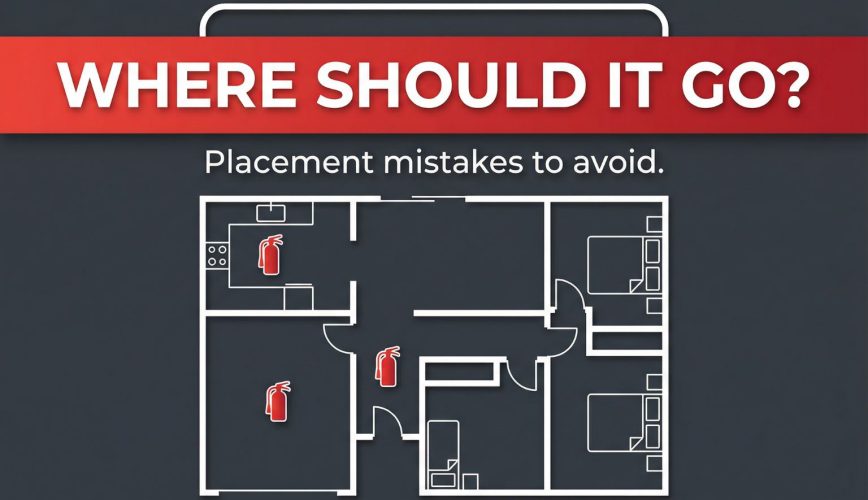
Home fires don’t wait for a “perfect time.” They start fast, spread faster, and the first minute is where you either stop a small problem… or you’re suddenly dealing with major damage. That’s why homeowners in Brooklyn and the NYC metro area should treat extinguisher readiness like smoke alarms: non-negotiable, visible, and maintained.
If you’re looking for the best fire extinguishers for home use, the goal isn’t to buy the fanciest unit – it’s to choose the right type for your risks, place it correctly, and keep it “inspection-ready.” At A&J Fire Extinguisher (https://anjfire.com/), we help homeowners do exactly that: choose the right equipment, install it properly, and keep it ready year-round.
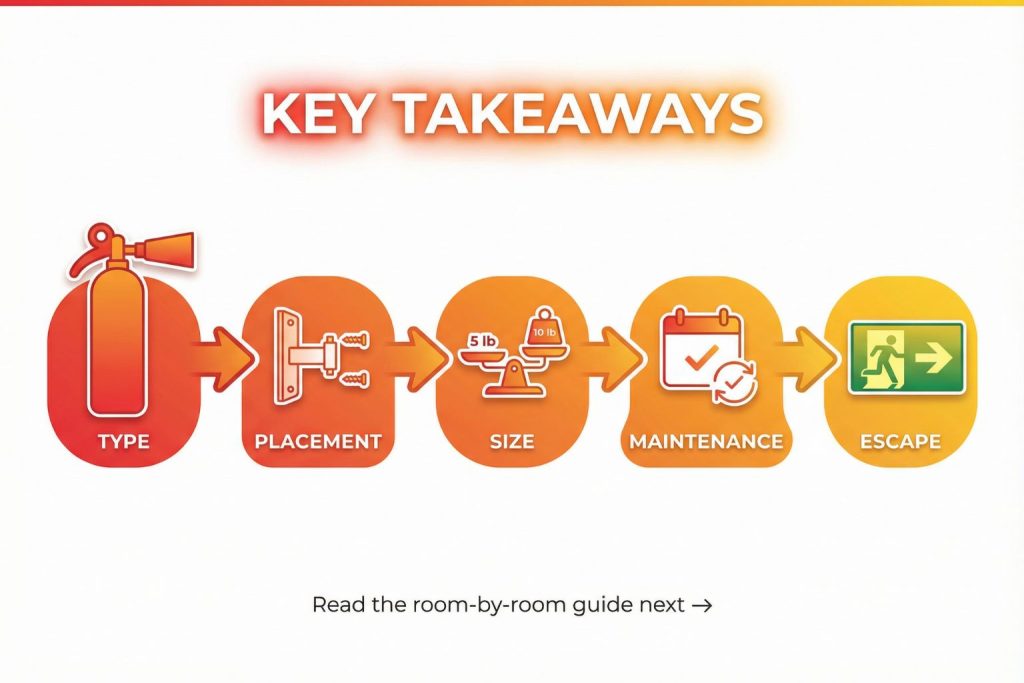
Key Takeaways
- Choose the right type for your home risks: most homes do best with a multi-purpose ABC unit, plus a kitchen-appropriate option if you cook often.
- Placement beats power: the best extinguisher is the one you can reach in seconds – visible, mounted, unobstructed, and near an exit.
- Size matters (but so does usability): a 10 lb unit may offer more coverage, but a 5 lb may be what someone can actually lift and use quickly.
- Maintenance keeps it real: do a monthly visual check and schedule professional inspections so the unit performs when it counts.
- Know when to stop fighting and leave: extinguishers are for early-stage fires – if the fire is growing, you evacuate.
Why choosing the right home fire extinguisher matters
The best home safety plan is layered: smoke alarms + escape plan + the right fire protection tools. A fire extinguisher is not meant to “battle a full fire” – it’s meant to stop a small fire before it becomes a life-threatening emergency.
When you pick the right unit and place it where you’ll actually grab it, you gain:
- Speed (quick suppression in the earliest moments)
- Control (confidence under pressure)
- Peace of mind (you’re not guessing in an emergency)
If you want to see the different extinguisher products available (types, sizes, residential-friendly models), start here: https://anjfire.com/fire-extinguisher/
Understanding home fire risks (Brooklyn + NYC reality)
Brooklyn homes and apartments come with unique risks: tighter layouts, older buildings, shared walls, and sometimes limited exit pathways. Most home fires start from ordinary life – not dramatic accidents.
Common causes of home fires
- Cooking (unattended pans, grease flare-ups, ovens)
- Electrical (overloaded outlets, damaged cords, space heaters)
- Heating (portable heaters, baseboards, fireplaces)
- Laundry (dryer lint, overloaded circuits)
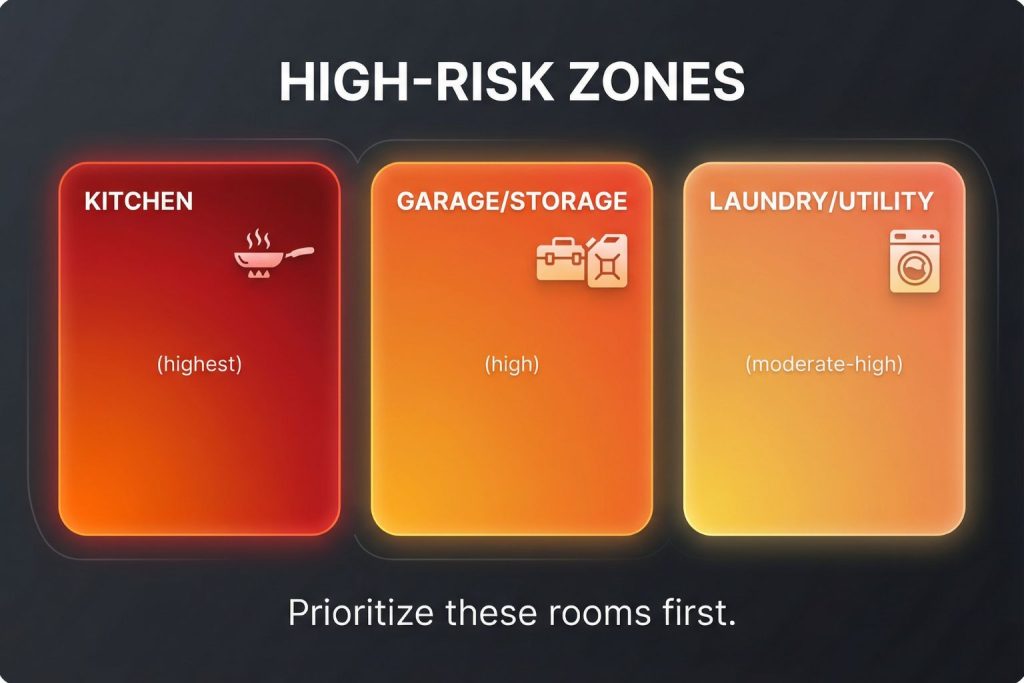
High-risk zones to take seriously
Kitchen: the fastest ignition zone (especially grease)
Garage/storage: flammables, tools, fuel, clutter
Laundry/utility: heat + friction + lint + electricity
Fast response matters most in the first moments. That’s why we focus on matching extinguisher type to the room and placing it where you can reach it without crossing the fire.
Room-by-room extinguisher picker (quick and simple)
Use this to decide what to buy (and where it belongs).
Table: Home extinguisher picker by room
Room-by-room guide: practical home fire extinguisher choices
Match the extinguisher type to the risk, then place it where you can reach it fast.
Home use • Quick reference
Tip: Mount extinguishers where they’re visible and easy to grab (near an exit path), not buried in a cabinet.
Home Extinguisher Coverage Planner
Quick scorecard to plan how many extinguishers you need and where they should go.
Planning tool
Garage
Laundry/Utility
visible, unobstructed, and near an exit path.
Goal: “Ready in seconds”
Kitchen covered
Garage/laundry covered (if applicable)
Visible + unobstructed
If you’re missing any “goal” items above, add a unit or adjust placement so you can grab it fast without moving toward the fire.
If you want a residential-focused setup (placement + selection guidance), this page is designed for homeowners: https://anjfire.com/residential-fire-extinguishers/
The “default winner” for most homes: The ABC’s fire extinguishers
If you only buy one unit, most homes start with an ABC’s extinguisher because it covers the most common household fire classes:
- Class A: ordinary combustibles (paper, wood, fabric)
- Class B: flammable liquids (oil, gasoline, solvents)
- Class C: energized electrical equipment
That’s why ABC’s units are often the “go-to” for houses, apartments, and multi-unit properties.
A quick note on “brands”
You’ll see familiar products like Kidde in stores. Brand matters less than: right class rating, reliability, usability, and proper maintenance. A “great brand” mounted in a hidden spot behind storage is still a weak plan.
Kitchen reality: grease fires and “kitchen-rated” options
A kitchen fire is different. Grease can flare fast, and the wrong reaction makes it worse.
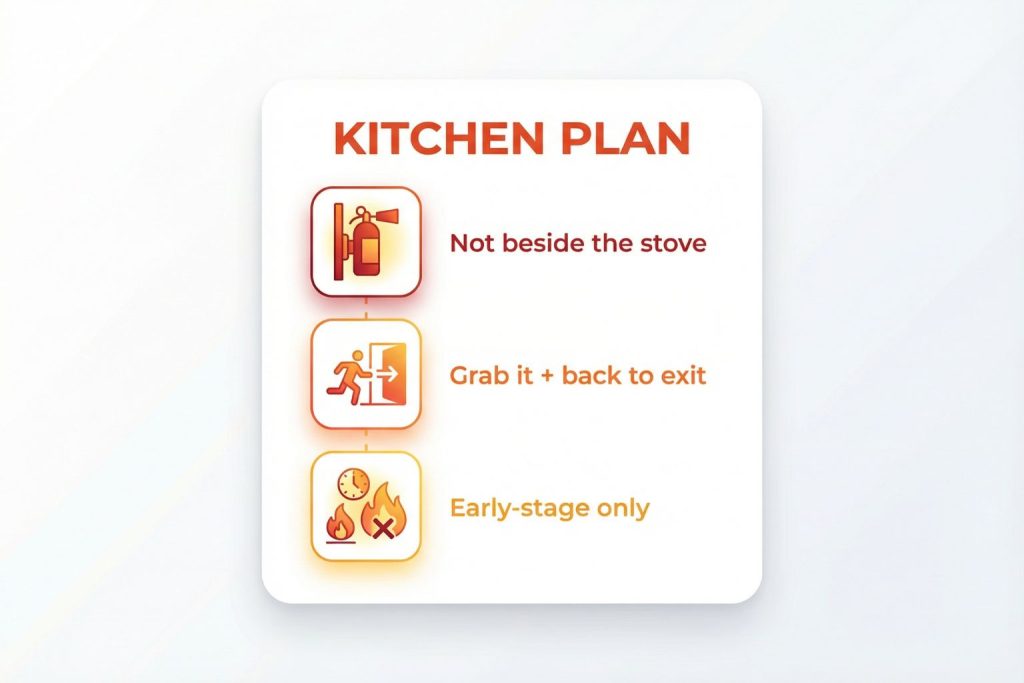
Your kitchen plan should be:
- Extinguisher is not directly beside the stove (so you don’t reach through flames)
- Mounted where you can grab it and back toward an exit
- You know the first move: turn off heat (if safe), smother when possible, and use extinguisher only for early-stage fires
What to buy for kitchens
- Many homeowners still use an ABC for general coverage
- If you cook a lot, consider a kitchen-rated unit that’s designed for cooking fires (and easier clean-up)
And if you want more guidance on kitchen incidents specifically (especially grease flare-ups), this educational page is a strong add-on: https://anjfire.com/how-to-put-out-a-grease-fire/
Electrical risks at home: when CO₂ (or clean-agent) makes sense
An ABC unit can cover Class C (energized electrical), but it may leave residue on electronics. For homeowners with a lot of sensitive devices (home office setups, server racks, studio gear), CO₂ or a clean-agent extinguisher can be a smart secondary tool.
When it’s worth it:
- Home office with expensive electronics
- Media room / gaming setup
- Small electrical panel area (where permitted and safe)
Reality check: Most households still do great with a properly placed ABC unit plus strong prevention habits (don’t overload outlets, replace damaged cords, manage heaters).
Apartment and condo living: compact, “smaller” units that still perform
NYC apartments often push people toward smaller extinguishers. That’s fine – if you don’t sacrifice usability and reliability.
What “good” looks like in a small space
- Wall-mounted near the kitchen exit path
- Visible (not inside a deep cabinet)
- Easy instructions and readable gauge
- The right class rating for the risks
Space-saving models that homeowners like
- Compact traditional units
- Specialty shapes like oval models that improve access in tighter layouts
If space and accessibility are priorities (especially in apartments), explore: https://anjfire.com/oval-fire-extinguishers/
Features to look for before you buy (so you don’t regret it)
This is the section most “best of” blogs mess up by focusing only on brand names. Your purchase should be based on real-world handling.
UL certification and compliance standards
Look for UL-listed units and clear labeling. This is one of the quickest ways to avoid questionable products.
Easy-to-read pressure gauges
If the gauge isn’t easy to read, it’s easy to ignore. You want something obvious at a glance.
Lightweight design (because someone has to use it)
A unit that’s too heavy is a unit that won’t get used under stress.
Clear instructions
In an emergency, nobody wants tiny font. You want a unit that’s easy to understand quickly.
Wall-mounting and accessibility
Mounting matters because it prevents “storage creep” (the extinguisher gets buried behind stuff).
5 lb vs 10 lb: a quick decision that most homeowners overthink
Both can work. The better one is the one your household can actually use.
Table: 5 lb vs 10 lb (real-world decision matrix)
5 lb vs 10 lb: which home fire extinguisher size makes sense?
Answer these quick questions to choose the right size without overthinking it.
Homeowner decision matrix
Simple rule: capacity helps, but only if the person who grabs it can carry it and operate it confidently.
Fire safety best practices for homeowners (what actually works)
This is where you win the “real-life” part of fire safety.
Placement by room type
- Kitchen: near exit path, not behind the stove
- Garage: near the entry door
- Basement/utility: near stairs or exit path
- Each level: at least one accessible unit
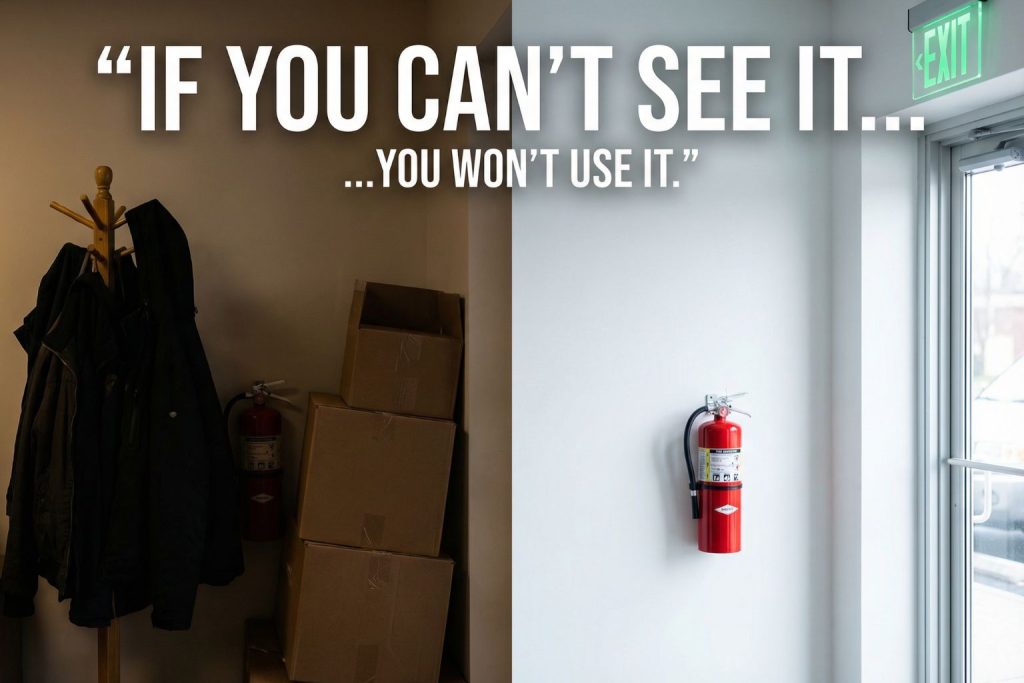
Keep extinguishers visible and unobstructed
If you can’t see it, you won’t use it.
Teach PASS (and keep it simple)
- Pull the pin
- Aim at the base
- Squeeze the handle
- Sweep side to side
Monthly visual inspections (60 seconds)
Check: gauge, pin/seal, hose/nozzle, body condition, and accessibility.
Room Risk Heatmap (Home Fire Priorities)
If you only upgrade a few areas this month, start here.
Moderate priority
Next step: after prioritizing rooms above, match each area to the right extinguisher type (ABC vs kitchen-rated vs optional CO₂/clean-agent).
Pro tip: “High priority” rooms should have the fastest access and the cleanest path to the extinguisher.
Replace or recharge after any use
Even partial discharge means it’s not “ready” anymore.
If you want certified support for home inspections and readiness, here’s the service page: https://anjfire.com/fire-extinguisher-inspections/
And if you want a deeper dive on replacement logic and lifespan, link this in your article as a supporting resource: https://anjfire.com/how-often-to-replace-fire-extinguishers/
How fire extinguisher technology has evolved (why modern units are easier)
Home fire safety is more practical now than it used to be:
- Cleaner discharge options exist (less mess in some cases)
- Better labeling and instructions
- More compact designs with strong ratings
- Improved storage life (when properly maintained)
This matters because modern homes contain more synthetics and electronics – your extinguisher plan should match modern materials.
Early intervention… and when to evacuate (don’t gamble)
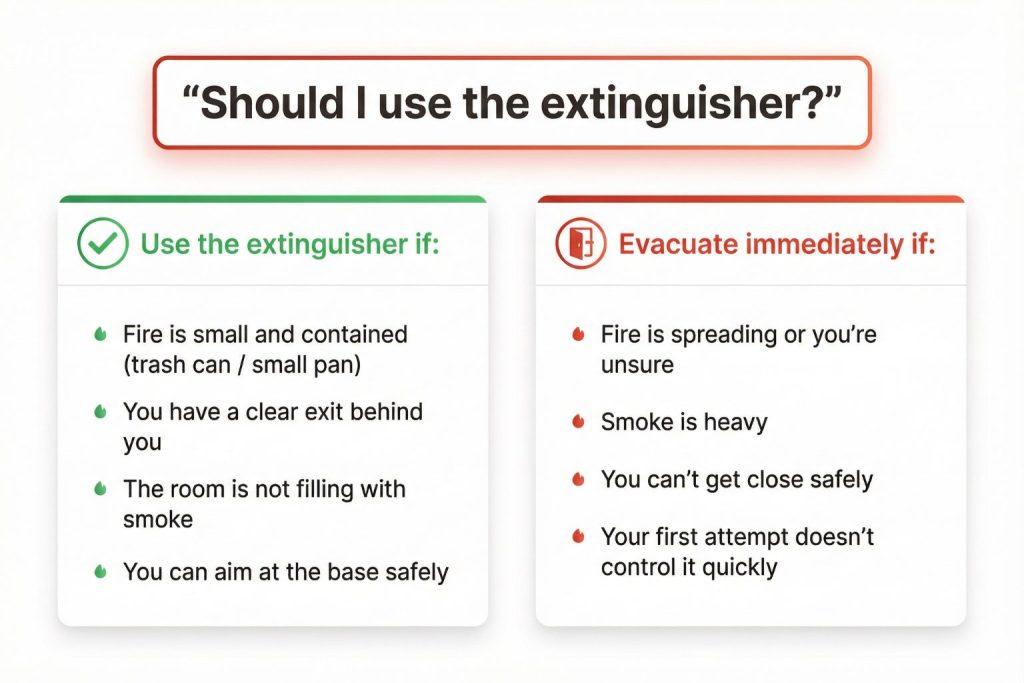
A strong home plan includes a clear “fight vs flight” rule. Use extinguishers only for early-stage fires.
Text decision graphic: “Should I use the extinguisher?”
✅ Use the extinguisher if:
- Fire is small and contained (trash can / small pan)
- You have a clear exit behind you
- The room is not filling with smoke
- You can aim at the base safely
🚪 Evacuate immediately if:
- Fire is spreading or you’re unsure
- Smoke is heavy
- You can’t get close safely
- Your first attempt doesn’t control it quickly
Brooklyn + NYC-area guidance: why professional help beats guessing
A lot of “home extinguisher shopping” goes wrong in 3 ways:
- Wrong class for the risk
- Bad placement (hidden, blocked, too close to hazard)
- No inspection plan (expired tags, low pressure, missing pin/seal)
For NYC apartments, brownstones, and multi-unit buildings, professional guidance makes the setup faster, cleaner, and more reliable.
If you want local support from a Brooklyn-based team that handles sales, installation, inspection, and service, use: https://anjfire.com/brooklyn-fire-extinguisher-company/
And if you manage mixed-use buildings or want a broader compliance framework, this article is worth linking as “related reading”: https://anjfire.com/fire-safety-compliance-for-businesses/
FAQ homeowners ask
What type of fire extinguisher is best for home use?
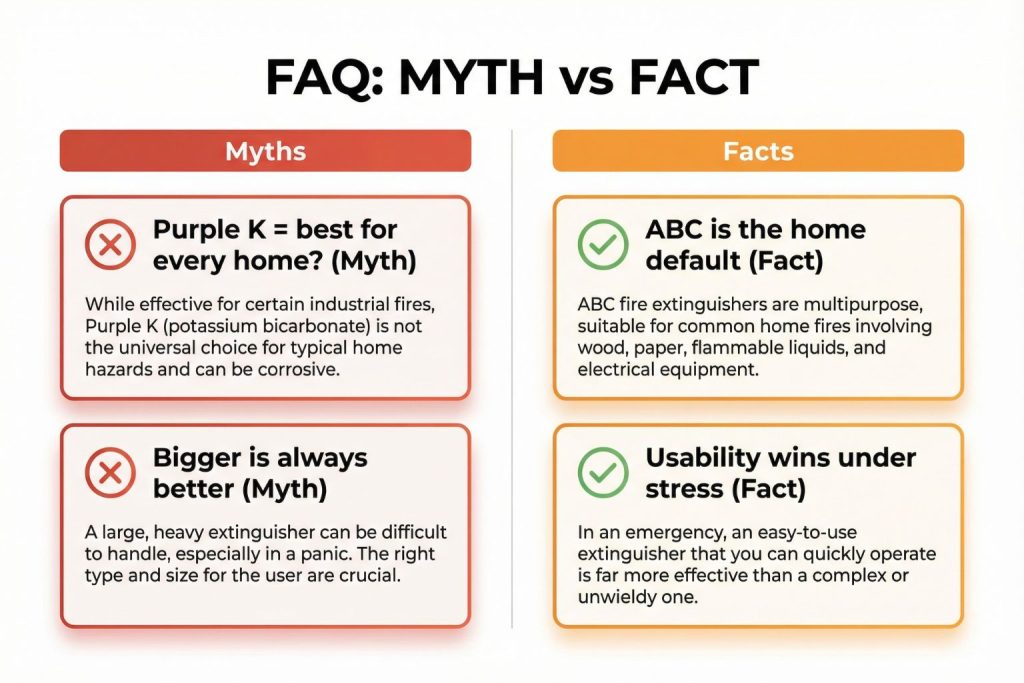
For most households, an ABC fire extinguisher is the most versatile starting point. Add a kitchen-appropriate option if cooking risk is high, and consider CO₂/clean-agent if electronics protection is a priority.
Is Purple K better than ABC?
Purple K is often used in higher-risk environments and can be extremely effective for certain Class B fires, but it’s not the “default home winner.” Most homeowners do best with simple, accessible ABC coverage and good placement.
Do I need a 5 lb or 10 lb fire extinguisher?
It depends on your home layout and who will use it. A 10 lb unit can offer more coverage, but a 5 lb unit may be more realistic to lift quickly. Many homes do well with one larger unit on the main level and a smaller unit upstairs.
When should you not use an ABC fire extinguisher?
If the fire is spreading, smoke is heavy, you don’t have a safe exit behind you, or you’re unsure – evacuate. Extinguishers are for early-stage fires only.
Are aerosol fire extinguishers good for home use?
Aerosol can be a supplemental tool for very small incidents, but it shouldn’t replace a properly rated, reliable fire extinguisher plan for the home.
What is Halotron, and should I get it?
Halotron is a cleaner-discharge option often chosen to reduce residue (especially near electronics). It can be useful in home offices or areas with sensitive equipment, but most homes still start with ABC coverage.
Conclusion for homeowners in Brooklyn and beyond
Choosing the right extinguisher setup empowers homeowners to act fast, protect family, and reduce damage when a small fire begins. The real win is a simple system: right class, right placement, routine checks, and professional support when needed.
If you want help selecting, installing, or maintaining the right home fire extinguishers, start with our equipment options here: https://anjfire.com/fire-extinguisher/
Or book local service support through our Brooklyn team: https://anjfire.com/brooklyn-fire-extinguisher-company/