Fire extinguisher size matters more than most people realize. An undersized unit runs dry before the fire is out, while an oversized one is too heavy to handle in an emergency. A&J Fire supplies, installs, and inspects extinguishers across NYC, and this fire extinguisher sizes guide breaks down weight, rating, and coverage by building type.
Key Takeaways
- Size means agent weight (2.5, 5, 10, 20 lb). The rating (4-A, 10-B:C) tells you what the unit can fight.
- Most homes need a 5 lb or 10 lb ABC extinguisher per floor, plus a Class K unit near the stove.
- NFPA 10 sets business rules by hazard level and travel distance, not by owning one big cylinder.
What Fire Extinguisher Sizes Actually Mean
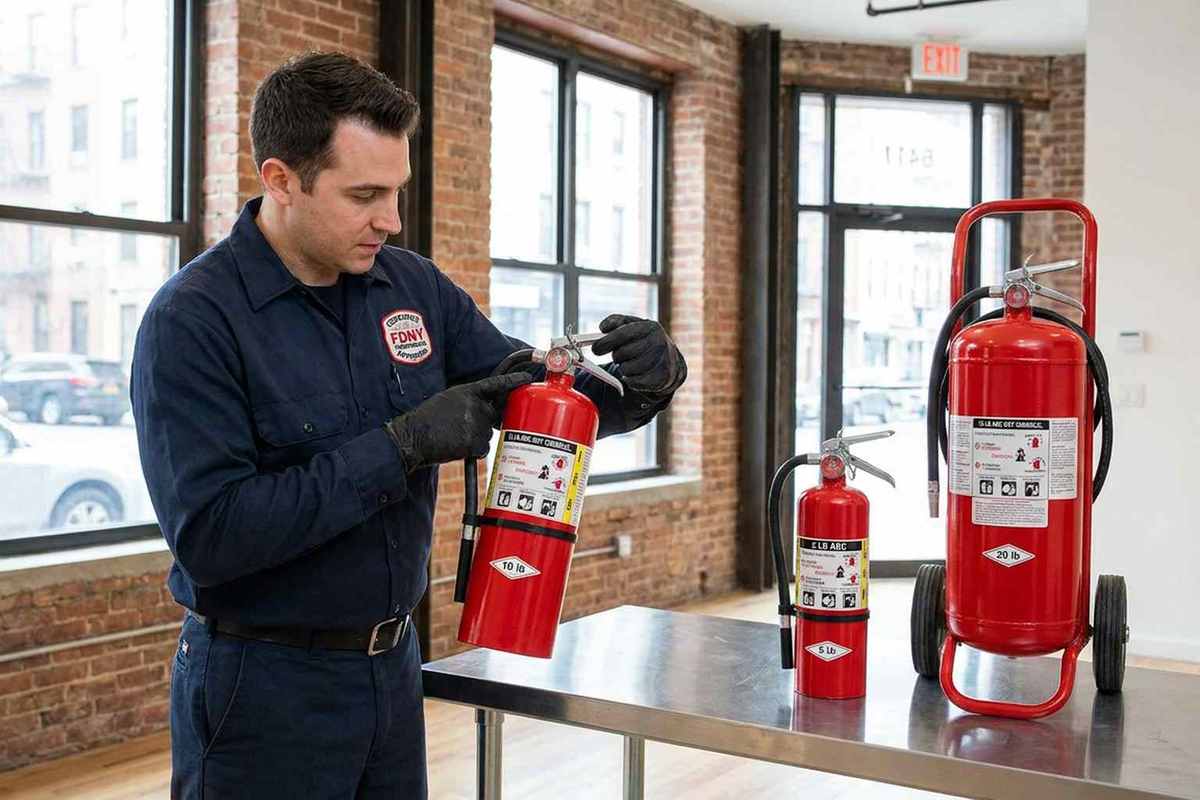
A fire extinguisher size has two parts: the agent weight and the numerical rating. The weight (2.5 lb, 5 lb, 10 lb, 20 lb) refers to the extinguishing agent inside the cylinder, not the total unit. The rating on the label tells you what the unit can fight. A 4-A rating handles the same amount of burning material as five gallons of water. A 10-B rating covers roughly 10 square feet of flammable liquid fire. Read both together to know if a unit fits your space.
| Size | Typical Rating | Fire Coverage | Best Use |
|---|---|---|---|
| 2.5 lb | 1-A:5-B:C | Small incipient fires | Vehicles, small kitchens |
| 5 lb | 2-A:10-B:C | 25-30 sq ft | Homes, small offices |
| 10 lb | 4-A:20-B:C | 40-50 sq ft | Businesses, restaurants, garages |
| 20 lb | 10-A:60-B:C | Large rooms | Industrial sites, warehouses |
What Size Fire Extinguisher Does a Home Need?
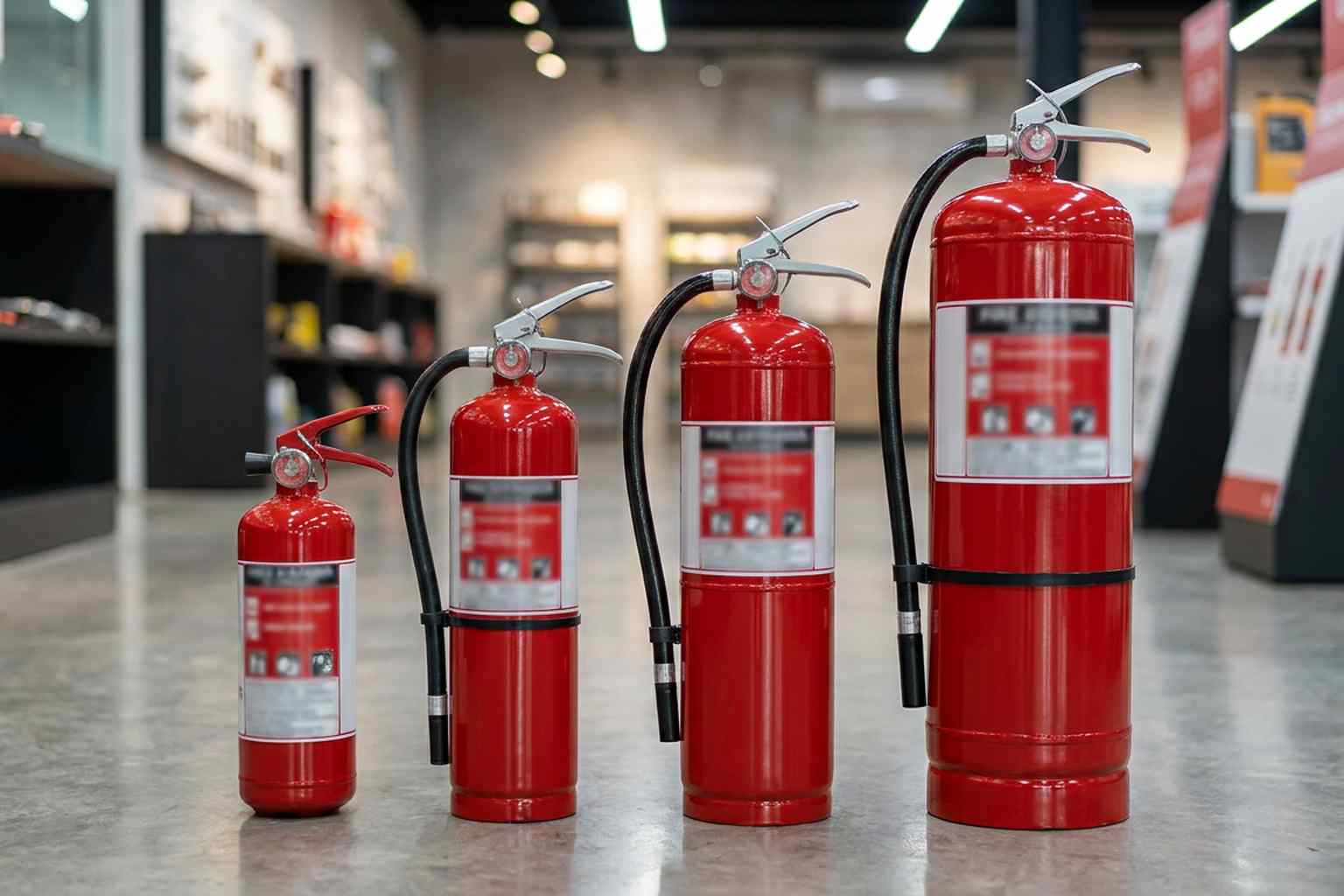
Most homes need a 5 lb or 10 lb ABC dry chemical extinguisher on each floor, plus a dedicated unit near the kitchen. The 5 lb size suits apartments and condos because anyone can operate it, and it discharges for 10 to 12 seconds. A 10 lb unit delivers a stronger stream and longer discharge time, which suits larger houses and garages where flammable liquids are stored.
The kitchen is different. A grease fire needs a Class K kitchen extinguisher within 30 feet of the stove, not a general-purpose unit that can splash burning oil. Keep a 10 lb ABC unit in the garage and a 5 lb unit near sleeping areas. A 2.5 lb model handles small car fires.

What Size Fire Extinguisher Does a Business Need?
Commercial sizing follows NFPA 10, which bases requirements on hazard level and travel distance. Light hazard spaces like offices need at least a 2-A rated extinguisher (a 5 lb ABC unit qualifies) within 75 feet of any point. Ordinary hazard spaces such as retail stores need 2-A coverage within 50 feet. Extra hazard occupancies like auto shops require 4-A rated extinguishers, usually 10 lb or 20 lb units, within 50 feet.
Employee capability matters too. A fully charged 20 lb extinguisher weighs close to 35 pounds total, and NFPA 10 requires that units be portable for the people expected to use them. If your staff cannot safely lift a 20 lb cylinder, install multiple 10 lb units instead. Our Brooklyn fire protection team can map your floor plan against code.
How Fire Class Changes the Size You Choose
The agent class decides what a unit can fight, and the size decides how much of it. ABC dry chemical handles ordinary combustibles, flammable liquids, and electrical fires, which is why it is the default for homes and most businesses. BC units skip Class A protection and suit areas with only liquid and electrical hazards. Class K wet chemical units are sized for commercial cooking equipment, and Class D units cover combustible metals.
A common mistake is buying one large extinguisher for every hazard. A 20 lb ABC unit in a commercial kitchen does nothing against a deep fryer fire because the wrong agent makes the fire worse. Match the class first, then choose the size. If you are unsure which classes your building faces, our fire extinguisher types guide covers every option, and a call to (718) 852-2762 gets a free assessment.
Common Sizing Mistakes That Leave Buildings Unprotected
Four mistakes show up on almost every inspection we run in NYC:
- Going too small. A 2.5 lb unit discharges in about 8 seconds, not enough time to knock down anything beyond a trash can fire.
- Going too heavy. A 20 lb unit in a dentist's office is overkill that no one can lift quickly.
- Ignoring the class. A water extinguisher near electrical panels is a shock hazard, not protection.
- Buying one and forgetting it. Every unit needs a certified annual inspection and the right mounting height to stay code compliant.
Keeping Your Extinguisher Sizes Compliant in NYC
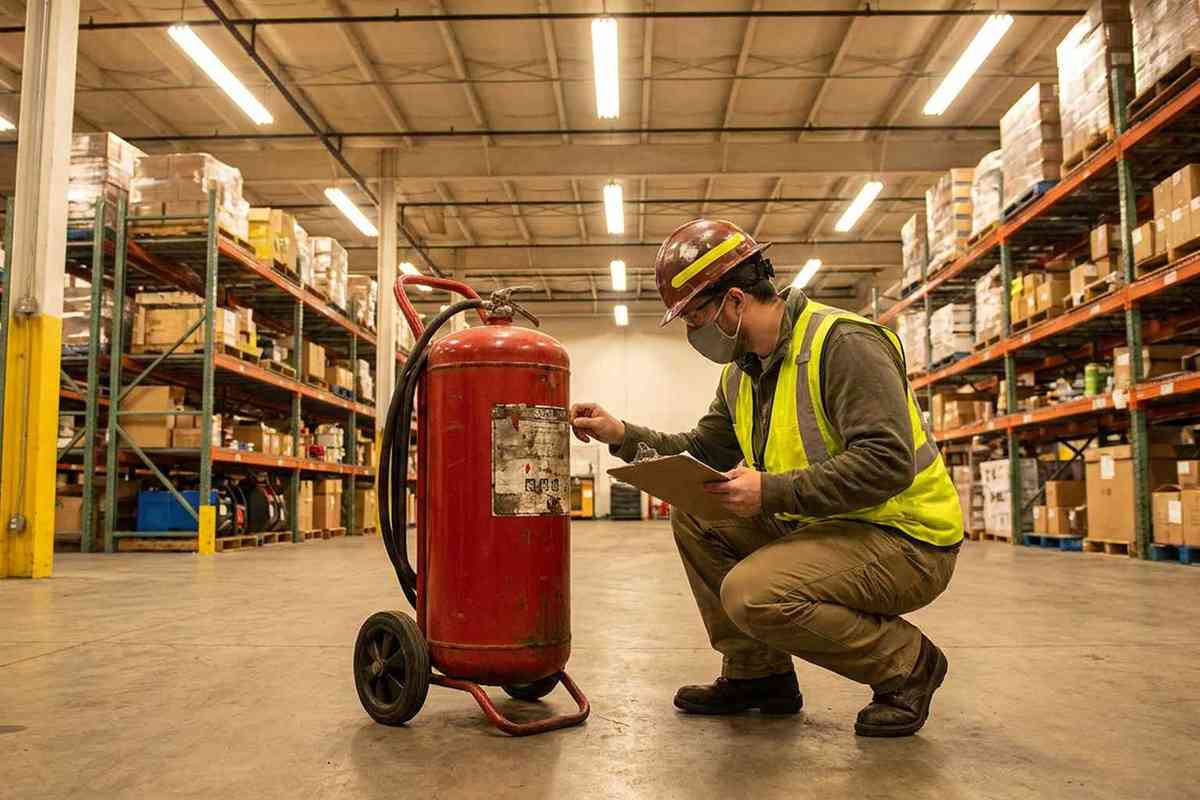
New York City enforces NFPA 10 through the FDNY, and inspectors check rating, size, mounting height, and tag dates on every visit. Businesses need a certified inspection every 12 months, internal maintenance every 6 years, and hydrostatic testing every 12 years for stored-pressure dry chemical units. If an inspector finds an undersized or unrated extinguisher, you get a violation and a deadline, not a warning.
A&J Fire handles sizing, installation, and FDNY-compliant inspections from our Brooklyn headquarters. Call (718) 852-2762 or contact our office to have a technician verify that every extinguisher on your property is the right class, the right size, and in the right location.