A water fire extinguisher is the most straightforward and time-tested tool for fighting Class A fires. Water cools the burning fuel below its ignition temperature and soaks surrounding materials to prevent fire spread. Simple, effective, and free of chemical residue - but also one of the most dangerous extinguishers if used on the wrong fire type.
Key Takeaways
- Water extinguishers are rated for Class A fires only - wood, paper, cloth, rubber, some plastics
- NEVER use water on electrical fires - water conducts electricity and can cause fatal shock
- NEVER use water on grease or oil fires - water vaporizes and splatters burning oil everywhere
- Three discharge types: water jet (solid stream), water spray (fine mist), water mist (deionized, safe for electrical)
- NFPA 10 requires monthly inspections, annual maintenance, and 12-year hydrostatic testing
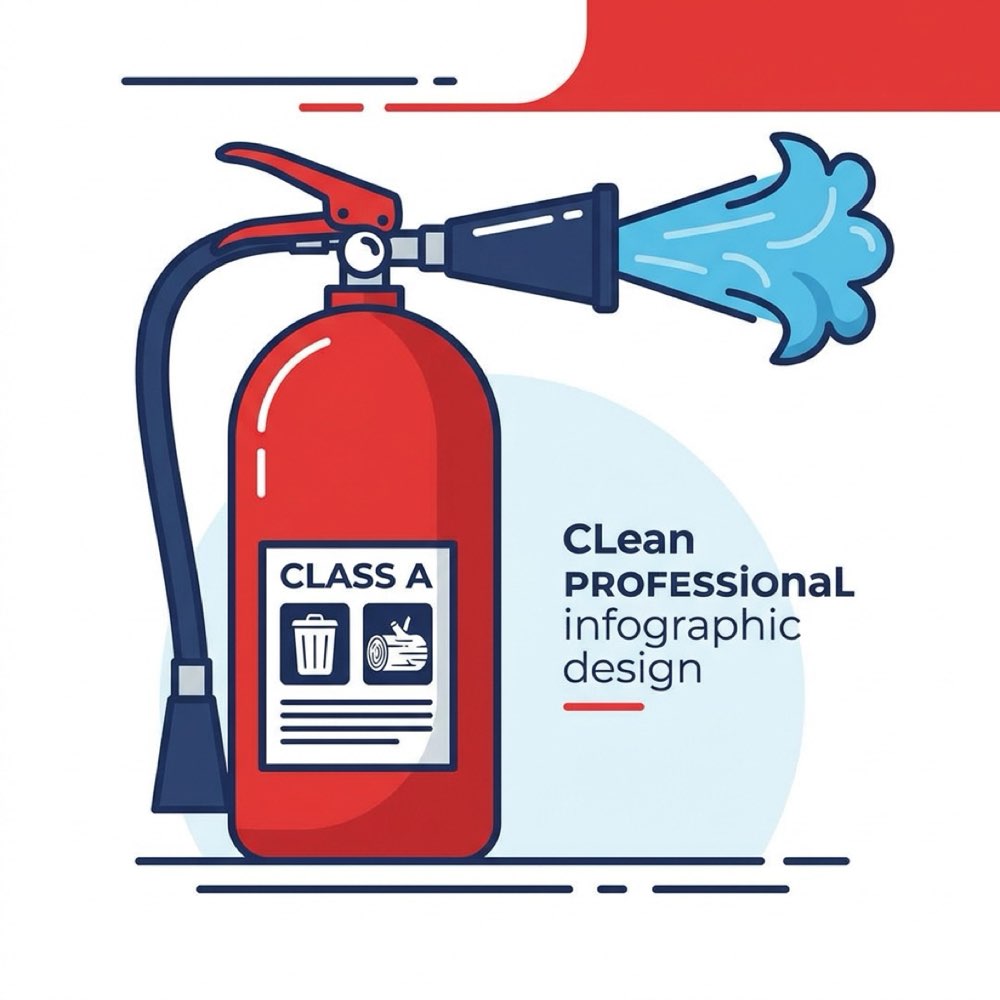
What Is a Water Fire Extinguisher?
A water fire extinguisher contains water under pressure (typically with an air cartridge or stored pressure system) that is discharged through a nozzle to cool Class A fires. The water absorbs heat from the burning material, reducing the temperature below the ignition point while also soaking unburned fuel to prevent the fire from spreading.
Water extinguishers are the oldest and simplest type of fire extinguisher, dating back to the early 1900s. Modern versions use stored pressure (a nitrogen charge) or cartridge-operated systems to expel water through a jet or spray nozzle. They contain no chemicals, leave no residue, and are environmentally completely benign.
Common applications include:
- Offices and commercial buildings with paper and wood materials
- Schools, libraries, and educational facilities
- Warehouses storing solid combustible materials
- Residential buildings and apartment complexes
- Retail stores and shopping centers
- Manufacturing facilities with Class A materials
- Parks and recreational buildings
How Water Fire Extinguishers Work
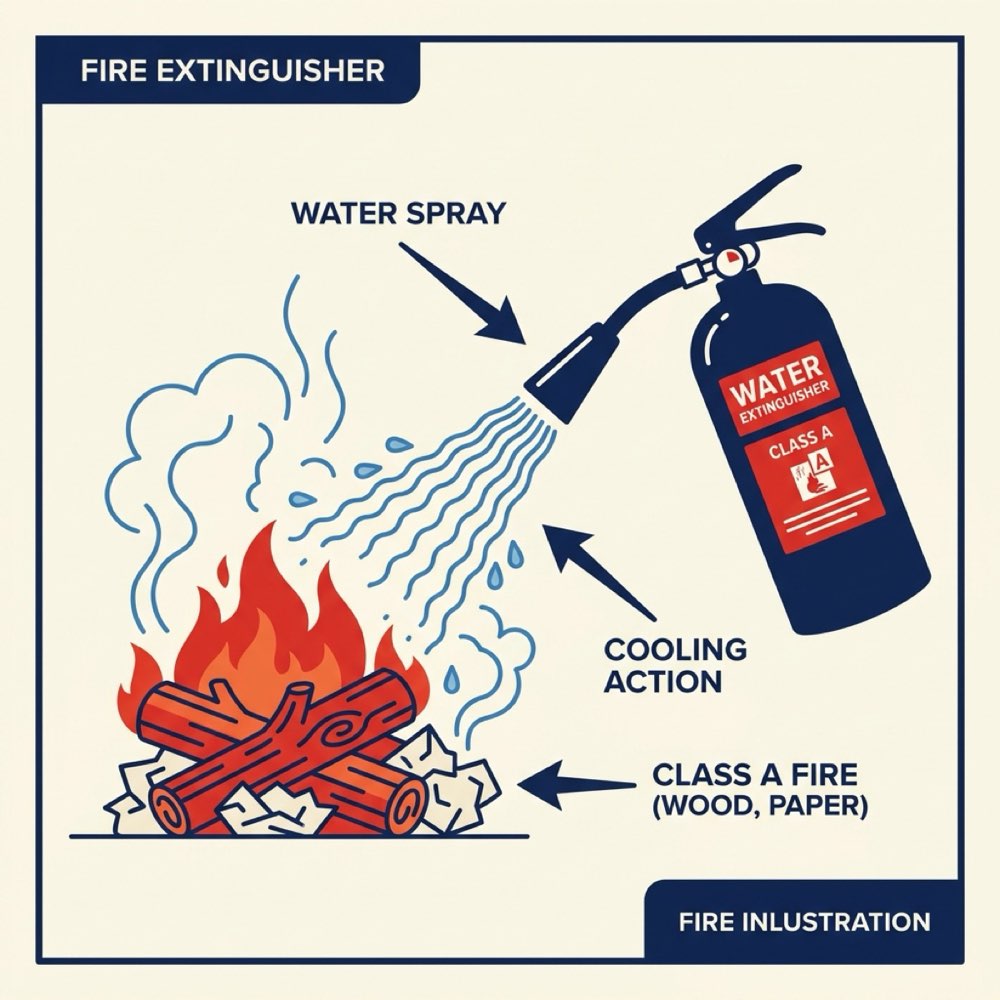
Water extinguishes fire through a single primary mechanism: cooling. Unlike dry chemical extinguishers that interrupt the chemical reaction, or CO2 extinguishers that displace oxygen, water physically removes heat from the burning fuel.
The Cooling Process
When water hits a burning material, it absorbs heat as it converts to steam. Each gallon of water absorbs approximately 8,330 BTUs of heat as it vaporizes. This rapid heat absorption cools the fuel below its ignition temperature, stopping the combustion process. The water that does not vaporize soaks into the surrounding unburned material, creating a barrier that prevents the fire from spreading.
Why Water Is Ineffective on Other Fire Classes
Water's cooling mechanism works perfectly on solid combustibles, but it fails or becomes dangerous on other fire types:
| Fire Class | Why Water Fails | Danger Level |
|---|---|---|
| Class A | Works correctly - cools solid combustibles | Safe |
| Class B (flammable liquids) | Water is heavier than most flammable liquids - it sinks below the burning liquid and can spread it | Moderate - spreads fire |
| Class C (electrical) | Water conducts electricity - current travels up the water stream to the user | Severe - electrocution risk |
| Class D (combustible metals) | Water reacts chemically with burning metals, producing hydrogen gas | Extreme - explosion risk |
| Class K (cooking oils) | Water instantly vaporizes and splatters burning oil in all directions | Severe - spreads fire rapidly |
⚠️ Critical Warning: Using a water fire extinguisher on anything other than a Class A fire can cause serious injury or death. On electrical fires, water conducts electricity up the stream to the person holding the extinguisher. On grease fires, water causes the burning oil to explode outward. On metal fires, water causes violent hydrogen gas explosions. Always verify the fire class before using a water extinguisher.
Types of Water Fire Extinguishers
There are three main types of water fire extinguishers, each designed for different applications:
1. Water Jet Extinguishers
Water jet extinguishers discharge a solid stream of water that can reach 20-30 feet. The solid stream penetrates deep into burning materials like stacked paper, wood pallets, or textiles, cooling the fuel at its core. Jet extinguishers are the traditional choice for warehouses, manufacturing facilities, and any location with deep-seated Class A fire risks.
- Best for: Deep-seated Class A fires in warehouses, factories
- Range: 20-30 feet
- Sizes: 2.5 gallon, 5 gallon typical
- Limitation: Cannot be used on electrical fires (high conductivity)
2. Water Spray Extinguishers
Water spray extinguishers discharge a fine mist or spray pattern that covers a wider area than a jet. The fine droplets absorb heat more efficiently than a solid stream, making spray extinguishers effective on surface Class A fires. The spray pattern also reduces the conductivity risk compared to a solid stream, though standard spray extinguishers are still not rated for electrical fires.
- Best for: Surface Class A fires in offices, schools, retail
- Range: 10-15 feet
- Advantage: Wider coverage area, faster heat absorption
- Limitation: Less penetration for deep-seated fires
3. Water Mist Extinguishers
Water mist extinguishers are the newest type, using deionized (purified) water discharged as an ultra-fine mist. Because the water is deionized, it does not conduct electricity, making these extinguishers safe for Class C electrical fires in addition to Class A. The ultra-fine mist also absorbs heat extremely efficiently and uses less water than jet or spray types.
- Best for: Offices with electrical equipment, museums, healthcare facilities
- Rating: Class A:C (unique among water extinguishers)
- Advantage: Safe for electrical fires, minimal water damage
- Limitation: Higher cost, smaller sizes (typically 2-3 gallons)
💡 Choosing the Right Type: For most commercial buildings in NYC, water spray extinguishers provide the best balance of cost and coverage. If you have sensitive electrical equipment, consider water mist units rated for Class A:C. For warehouses with deep combustible storage, water jet extinguishers provide the penetration needed. See our complete fire extinguisher types guide for more details.
Water Fire Extinguisher Ratings
Water extinguishers carry a Class A numerical rating that indicates the amount of Class A fuel they can handle. The rating is based on testing against stacked wood cribs:
- 1-A rating: Equivalent to 1.25 gallons of water - small offices
- 2-A rating: Equivalent to 2.5 gallons of water - standard commercial use
- 3-A rating: Equivalent to 3.75 gallons of water - light industrial
- 4-A rating: Equivalent to 5 gallons of water - warehouses and industrial
- 6-A rating: Equivalent to 7.5 gallons of water - high-hazard industrial
Per NFPA 10, the maximum travel distance to a Class A extinguisher is 75 feet. Most commercial buildings need a minimum 2-A rated unit every 75 feet of travel distance.
Water vs Other Fire Extinguisher Types
Understanding how water compares to ABC dry chemical and other extinguisher types helps facility managers choose the right protection:
| Feature | Water | ABC Dry Chemical | CO2 |
|---|---|---|---|
| Class A fires | ✅ Excellent (deep cooling) | ✅ Good | ❌ No |
| Class B fires | ❌ No (spreads liquid) | ✅ Yes | ✅ Yes |
| Class C (electrical) | ❌ No (except water mist) | ✅ Yes | ✅ Yes |
| Residue | Water (clean, minimal damage) | Powder (messy, damages electronics) | None |
| Re-ignition prevention | Excellent (soaks fuel) | Good (coats fuel) | Poor (no coating) |
| Cost | Low ($50-$150) | Low ($35-$100) | Medium ($180-$400) |
How to Use a Water Fire Extinguisher
Water extinguishers use the standard PASS method:
- Pull the safety pin and break the tamper seal
- Aim the nozzle at the base of the fire, not the flames
- Squeeze the handle to discharge water
- Sweep the nozzle from side to side at the base of the fire, working outward to soak surrounding fuel
💡 Technique Tip: After the flames are out, continue applying water to soak the area thoroughly. Class A materials can hold heat deep inside and re-ignite if not completely cooled. Break apart stacked materials and apply water to all exposed surfaces. This is especially important for paper, fabric, and wood stacks.
Inspection and Maintenance
Water fire extinguishers require the standard NFPA 10 inspection schedule:
- Monthly visual inspection - verify the extinguisher is accessible, the pressure gauge reads in the green zone, the pin and seal are intact, and there is no physical damage or leakage
- Annual professional inspection - certified technician verifies pressure, water level, nozzle condition, and internal cylinder integrity
- Internal examination every 5 years - the extinguisher is opened, the water is replaced, and the cylinder is inspected for corrosion or lining deterioration
- Hydrostatic testing every 12 years - the cylinder is pressure-tested to verify structural integrity
Water extinguishers are susceptible to freezing in cold environments. If installed in unheated areas, they must use an antifreeze solution (typically calcium chloride solution) rated for the expected minimum temperature. Standard water extinguishers can burst if the water freezes and expands.
For professional fire extinguisher inspections in NYC, A&J Fire Extinguisher provides certified maintenance services for water and all other extinguisher types.
Water Fire Extinguisher Cost
Water extinguishers are among the most affordable fire protection options:
- 2.5 gallon water jet (2-A): $50-$90
- 5 gallon water jet (4-A): $90-$150
- 2.5 gallon water spray (2-A): $60-$100
- Water mist (A:C rated): $150-$300
- Antifreeze water unit: $80-$130
While water extinguishers are inexpensive, remember that they only protect against Class A fires. Most facilities need a combination of water units for Class A areas and ABC dry chemical or CO2 units for areas with electrical or flammable liquid hazards.