A fire marshal inspection can arrive with little warning, and the difference between passing and failing often comes down to a few details nobody fixed. This fire marshal inspection checklist breaks down exactly what inspectors verify, from extinguisher tags to exit door hardware. If you manage a commercial building in the New York City area, A&J Fire Extinguisher Corp provides certified fire extinguisher inspections that keep your units compliant with NFPA 10 and FDNY requirements so you walk into every inspection ready.
Key Takeaways
- Fire marshals check six core systems: portable extinguishers, exit routes, alarm systems, emergency lighting, sprinklers, and fire doors.
- Extinguishers fail most often for missing inspection tags, blocked access, wrong placement, or overdue maintenance.
- NFPA 10 requires monthly visual checks and annual professional maintenance for every portable extinguisher.
- Documentation wins inspections: inspection forms, service records, and routine surveys prove compliance on the spot.
- Failed inspections trigger re-inspection fees, fines, and in NYC, FDNY violations that can threaten your certificate of occupancy.
What Is a Fire Marshal Inspection?
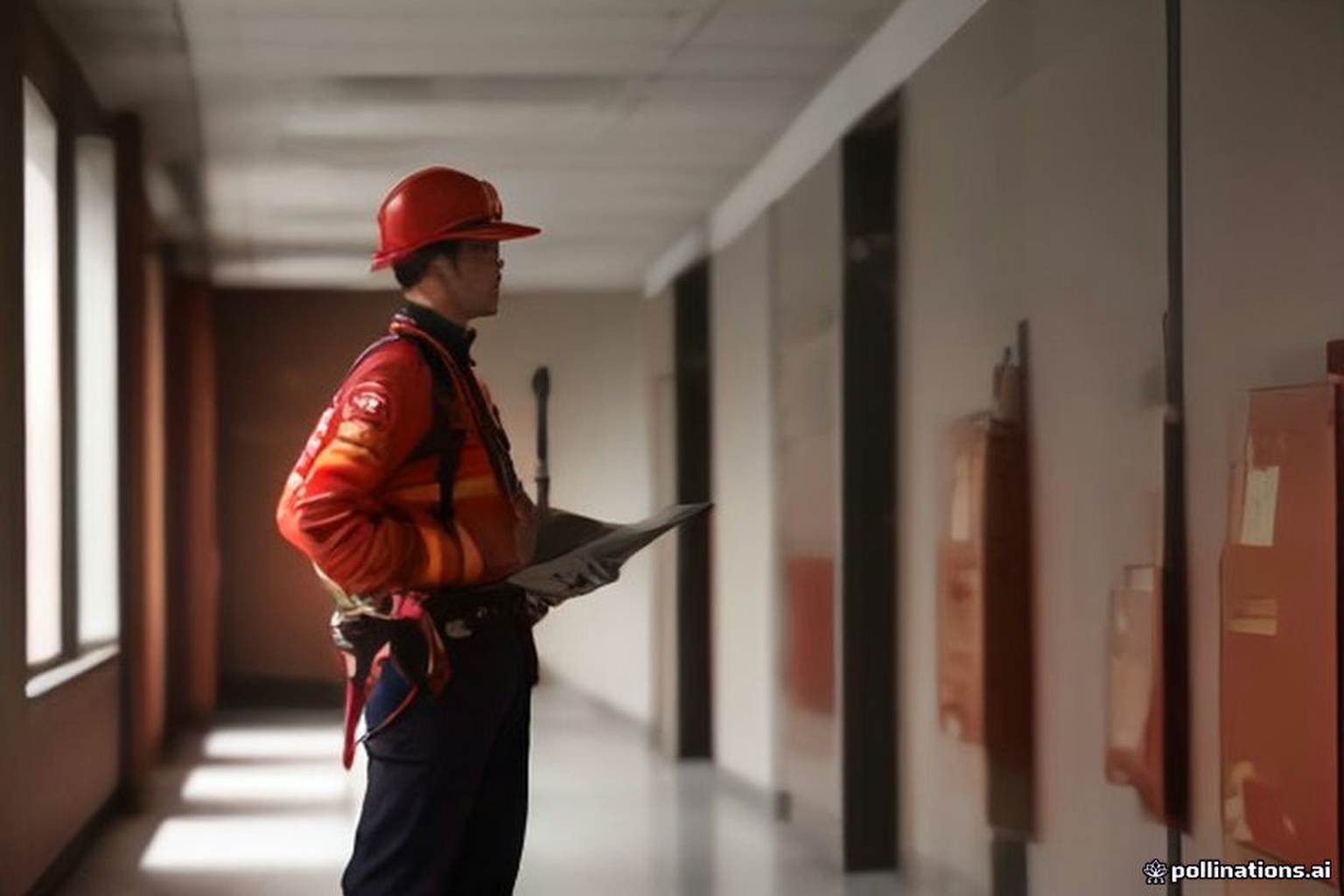
A fire marshal inspection is a scheduled or surprise review of your building's fire safety compliance. The fire marshal walks your property with a standardized inspection checklist and verifies that fire protection systems work, escape routes stay clear, and required maintenance records exist.
Inspections happen at the city or county level. In New York City, the Fire Department of New York (FDNY) performs these reviews and issues violations when buildings do not meet the fire code. In other jurisdictions, the local fire marshal's office handles the same process under codes based on the NFPA and International Fire Code.
The inspector is not there to shut you down. They are there to confirm your building will not kill anyone in a fire. Buildings that treat the inspection as a routine maintenance event, not an emergency, pass every time.
What Fire Marshals Look For During an Inspection
Every fire marshal works from a version of the same fire safety inspection checklist. The categories below cover what gets checked in nearly every commercial building, from small offices to large facilities with multiple campuses.
Fire Extinguishers
The inspector verifies each extinguisher is present, mounted at the correct height, unobstructed, and tagged with current monthly and annual inspection records. They check pressure gauges, safety pins, hose condition, and whether the unit matches the hazard class of the area it protects. A kitchen with only an ABC dry chemical unit, for example, may fail because cooking hazards require a Class K extinguisher within 30 feet.
Exit Routes and Egress
Exit paths must stay completely clear. Inspectors look for stored boxes in corridors, chained doors, blocked stairwells, and exit signs that are burned out or missing. Every exit door must open from the inside without a key. Assembly occupancies need panic hardware on egress doors.
The egress portion of the checklist covers four items:
- Clear width on every corridor and stairwell
- Illuminated exit signs above every required exit
- Doors on the escape path that open without keys or special effort
- Posted occupancy limits in assembly spaces
Fire Alarm Systems
The fire marshal verifies your alarm system gets annual testing by a licensed technician and that records exist on site. They may test pull stations, check notification appliances like horns and strobes, and confirm that monitoring certificates are current. Missing annual test documentation is one of the fastest ways to fail.
Emergency Lighting
Emergency and exit lighting must illuminate the egress path when power fails. Inspectors press the test button or trip the breaker to confirm the lights work, then ask for the monthly and annual testing logs. Dead batteries in emergency lighting fixtures are a routine violation.
Sprinkler Systems
Sprinkler systems that stay compliant share these habits:
- 18 inches of clearance below every head
- Control valves open, sealed, and accessible
- Annual inspection paperwork filed on site
- Sprinkler rooms kept clear, locked, and labeled
- Spare head cabinet stocked with the right replacements
Fire Doors
Fire-rated doors must close and latch on their own. Inspectors verify door closer function, intact seals, no holes in the door surface, and unobstructed paths on both sides. A fire door propped open with a wedge is an automatic violation in most jurisdictions.
The Fire Extinguisher Section of the Checklist
Extinguishers earn extra attention because they fail inspections more than any other device. Use this checklist to audit your own units before the fire marshal does.
| Checklist Item | What Passes | Common Failure |
|---|---|---|
| Mounting | Wall bracket or cabinet, handle 3.5 to 5 ft from floor | Unit sitting on the floor |
| Access | 30-second reach, nothing blocking the unit | Boxes or equipment stored in front |
| Tag | Monthly and annual records current | Missing or expired inspection tag |
| Gauge | Needle in the green zone | Low pressure or tampered gauge |
| Condition | No rust, dents, or damaged hose | Corroded cylinder or cracked nozzle |
| Type | Matches the hazard in that area | Wrong class unit for the room |
| Travel distance | 75 ft max for Class A hazards | Coverage gaps too wide |
Monthly visual inspections can be done in-house, but the person doing them needs training on what to look for. Annual maintenance requires a certified technician who breaks down the unit, verifies weight, and documents the service. Our technicians handle both, and you can learn the full requirements in our guide to fire extinguisher inspection requirements.
If a unit has been discharged, even partially, it needs professional service. A partially used extinguisher will fail a fire marshal check, and recharge work must be done by a certified shop. Our fire extinguisher recharge service restores units to full pressure with fresh tags.
The Most Common Fire Code Violations

Fire marshals publish annual violation data, and the same failures top the list year after year. Knowing them helps you target your pre-inspection walk-through.
- Obstructed exits and extinguishers. Storage in stairwells and in front of extinguisher cabinets is the number one citation in most jurisdictions.
- Expired inspection tags. The annual extinguisher maintenance date has passed, and nobody scheduled the service.
- Emergency lighting failures. Batteries die quietly, so monthly testing is the only way to catch them.
- Blocked fire department connections. Landscaping, dumpsters, or parked vehicles hide the FDC sprinkler connections firefighters need.
- Improper storage. Flammable liquids stored in ordinary rooms instead of rated cabinets or storage areas.
- Door hardware problems. Broken closers, missing latch guards, or doors that do not self-latch.
- Missing records. Alarm tests, sprinkler inspections, and extinguisher services all need paper trails on site.
Each item above is preventable with a monthly self-audit. Facilities that document routine surveys catch these problems weeks before an inspector ever walks in.
How to Prepare for a Fire Marshal Inspection
Preparation is a process, not a scramble. Follow these steps in the weeks before your scheduled inspection.
Step 1: Pull Your Records
Gather inspection forms for the last 12 months: extinguisher tags, alarm test reports, sprinkler inspections, emergency lighting logs, and any previous violation notices and their proof of correction.
Step 2: Walk Every Exit Path
Start at the farthest point from each exit and walk the route. Remove anything that narrows the corridor. Confirm every exit sign is lit and every door opens freely.
Step 3: Audit Every Extinguisher
Check mounting height, gauge position, tag dates, and access. Use the table above. Replace or service any unit with an issue, and verify the right extinguisher types sit in the right hazard areas. Our guide to types of fire extinguishers maps every class to its correct location.
Step 4: Test Emergency Lighting
Run the monthly test on every fixture. Log the results. Replace failed batteries or entire fixtures immediately, because they never fail at a convenient time.
Step 5: Verify Alarm and Sprinkler Paperwork
Confirm your annual alarm test and sprinkler inspection are current and filed on site. If either is overdue, schedule it before the marshal arrives.
Step 6: Fix Housekeeping Issues
Break down the storage that has crept into corridors, mechanical rooms, and sprinkler rooms. Flammables go into rated cabinets.
Step 7: Do a Final Walk-Through With the Checklist
The day before, walk the building with a printed checklist and mark each item pass or fail. Fix what you can, and have a plan and a service date booked for anything you cannot fix on the spot. Inspectors treat an active, documented remediation plan far better than an ignored problem.
How Often Do Fire Marshal Inspections Happen?
Frequency depends on your occupancy type and jurisdiction. The table below shows typical cycles for commercial buildings.
| Occupancy Type | Typical Inspection Cycle | Notes |
|---|---|---|
| Offices and retail | Annual | Routine, scheduled |
| Restaurants | 1 to 2 times per year | Kitchen suppression systems get extra scrutiny |
| Assembly (theaters, halls) | Annual or more | Capacity-driven requirements |
| Schools and daycare | Annual, plus drills | State rules often add monthly checks |
| Industrial and warehouses | Annual | Hazard classification drives depth |
| High-rise buildings | Annual plus system tests | FDNY cycles in NYC are strict |
Buildings with prior violations get inspected more often. A clean compliance history earns flexibility, because inspectors prioritize by risk.
What Happens If You Fail a Fire Marshal Inspection?
Most failures are not catastrophic. The inspector issues a notice with a correction deadline, usually 30 days, then schedules a re-inspection. You fix the items, pay any re-inspection fee, and the case closes.
The problems start when violations are ignored. Unaddressed notices escalate to fines, and in New York City an open FDNY violation can block permit renewals, trigger hearing dates at the Office of Administrative Trials, and in severe cases jeopardize your certificate of occupancy. Insurance carriers also review violation histories, and open fire code violations can affect claims and premiums.
The cheapest path is always the same: fix it, document it, keep the paper.
NYC and FDNY Inspection Requirements
New York City runs its own inspection ecosystem, and building owners who operate in multiple states need to know where NYC differs.
- FDNY inspects under the NYC Fire Code, which incorporates NFPA standards with local amendments. Annual sprinkler, standpipe, and alarm tests must be filed with FDNY in many occupancy classes.
- Local Law 152 requires periodic natural gas piping inspections by a licensed master plumber, and failure to file results in civil penalties.
- Fire extinguisher rules follow NFPA 10: monthly visual checks by trained staff, annual maintenance by a certified extinguisher company. FDNY inspectors check tags during visits. Our team provides FDNY-compliant extinguisher services across Brooklyn, Queens, Manhattan, and the Bronx.
- Commercial kitchens need Class K extinguishers plus semiannual hood suppression system certification. Missing suppression tags are a common FDNY violation.
- Fire safety plans and personnel must be current in larger occupancies, including fire safety director certificates where required.
A building that keeps an FDNY violation history clean also keeps its boiler inspection, elevator, and gas piping cycles in better standing, because city agencies share data.
Keep Inspection Records On Site
Documentation is half the inspection. The marshal will ask for records, and having them organized in one binder or folder turns a two-hour visit into a 30-minute one. Call (718) 852-2762 if you need help building a records system that satisfies FDNY document requests.
Keep these on site and current:
- Monthly extinguisher inspection forms with initials and dates
- Annual extinguisher maintenance certificates for every unit
- Fire alarm annual test reports and monitoring certificates
- Sprinkler inspection reports and FDC access photos
- Emergency lighting monthly test logs
- Hood suppression system semiannual certificates for kitchens
- Prior violation notices with proof of correction
Buildings with multiple floors or campuses should keep records per building and per floor. When our technicians service your extinguishers, every unit leaves with a fresh tag and your file gets a signed inspection form, so your binder builds itself month over month.
Professional Pre-Inspection Help
You do not have to face the fire marshal alone. A professional pre-inspection audit catches the failures before the city does.
A&J Fire Extinguisher Corp has served New York buildings since 1953. Our certified technicians perform extinguisher sales, ABC dry chemical unit installation, monthly and annual inspections, recharge and hydrostatic testing, and FDNY violation corrections. We walk your building with the same checklist a fire marshal uses, fix what we find, and leave you with the paperwork that proves compliance.
Call (718) 852-2762 to schedule a pre-inspection audit or annual extinguisher maintenance anywhere in the five boroughs.