Every fire extinguisher in service needs a tag. In New York City, an extinguisher without a current tag is a violation waiting for an inspector to write up. At A&J Fire Extinguisher, we tag, inspect, and certify extinguishers for buildings across NYC, and we have seen exactly what FDNY looks for when tags are missing, torn, or out of date. This guide covers what goes on a fire extinguisher tag, how the inspection record works, and when you need a replacement.
Key Takeaways
- A fire extinguisher tag records every monthly and annual inspection your unit has passed.
- Tags confirm the extinguisher is the right class for the hazards nearby and has a valid 6-year or hydrostatic test date.
- Missing, torn, or outdated tags are among the most common fire code violations in NYC buildings.
- Only a licensed fire extinguisher service company can fill out and sign an inspection tag.
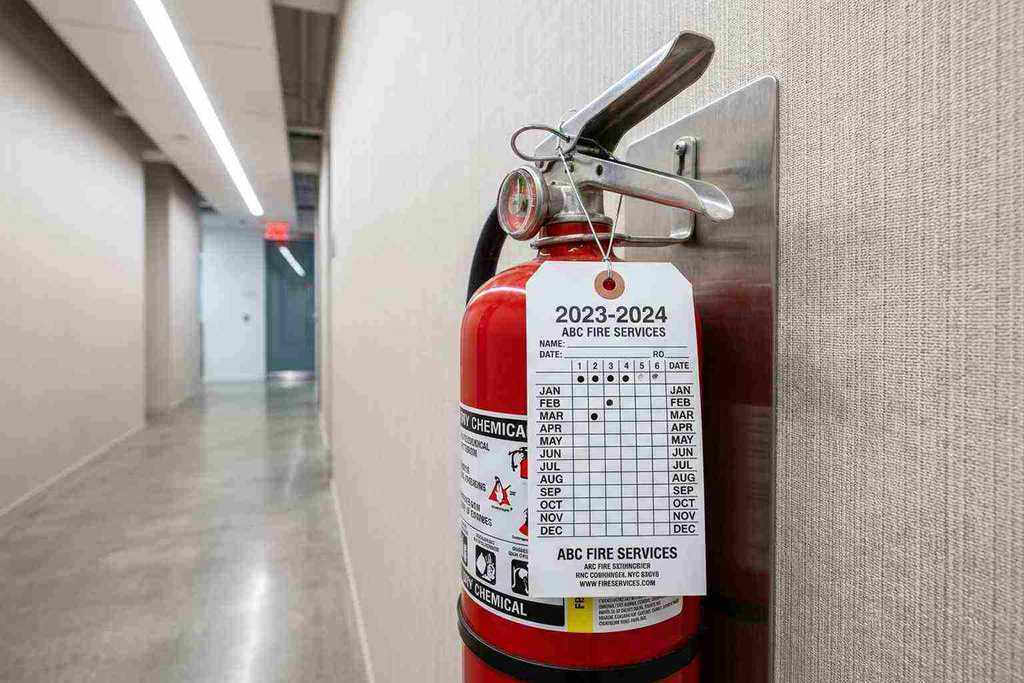
Why Fire Extinguisher Tags Matter
A fire extinguisher tag is not a decoration. It is the paper record that proves your extinguisher is functional, charged, and legally in service. Safety tags answer three questions: who serviced the unit, when it was last inspected, and whether the extinguisher passed. All three must stay clear and current.
During an FDNY inspection, one of the first things an inspector does is walk the corridor and check extinguisher tags. An extinguisher with no tag, or with a tag that shows a lapsed inspection date, is treated the same as having no extinguisher at all. The building owner gets cited, and the violation lands on the record. That citation often costs more than a full year of extinguisher service.
Tags also protect your people. In an emergency, a worker who grabs an extinguisher needs to know it works. The inspection tag is the fastest way to confirm the unit has been maintained and is safe to use on the fire classifications present in that area.
Tip: Walk your own building today. If any of your extinguisher tags are missing, unreadable, or show a date more than a month old for the monthly check, you are already out of compliance.
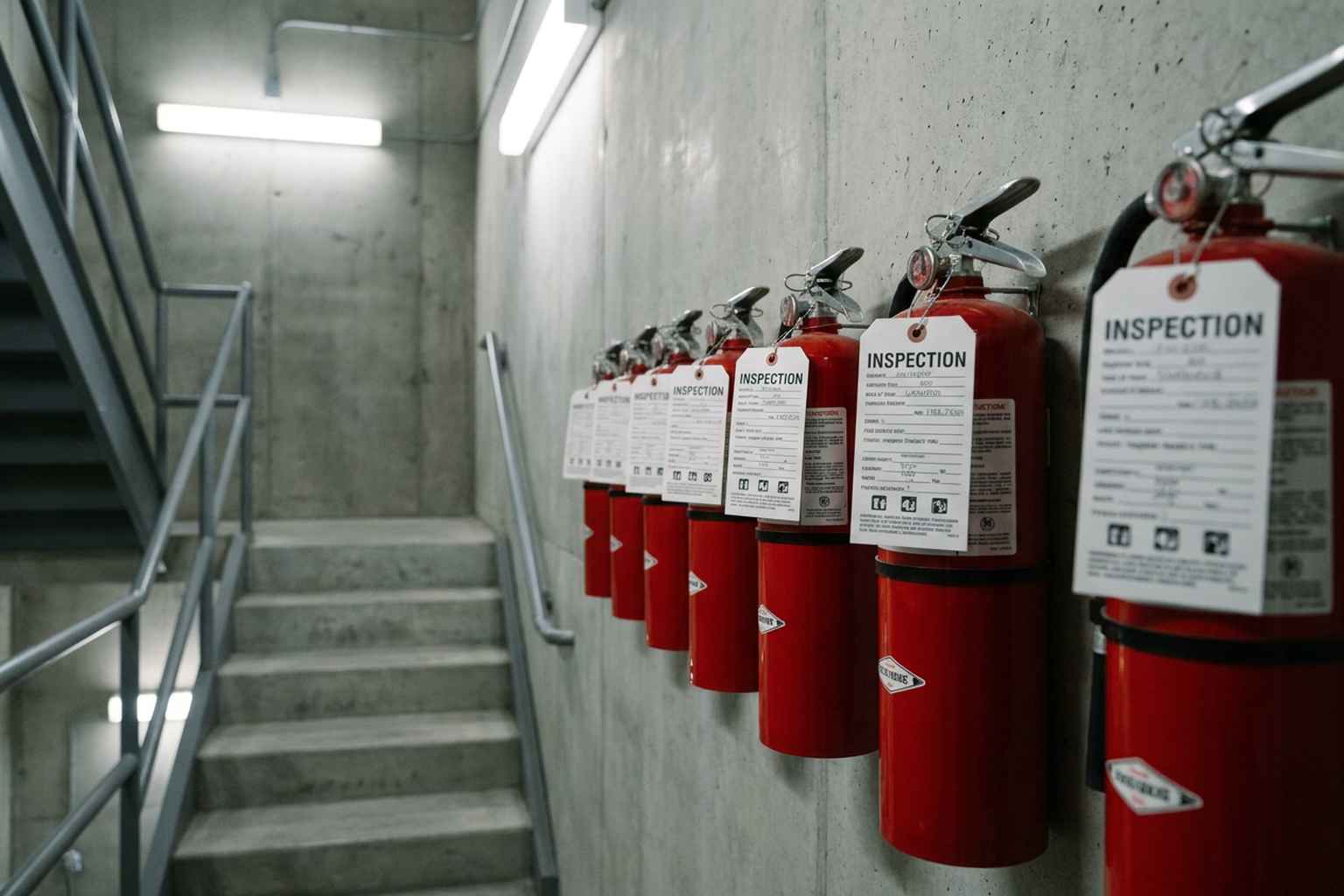
What Goes on a Fire Extinguisher Tag
A proper extinguisher tag is a small record book that hangs from the neck of the unit. There are two common styles of inspection tags:
- Inspection record tag: a vinyl or plastic tag with a grid for monthly punch-outs and lines for annual service entries.
- Recharge and maintenance record tag: used when a unit is discharged, refilled, or goes through internal maintenance.
Some service companies use custom-printed tags with their license number, and blank tags and labels sold at office supplies retailers look identical. But an unsigned blank means nothing. Until a licensed technician records the inspection, the unit is not compliant. Wall signs and stickers can mark where extinguishers live, but they never replace the record tag on the unit itself.
Every compliant inspection tag carries the same core information:
| Tag Section | What It Records |
|---|---|
| Company name and license number | The licensed servicer who performed the work |
| Monthly inspection punch-outs | 12 slots showing each monthly visual check |
| Annual service record | The date and type of yearly maintenance performed |
| 6-year and 12-year test dates | When the next internal exam or hydrostatic test is due |
| Extinguisher class | The letter marking for the fire it is rated to fight |
The class marking matters more than most building managers realize. An extinguisher tag links the unit to the hazard it protects. A class K tag belongs in a kitchen, a class ABC unit covers general office and retail areas, and a class D tag belongs near combustible metal work. For an overview of which type goes where, see our fire extinguisher types guide.
Fire Extinguisher Tag Requirements
New York City follows NFPA 10, the national standard for portable extinguishers, and layers FDNY rules on top. The rules for tags and inspection records are simple but strict:
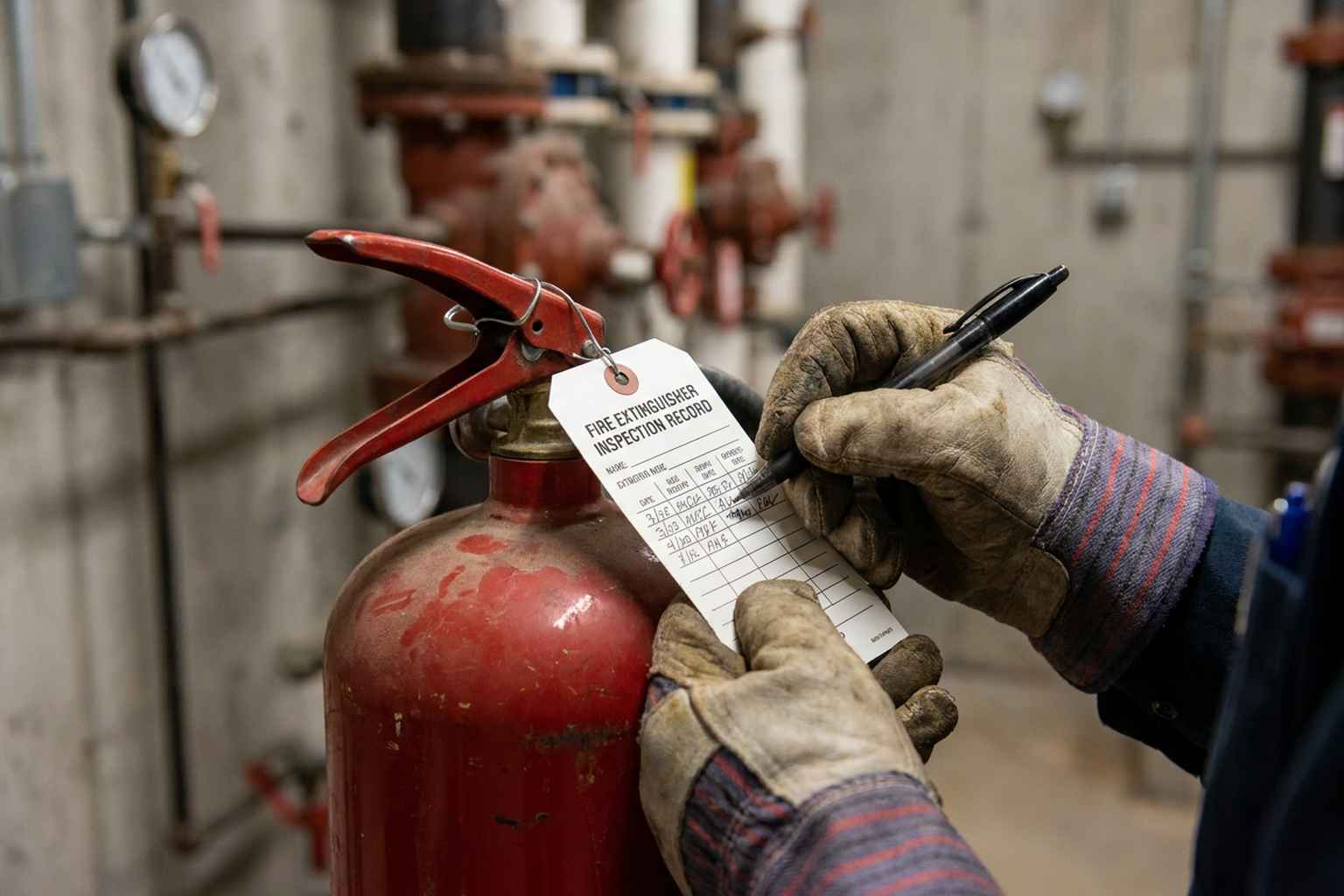
- Every portable extinguisher must be inspected monthly and the inspection recorded.
- A full maintenance check is required annually, with the date written on the tag by the service technician.
- Stored pressure units need an internal examination every 6 years and a hydrostatic test every 12 years. The test date goes on the tag or the cylinder, and it shows the age of the unit at a glance.
- The unit must also be mounted properly: brackets and cabinets keep extinguishers visible, accessible, and off the floor.
- Only a licensed fire extinguisher company can complete an inspection tag. A superintendent doing a visual check can note it internally, but the signed tag must come from a licensed servicer.
Warning: Writing your own dates on a tag without a licensed inspection does not count as compliance. FDNY treats a self-signed tag the same as a forged one. Call (718) 852-2762 to schedule a licensed inspection.
When Tags Wear Out: A Realistic Timeline
Tags live on extinguishers in stairwells, basements, and loading docks. They get painted over during renovations, torn by carts, and baked by boiler room heat. Vinyl and plastic tags become brittle and illegible long before the extinguisher itself fails.
A realistic replacement cycle:
| Tag Condition | What To Do |
|---|---|
| Tag missing | Schedule service immediately, unit is non-compliant |
| Tag torn or unreadable | Replace the tag at the next inspection |
| Tag painted over | Replace the tag and confirm the unit was not damaged |
| Tag full, no open slots | Replace with a fresh tag at annual service |
| Dates lapsed by a month or more | Full inspection before a new tag is issued |
Most vinyl and plastic tags hold up for a few years of service, but there is no fixed expiration on the tag itself. The dates on it control. When a technician replaces a tag, the old record should be kept with your building files, because those historical entries are your proof of continuous compliance if a violation is ever contested.
If a tag is missing, do not just print a new label and hang it. The unit needs a licensed visual and functional check before a new inspection tag is issued, because the tag is a certification that the extinguisher worked when the technician signed it. That certification is exactly what our inspection service provides, and it is what protects you when FDNY comes through.
How Monthly and Annual Inspections Work
The tag system tracks two different inspections:
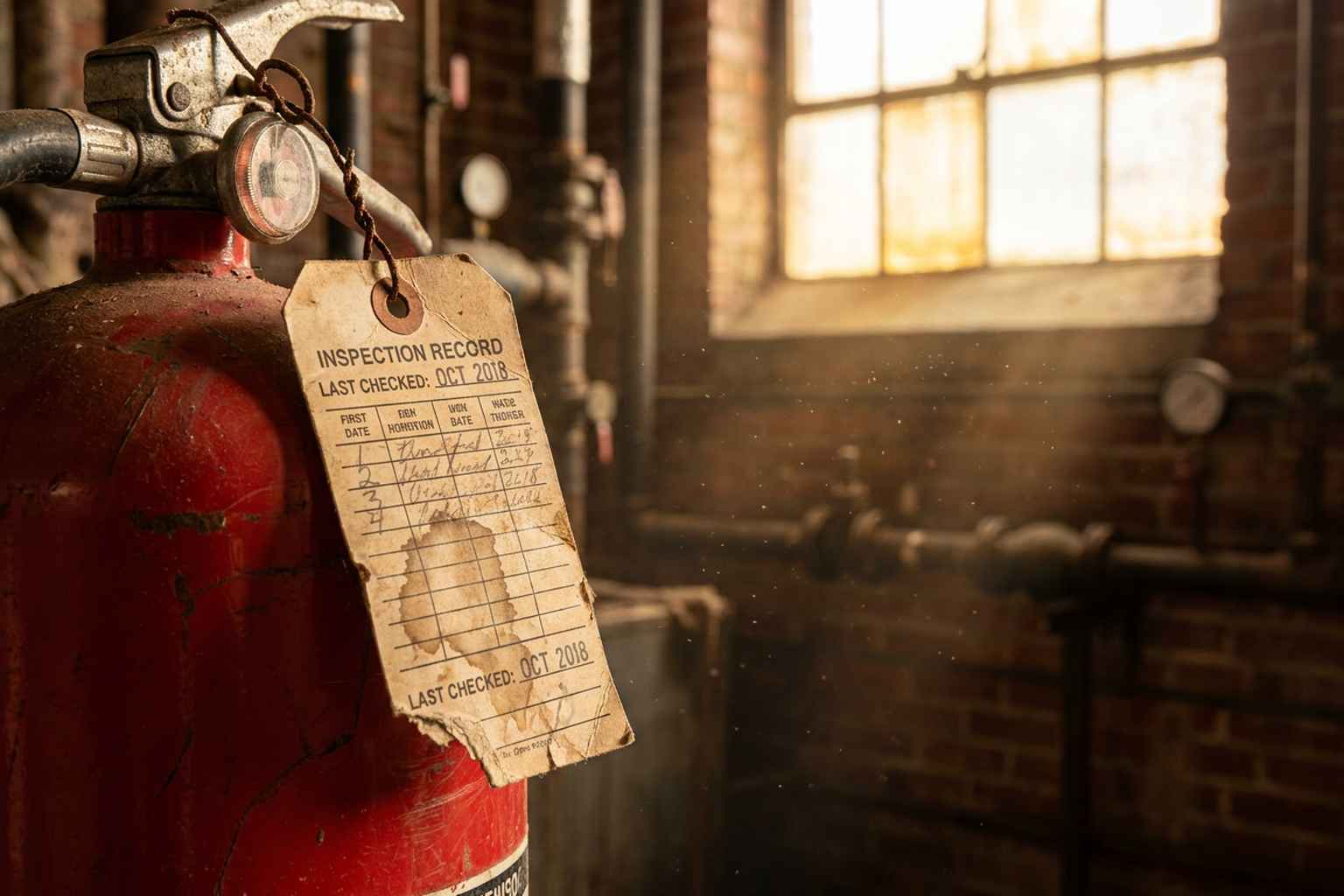
Monthly visual inspections. A technician or trained building staff member confirms each unit is in its place, unobstructed, charged, and undamaged. The monthly punch on the tag records that the check happened. These checks catch the common failures: a unit knocked off its bracket, a pressure gauge in the red, a broken seal, or a missing pin. NFPA 10 allows designated trained personnel to perform the monthly visual check and punch the tag, but many NYC buildings prefer to have their fire protection company handle it so every punch is backed by a licensed visit.
Annual maintenance. Once a year, a licensed technician performs full maintenance on each unit: checking the agent quantity, verifying the pressure, inspecting the hose and nozzle, confirming the locking pin and lever, and looking for corrosion or damage. The annual date is written on the tag and initialed. This is the service that keeps your annual certification valid.
The two inspections work together. Monthly punches show continuous care. The annual entry shows professional maintenance. Together they form the inspection record an inspector wants to see.
What Happens If Your Tags Are Out of Date
An out-of-date tag turns a safe building into a cited building. FDNY issues violations for missing or lapsed tags, and the fine is only the beginning. A violation order requires corrective service within a set window, follow-up paperwork, and in commercial buildings a note in the fire safety record that insurance carriers can ask about.
The fix is fast. A licensed technician inspects each unit, replaces the tags, punches the current month, and logs the annual service. If your building is due, schedule with A&J Fire Extinguisher at (718) 852-2762. We tag, service, and certify across all five boroughs, and we keep your inspection record current so an FDNY walkthrough is a non-event instead of a citation.