Every business that owns fire extinguishers needs them serviced on a fixed schedule, and A&J Fire Extinguisher gets asked one question more than any other: what does fire extinguisher service actually cost? A single commercial extinguisher typically runs $35 to $100 to service in NYC, while a full building compliance plan ranges from a few hundred dollars for a small storefront to several thousand for a multi-floor property. The price depends on how many units you have, what types they are, how far the technician travels, and what code requires in your borough. This guide breaks down real service costs so you can budget with confidence and avoid paying for work you do not need. For an exact quote on your building, call (718) 852-2762.
Key Takeaways
- A basic annual service visit for a commercial extinguisher runs $35 to $100 per unit.
- Six-year teardown maintenance costs $40 to $90, and 12-year hydrostatic testing runs $60 to $150 per unit.
- Fire code violations in NYC start near $1,000, far more than decades of routine service.
- Multi-unit buildings and annual service contracts cut per-unit costs by 20 to 40 percent.
- Cheap per-unit quotes often skip required documentation, tags, and reports that inspectors demand.
What Fire Extinguisher Service Includes
Fire extinguisher service is not one product. It is a set of scheduled tasks that NFPA 10 and FDNY rules require at different intervals. A quote covering only a visual check is not the same as one covering full maintenance and testing. When you compare service prices, compare the scope of work, not just the dollar figure.
Annual Inspection
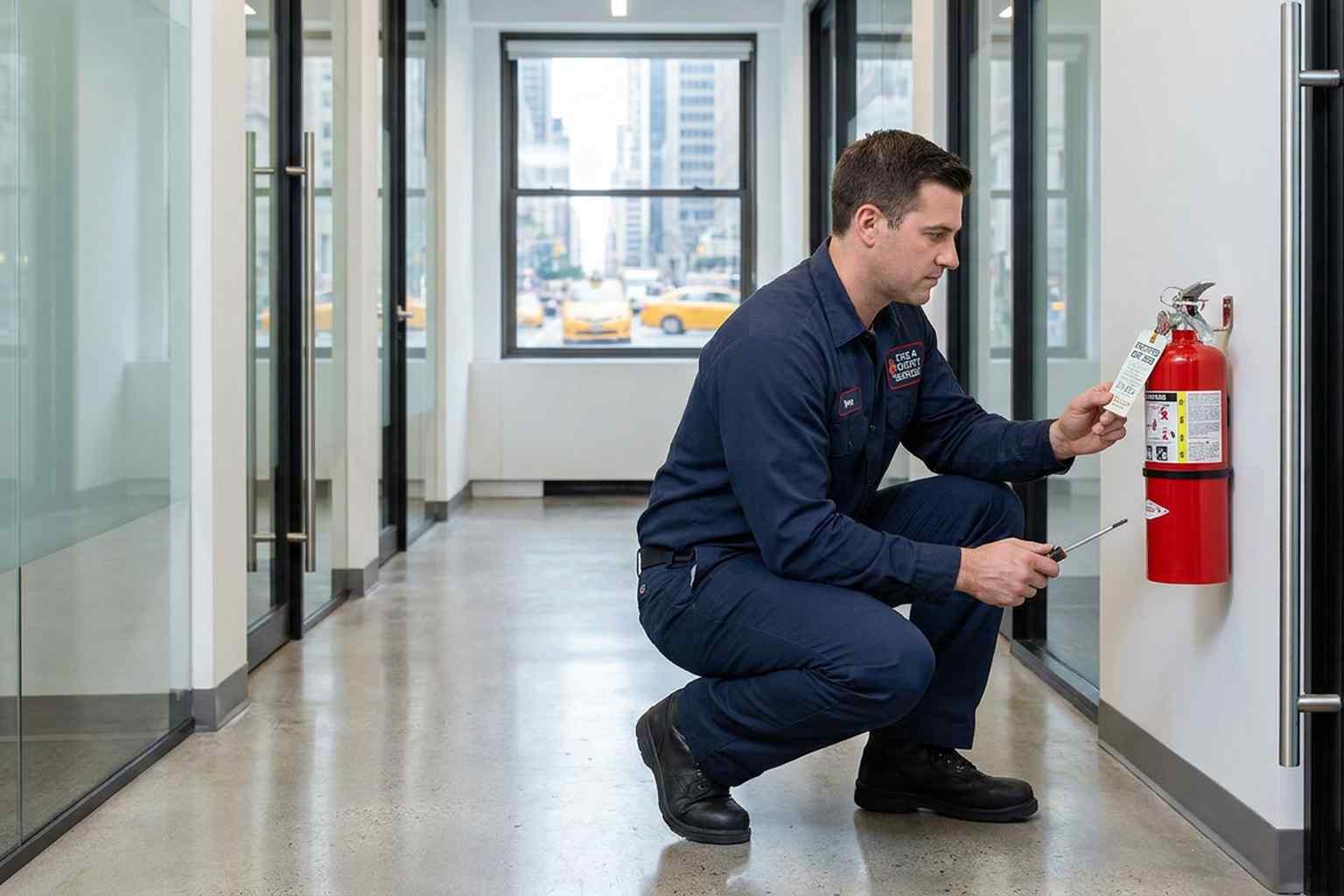
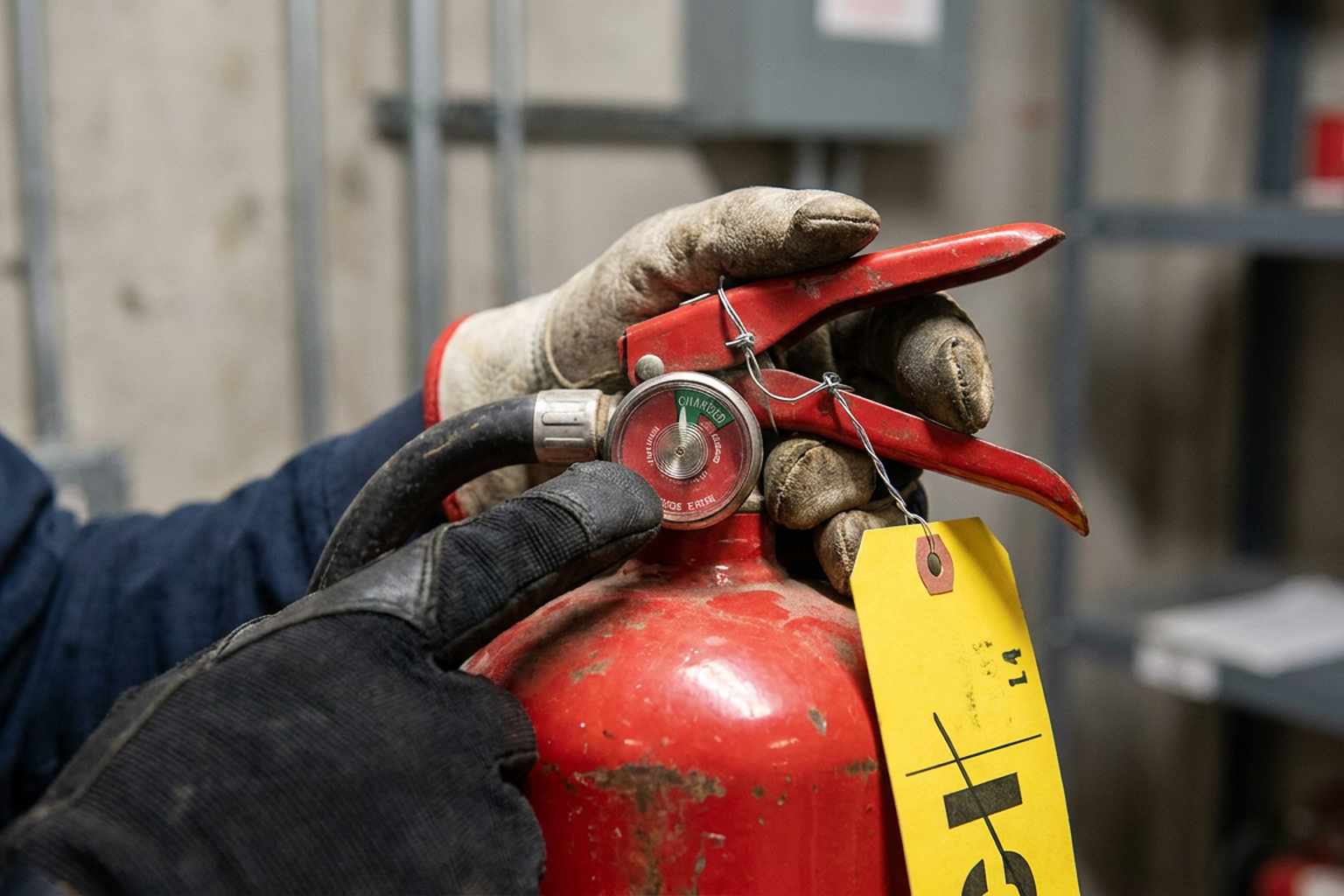
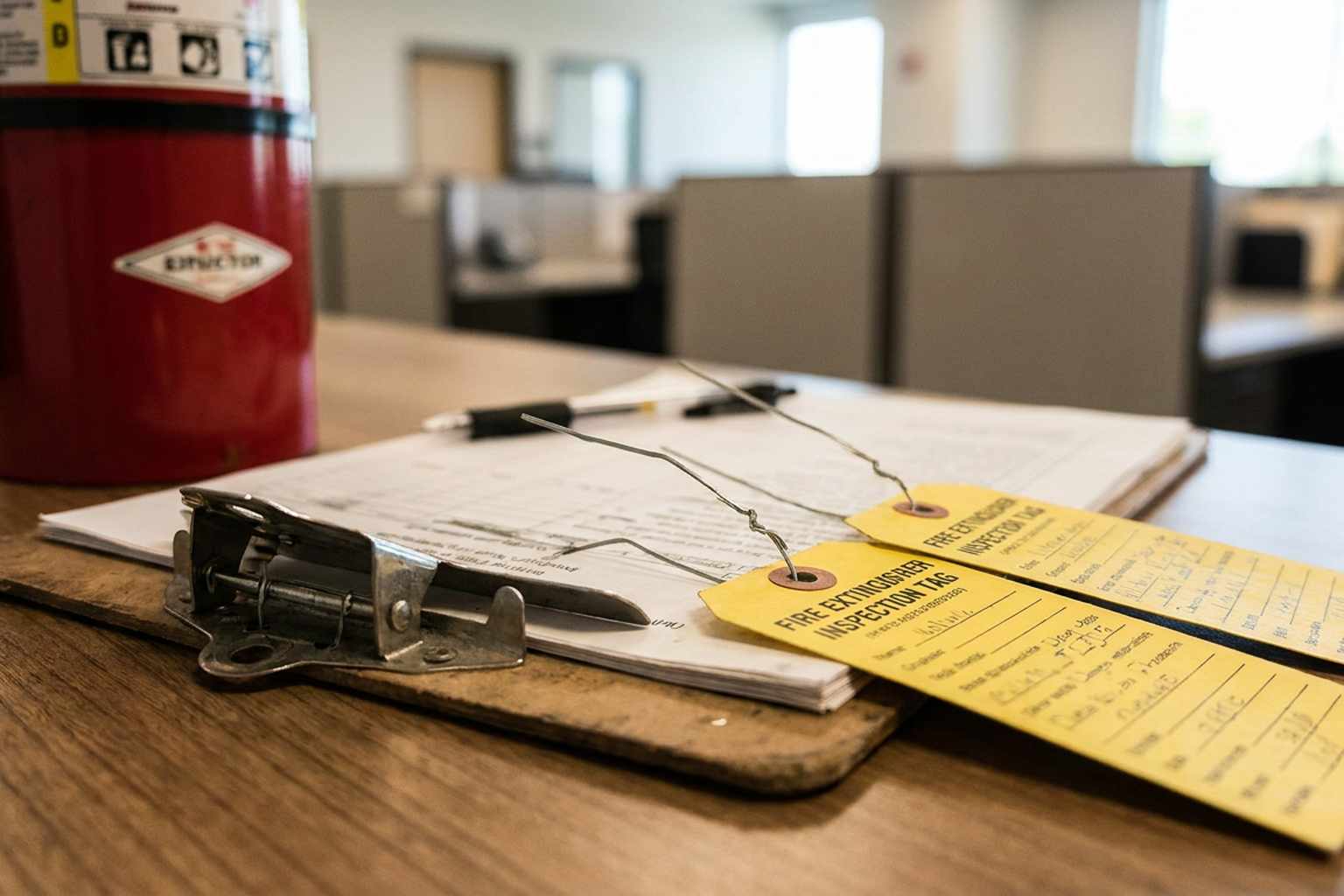
Once every 12 months, a certified technician performs a professional inspection. They confirm each extinguisher is in its assigned spot, unobstructed, fully charged, and free of corrosion or damage. They verify the pressure gauge reads in the green, the safety pin and seal are intact, and the operating instructions face outward. Each unit gets a dated inspection tag. A professional inspection costs $35 to $60 per extinguisher in the New York metro area, with some companies charging a trip minimum of $75 to $150 for small accounts.
Monthly, someone on your own staff should also walk the floor. This internal check is free and required by NFPA 10: gauges in the green, seals intact, no obstructions, units on their hooks. It catches problems between paid visits, and it protects you if an inspector arrives mid-year. The annual paid visit is what produces the tagged record the fire department accepts.
Six-Year Teardown Maintenance
Every six years, stored-pressure extinguishers must be broken down. The technician empties the unit, checks the interior for corrosion, replaces O-rings and gaskets, refills the agent, and re-pressurizes. This teardown maintenance runs $40 to $90 per unit. ABC dry chemical units sit at the lower end. Halotron and other clean agent units cost more because the agent itself is a large share of the price.
12-Year Hydrostatic Testing
Twelve years after manufacture, most extinguishers need hydrostatic testing. The cylinder is pressurized under water to verify it can still safely hold its charge. Testing costs $60 to $150 per unit, and units that fail must be replaced. If your quote skips this line item on an older fleet, ask why before you sign.
Average Service Costs by Extinguisher Type
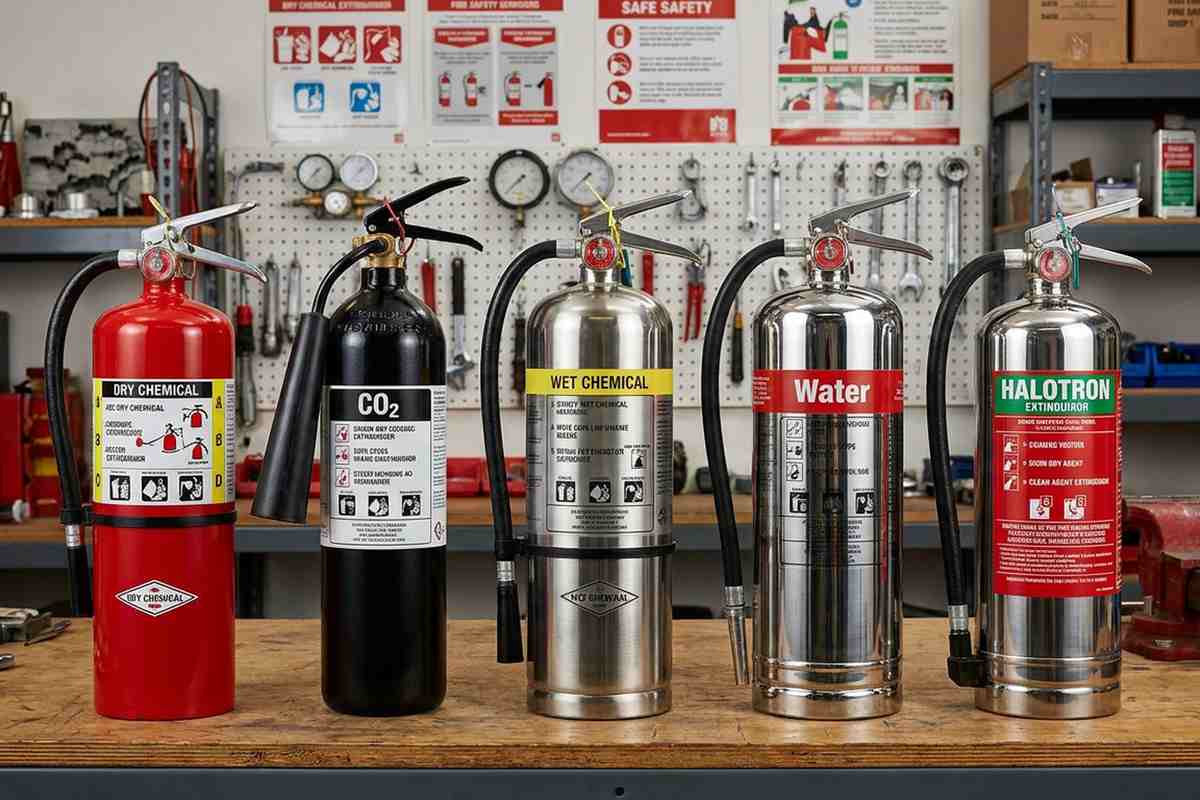
The agent inside the cylinder drives the bill. Refilling a standard ABC dry chemical unit is routine work. Servicing a Class K kitchen system or a clean agent unit for server rooms costs more per unit because the agents and parts cost more.
| Extinguisher Type | Annual Service | Recharge | Six-Year Maintenance | Typical Use |
|---|---|---|---|---|
| ABC dry chemical | $35 to $60 | $40 to $75 | $40 to $70 | Offices, retail, general spaces |
| CO2 | $40 to $70 | $75 to $120 | N/A, pressure test | Electrical rooms, labs |
| Class K wet chemical | $60 to $120 | $100 to $175 | $75 to $120 | Commercial kitchens |
| Water or foam | $35 to $65 | $50 to $90 | $40 to $75 | Warehouses, Class A hazards |
| Clean agent (Halotron) | $50 to $90 | $100 to $200 | $60 to $100 | Data rooms, museums, vehicles |
💡 Tip: Group several service dates into one visit. A technician servicing 20 units in a single trip charges less per unit than one servicing 3 units across two visits.
What Drives Your Service Cost
Four cost factors move a quote more than anything else. Knowing them lets you predict your bill before a technician arrives and spot inflated pricing when you see it.
Number of Units
Per-unit pricing drops fast as volume rises. A single extinguisher service visit might cost $75 including the trip charge, but a building with 40 units can negotiate $25 to $35 per unit on a contract. If you manage multiple properties, bundling them under one account lowers the average cost further.
Extinguisher Condition
Extinguishers with missing pins, broken gauges, or corroded collars need parts before service can pass. Parts add $10 to $40 per unit. Units that fail hydrostatic testing are a replacement cost rather than a service cost, which is why fleet age matters when you budget.
Location and Travel
Borough matters. A Brooklyn commercial building gets standard metro rates. Accounts far outside the five boroughs pay trip fees of $50 to $100 per visit. High-rise access, freight elevator scheduling, and restricted roof or basement access can add labor time to each unit.
Documentation Requirements
NYC buildings must produce inspection records on demand. Quotes that include tags, a written report, and FDNY-ready documentation run $5 to $15 more per unit than bare inspections. That premium is cheaper than reconstructing records from memory during an audit.
NYC Compliance Costs by Building Size
NYC properties answer to both NFPA 10 and FDNY inspection rules. Budget for the year as a system, not per extinguisher.
| Property Type | Typical Units | Annual Service Budget | Notes |
|---|---|---|---|
| Small storefront | 1 to 3 | $150 to $400 | Trip minimum often applies |
| Restaurant | 4 to 8 plus Class K | $500 to $1,200 | Kitchen units cost most |
| Mid-size office | 10 to 25 | $600 to $1,500 | Contract discounts common |
| Large high-rise | 50 to 200 | $2,500 to $8,000 | Staggered testing across floors |
⚠️ Warning: FDNY penalties for missing or expired extinguisher tags start near $1,000 per violation and climb after repeat visits. One skipped service year can cost more than a decade of compliant service. Call (718) 852-2762 to confirm your building schedule before the deadline passes.
Service Contracts vs. One-Off Visits
Most NYC building owners eventually choose between paying per visit and signing an annual service contract. One-off visits make sense for small storefronts with one or two units where the total bill is small. Contracts make sense once you pass roughly ten units or multiple locations, because the economics flip in your favor.
A typical annual contract covers the inspection visit, tags, written reports, and priority emergency recharge response. In exchange, the provider discounts per-unit pricing by 20 to 40 percent. A 30-unit building paying $45 per unit one-off might see $30 per unit on contract, a savings of $450 per year before counting the free emergency callouts some contracts include.
Contracts also lock in scheduling discipline. The provider tracks six-year and 12-year dates against manufacture stamps, so testing happens before tags lapse instead of after an inspector writes a violation. When you evaluate contract quotes, verify three things: what counts as an emergency visit, whether replacement units are included or billed separately, and how documentation is delivered. The cheapest contract is rarely the one with the thinnest scope.
Recharge vs. Replace: Which Is Cheaper?
After a discharge, the cheapest path depends on the unit. A recharge for a standard 10 lb ABC unit runs $40 to $75. A new commercial ABC unit runs $75 to $150, so recharging usually wins. For a small 5 lb disposable unit, a recharge quote near $50 often exceeds the cost of a new unit. CO2 and clean agent recharges cost more, but the cylinders themselves are expensive, so recharge almost always wins for those types. A rule that holds for every type: if the recharge quote tops two-thirds of the replacement price, replace it, because the new unit comes with a fresh six-year clock and a new manufacturer warranty.
How Often Extinguishers Need Service
The service calendar is fixed by code, not by preference. Annual inspection is every 12 months. Six-year teardown maintenance and 12-year hydrostatic testing run on manufacture dates stamped on the cylinder. Units discharged at any point need service immediately, even if the annual tag is still green. After any discharge, the unit is out of compliance until a technician refills and re-tags it. Our fire extinguisher inspections team maintains the tag calendar for commercial accounts so no deadline slips.
One hidden cost catches many building managers off guard: mixed fleets. A building holding ABC units, a Class K kitchen unit, and a clean agent cabinet runs three separate service tracks with three different price bands and testing dates. Ask your provider to align testing dates across mixed fleets so one visit covers everything. The alternative, three partial visits per year, quietly triples your trip charges and fragments your paper trail.
Choosing a Service Provider
Price alone is a poor filter. A $35 per unit quote means nothing if the company cannot produce FDNY-accepted documentation, misses appointment windows, or vanishes when your 12-year test dates land. Ask three questions before signing: Are technicians certified for the extinguisher types you own? Is documentation FDNY-ready? Does the contract cover emergency recharge response? A dependable fire protection company answers all three in writing. A&J Fire has served NYC buildings for three generations, and our brooklyn fire protection teams cover every borough.
Get quotes from two or three providers and lay them side by side. Match the scope line by line: tags, reports, recharge response, and testing dates. The lowest number usually wins only on paper.