A fire extinguisher pressure gauge is the small round dial near the handle that shows whether the unit has enough nitrogen propellant to discharge properly. It is the fastest way to know if your extinguisher will actually work in a fire. A&J Fire Extinguisher has served Brooklyn and the greater NYC area since 1989, and our certified fire extinguisher inspections team checks thousands of gauges a year. In this guide, the experts at anjfire.com explain how the gauge works, what the zones mean, and what to do when a needle drifts out of range. If your building needs units serviced now, call us at (718) 852-2762 for same-day service anywhere in New York City.
Key Takeaways
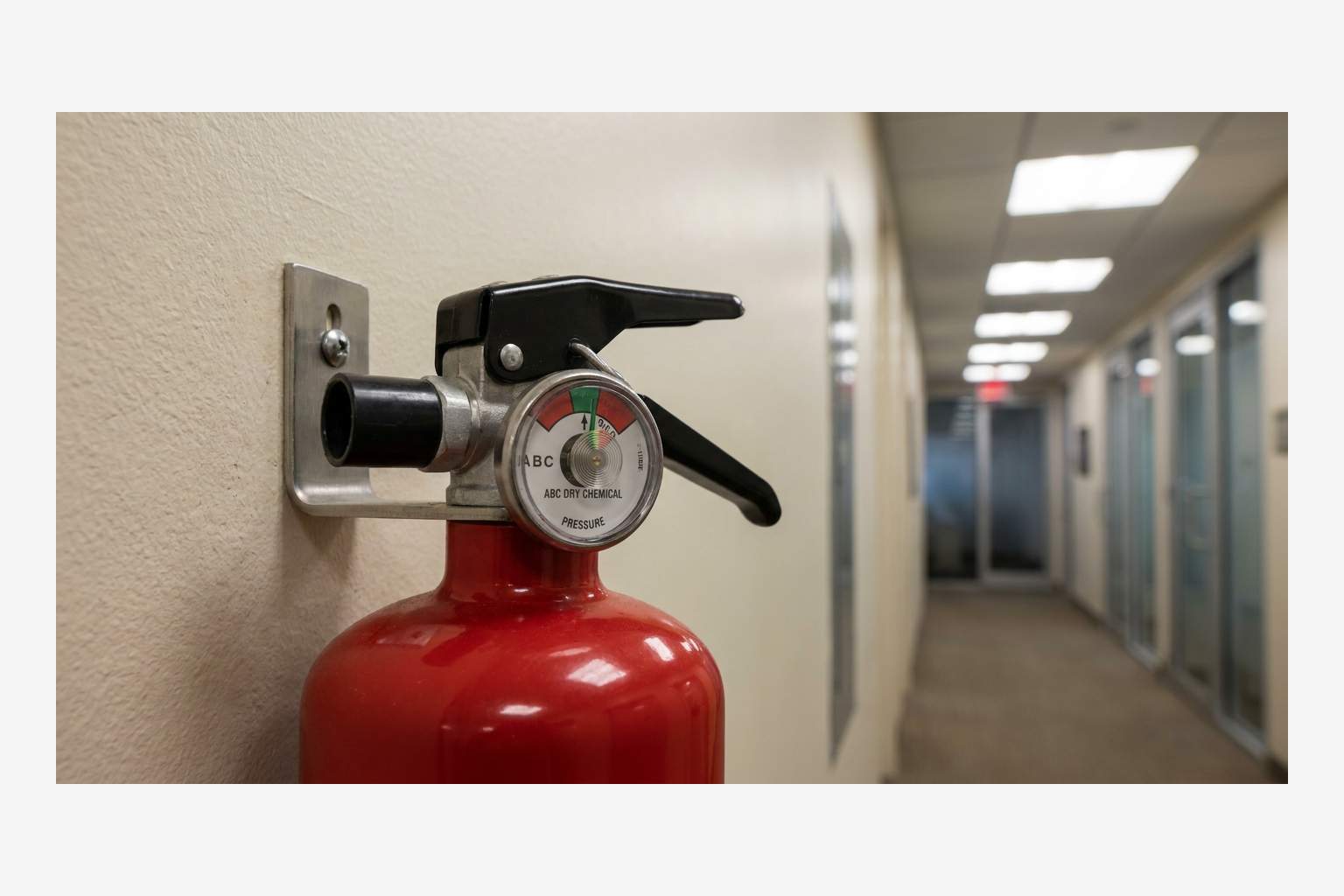
- The gauge needle must sit inside the green zone for the extinguisher to be charged and operable.
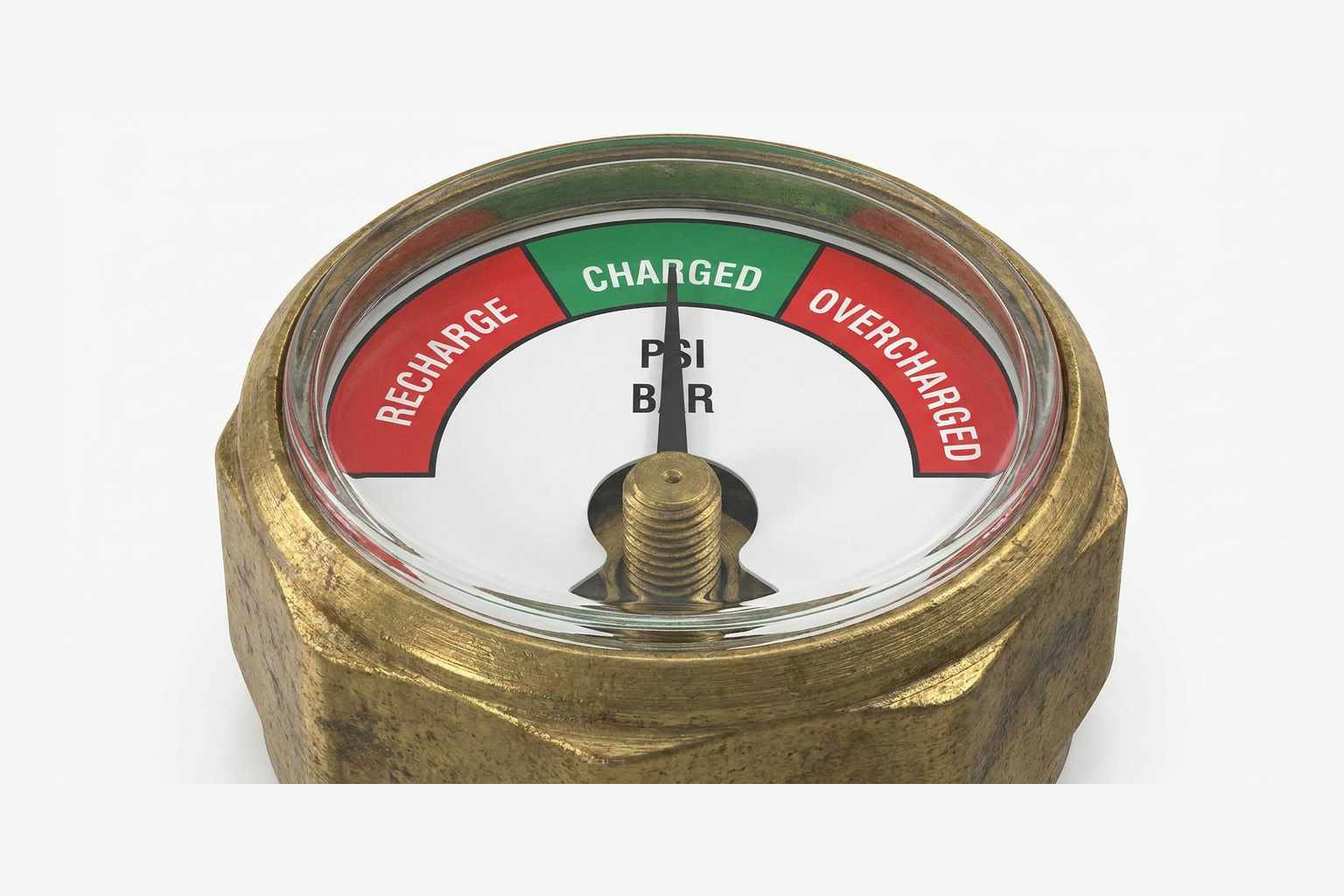
- Left red zone means undercharged; right red zone means overcharged. Both take the unit out of service.
- Stored-pressure dry chemical units typically read 100-195 psi, water units around 100 psi, and wet chemical units around 225 psi.
- CO2 extinguishers have no pressure gauge at all. They are verified by weighing the cylinder.
- NFPA 10 requires a monthly visual gauge check, annual professional maintenance, and a 6-year teardown for stored-pressure dry chemical units.
What Is a Fire Extinguisher Pressure Gauge?
The pressure gauge on a fire extinguisher is a small analog dial mounted on the valve body at the top of the cylinder. It displays the internal pressure of the stored propellant, which in most modern units is nitrogen gas pressing down on the extinguishing agent inside the cylinder.
That propellant is what pushes the agent out of the hose when you squeeze the handle. If the pressure is too low, the extinguisher may sputter, lose range, or fail to discharge at all. If the pressure is too high, the cylinder becomes a rupture hazard. The gauge catches both problems before they matter, which is why NFPA 10 makes it the first item on every monthly visual inspection.
Gauges use a sealed Bourdon tube inside the dial that flexes as internal pressure changes, moving the needle across a printed green arc flanked by two red arcs.
How a Fire Extinguisher Pressure Gauge Works
Stored-pressure extinguishers are factory-charged with agent plus pressurized nitrogen in a single sealed cylinder. The nitrogen sits on top of the agent as a pressurized gas cap, and the gauge reads that gas pressure through a small port in the valve.
The factory locks in a specific working pressure at 70 degrees Fahrenheit. On a typical 10 lb ABC dry chemical unit that number is around 195 psi, and the gauge face is printed so that working pressure sits in the middle of the green zone.
Pressure inside a sealed cylinder rises and falls with temperature, because nitrogen expands in heat and contracts in cold. A gauge near the top of the green in a hot boiler room may read near the bottom of the green in a cold loading dock. That is normal physics, not a leak.
How to Read a Fire Extinguisher Pressure Gauge
Nearly every stored-pressure extinguisher uses the same three-zone dial layout, so reading it comes down to knowing what each zone represents.
The Green Zone Means Charged and Ready
When the needle sits anywhere inside the green arc, the internal pressure matches the factory operating range and the extinguisher is considered charged. The green zone spans roughly plus or minus 15 percent around the rated pressure on the label. A needle in the green tells you the propellant is intact, but you still check the pin, tamper seal, hose, nozzle, and bracket at the same monthly visit.
The Left Red Zone Means Undercharged
A needle in the left red zone signals low pressure. The unit has either leaked slowly over years, been partially discharged, or sat in extreme cold. An undercharged extinguisher will still hiss if you pull the handle, but the stream may be too weak or brief to suppress a fire. NFPA 10 treats this as an out-of-service condition. Tag it, remove it, and get it recharged or replaced.
The Right Red Zone Means Overcharged
The right red zone indicates pressure above the safe operating range. This usually happens after a unit sits in a hot vehicle, near a boiler, or in direct sunlight for long stretches. Overpressure stresses the cylinder walls, the valve seals, and the safety rupture disc. An overcharged unit needs depressurizing and re-service by a certified technician. Never bleed pressure off yourself by partially squeezing the handle.
Tip: Photograph the gauge during your monthly walk-through. A year of photos makes slow pressure drift obvious long before the needle crosses into the red zone.
Pressure Gauge Ranges by Extinguisher Type
Different agents require different operating pressures, so the same green zone does not mean the same psi on every unit. The table below shows typical factory charge pressures for the most common extinguisher types in commercial buildings.
| Extinguisher Type | Typical Agent | Common Gauge Range | Has Gauge? |
|---|---|---|---|
| Stored-pressure dry chemical (2.5-10 lb) | ABC powder or BC powder | 100-195 psi | Yes |
| Water and foam | Water or AFFF | Around 100 psi | Yes |
| Wet chemical (Class K) | Potassium acetate solution | Around 225 psi | Yes |
| CO2 | Carbon dioxide | 850+ psi liquid | No, verified by weight |
| Cartridge-operated | Dry chemical with separate gas cartridge | None on cylinder | No, cartridge checked instead |
Match the gauge reading to the label on your specific unit. A 100 psi water extinguisher and a 195 psi dry chemical unit can both show green while reading nearly 100 psi apart.
Which Extinguishers Do Not Have a Gauge
CO2 extinguishers are the big exception. A CO2 unit stores liquid carbon dioxide at roughly 850 to 900 psi at room temperature, far above what a standard extinguisher gauge can display, so manufacturers fit no gauge at all. CO2 cylinders are verified by weighing them against the full charge weight stamped on the label. If a CO2 unit has lost more than 10 percent of its charge weight, it must be recharged by a certified shop.
Cartridge-operated wheeled units skip the cylinder gauge too, because the propellant gas lives in a separate cartridge that gets weighed and inspected instead.
Water-based extinguishers do have gauges, typically rated at 100 psi. Because water freezes, these units carry low-temperature storage requirements, and a frozen unit can crack its cylinder even while the gauge still shows green.

How to Check a Fire Extinguisher Pressure Gauge: Step by Step
The monthly visual inspection required by NFPA 10 follows a fixed sequence, and the gauge check sits right in the middle of it. Here is the routine our technicians use.
- Confirm access. The extinguisher must be in its designated spot, visible, unblocked, and mounted at the correct height with its brackets intact.
- Read the label. Verify the unit is the right type and size for the hazards in that area.
- Check the gauge. The needle must sit in the green zone. Note the exact position, because the trend matters more than any single reading.
- Inspect the physical condition. Look for dents, rust, corrosion, illegible labels, or a cracked hose and nozzle.
- Check the pin and tamper seal. The pull pin should be seated with the seal unbroken.
- Verify the inspection tag. Monthly checks get initialed and dated, and in NYC the annual certification tag must be current.
- Record anything abnormal. Flag any unit whose needle is out of the green so a technician can service it before the next cycle.
The routine takes about 30 seconds per extinguisher, so 20 units cost 10 minutes a month. Compare that with an FDNY violation for an out-of-service extinguisher, which can run hundreds of dollars per unit.
Common Gauge Problems and What They Mean
Gauges fail in a few predictable ways, and each pattern points to a different problem.
Slow drift into the left red zone almost always means a seal or valve leak. Stored-pressure units lose a few psi a year even when healthy, but a unit that drops from green to red within months has a leaking valve stem, O-ring, or gauge seal. A technician can reseat or replace the seal during recharge.
A stuck needle usually means a broken Bourdon tube. Tap the dial face gently. If the needle does not respond, the gauge is dead even if pressure is fine. This counts as a defect under NFPA 10 because the unit can no longer be verified.
A needle deep in the right red zone at room temperature points to a blocked gauge port or a unit that was overfilled at its last recharge. Either way, a certified shop must depressurize and re-service the cylinder.
A fogged or cracked gauge lens means moisture has entered the dial and corroded the movement. A replacement pressure indicator typically runs 10 to 60 dollars in parts plus labor, far cheaper than replacing the extinguisher.
Warning: Never remove a gauge on a charged extinguisher yourself. The gauge port vents the full cylinder pressure, and a stored-pressure unit at 195 psi can cause serious injury. Gauge replacement belongs to a certified technician with a recharge station.
NFPA 10 and FDNY Gauge Requirements for NYC Buildings
NFPA 10 requires a monthly visual inspection that includes the gauge, an annual professional maintenance visit, a 6-year teardown and recharge for stored-pressure dry chemical units, and a 12-year hydrostatic test for most dry chemical cylinders.
In NYC, FDNY rules require extinguishers in commercial occupancies to be certified annually by a company holding a Certificate of Fitness for fire extinguisher servicing. The certification tag showing the month and year of the last service must stay attached, and FDNY inspectors routinely check both the tag and the gauge. An extinguisher with a dead gauge or a needle in the red is not compliant, even if the tag is current.
Restaurants need Class K units near the cooking line, and those gauges read around 225 psi, so staff should know the Class K green zone looks different from the one on a wall ABC unit. Our types of fire extinguishers guide breaks down which unit belongs in each spot, and our ABC dry chemical guide covers the most common commercial unit in detail.
If FDNY has already flagged a unit, we swap in a serviced extinguisher the same day and handle the recharge in our shop, so your building never sits without coverage. Call (718) 852-2762 and ask about same-day swap service.
When a Gauge Reading Means Recharge or Replacement
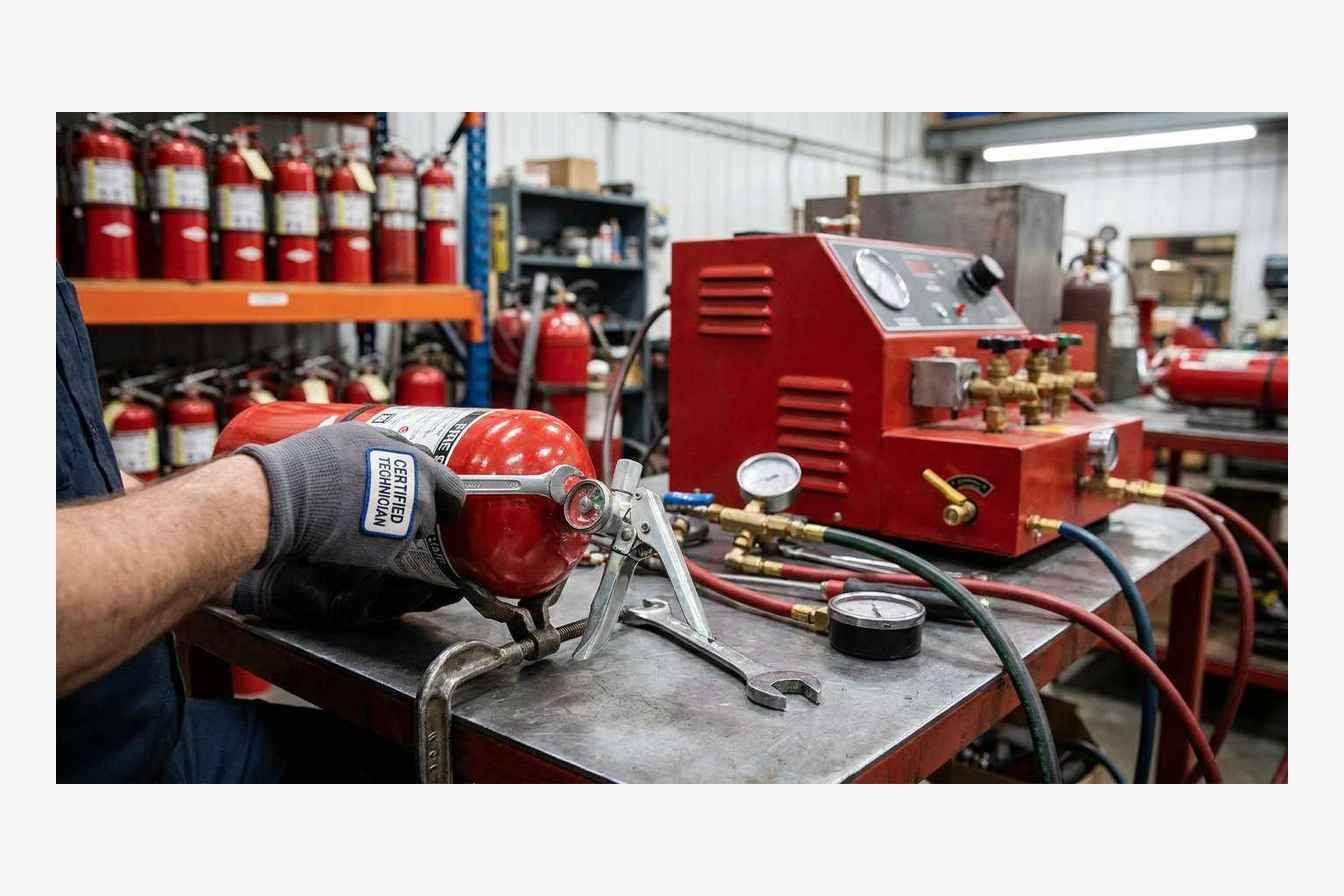
Deciding between recharge and replacement comes down to age, cylinder condition, and what the gauge told you. A unit that simply leaked down over years is a recharge candidate: a certified technician depressurizes it, inspects the valve, replaces the O-rings and gauge if needed, refills the agent, and repressurizes to factory spec. Our fire extinguisher recharge service covers every agent type.
A unit with a rusted cylinder shell, a cracked hose, or damage beyond the valve usually costs more to service than to replace, especially smaller 5 lb and 10 lb units. The 6-year teardown interval matters too: if a dry chemical unit is due for maintenance soon and the gauge has gone red, replace it rather than pay for a recharge followed immediately by a teardown.
For facility managers, track gauge readings by unit serial number. A monthly log lets you spot slow leakers early, budget replacements in batches, and hand FDNY inspectors documentation of a real inspection program.
Frequently Asked Questions
Need Gauges Checked in NYC?
Same-day extinguisher inspections, recharge, and gauge replacement for Brooklyn and the five boroughs.
📞 (718) 852-2762Schedule an Inspection