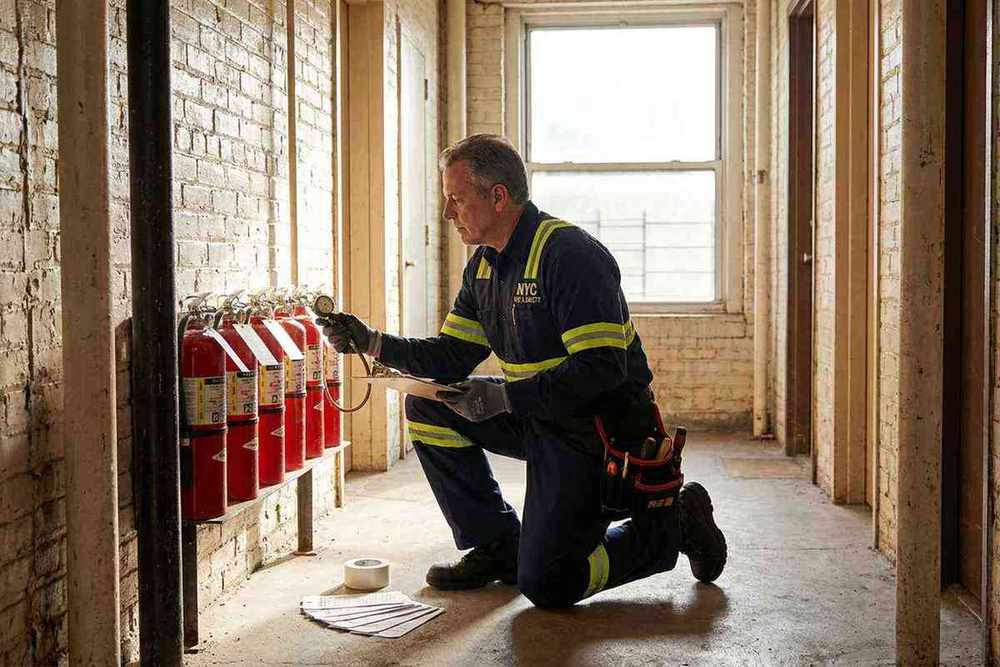
If you run a building in New York, few envelopes raise your blood pressure faster than an FDNY violation. A&J Fire Extinguisher has spent three generations keeping NYC buildings compliant, and our FDNY violation removal service clears notices for owners in every borough. This guide explains what these notices mean, what they cost, and the fastest way to resolve one. Call (718) 852-2762 with questions about a specific notice.
Key Takeaways
- An FDNY violation is an official notice that a condition in your building breaks the NYC Fire Code.
- Violations are heard at OATH, and FDNY penalties are set by a fixed penalty schedule that climbs with repeat offenses.
- The city offers a free FDNY fire violation lookup so you can see open notices by address.
- Correcting the condition and filing proof is the only way to remove FDNY violations from the record.
- Monthly extinguisher checks and current tags prevent the most common citations.
What Is an FDNY Violation?
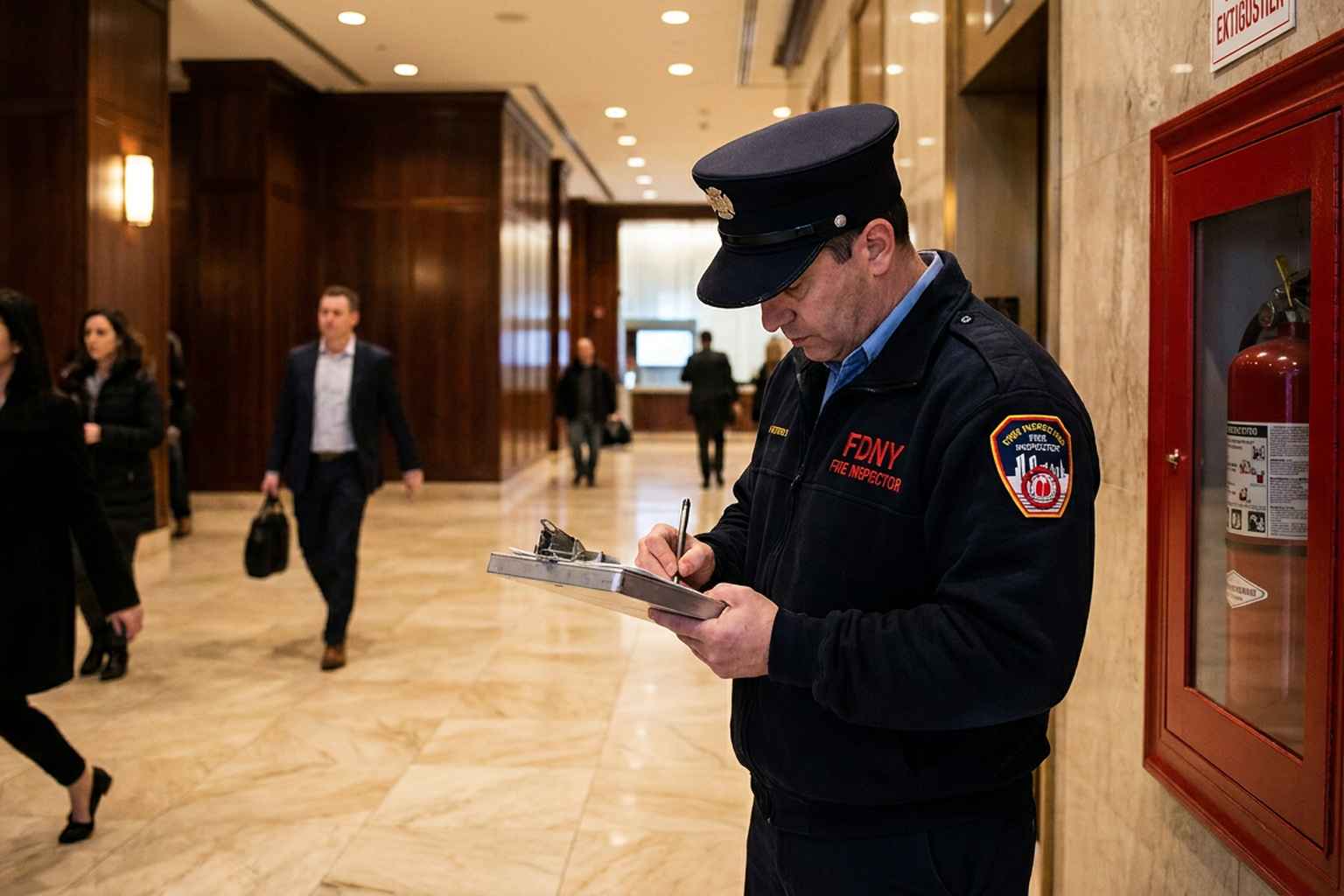
An FDNY violation is a formal notice issued when a Fire Department inspector finds a condition that breaks the NYC Fire Code. The code covers a wide range of life safety infractions: blocked exits, expired extinguisher tags, improper storage of combustibles, missing permits, and dozens of other hazards. Inspectors write these notices during routine visits, after a fire or false alarm, or in response to a complaint from a tenant or neighbor.
Most notices arrive as a Notice of Violation with a hearing date at OATH, the city's administrative tribunal. A smaller group of offenses are criminal court summonses, which put the matter in front of a judge instead of a hearing officer. Either way, the underlying condition has to be corrected no matter how the paperwork plays out. What changes is the process, the penalty, and how fast you need to act.
The Most Common FDNY Violations in NYC
Inspectors write the same violations year after year. In commercial spaces and multifamily buildings, these citations show up far more often than any others:
| Violation | Why FDNY Writes It |
|---|---|
| Obstructed exits or egress paths | Boxes, carts, and equipment slow evacuation to a crawl |
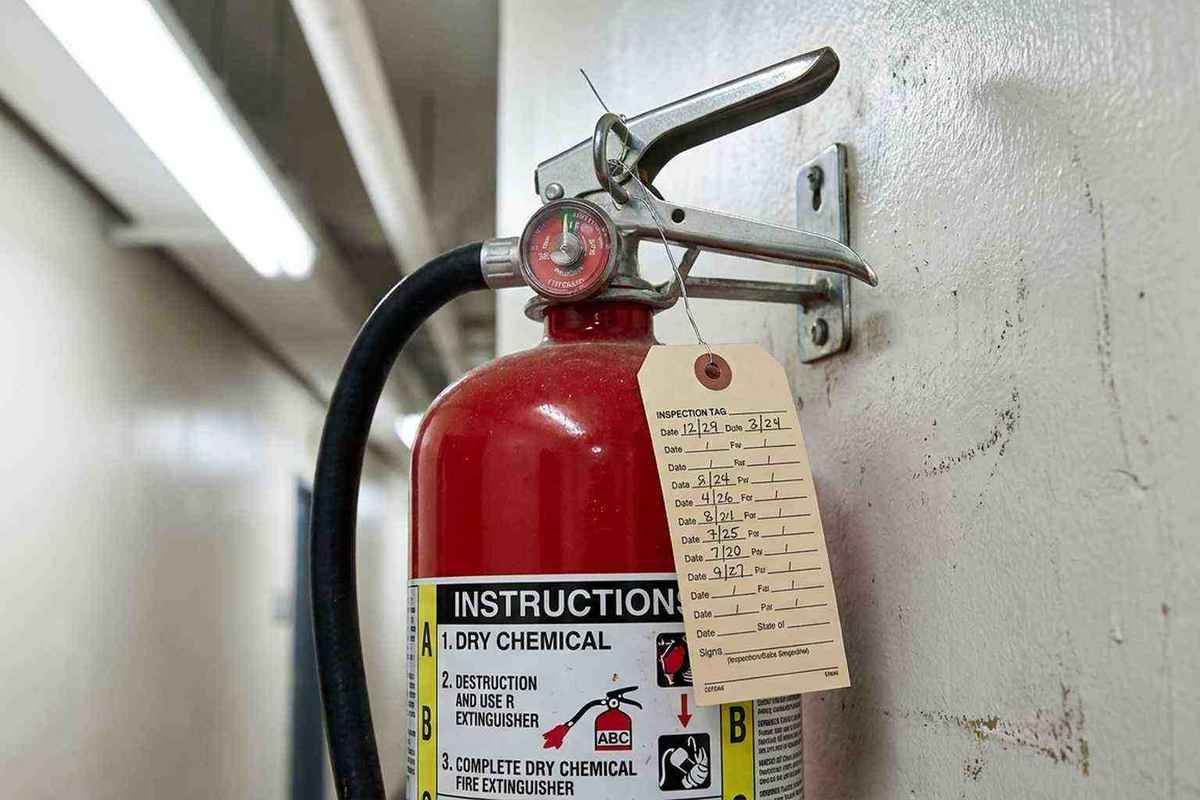
| Missing or expired extinguisher tags | The tag proves your monthly and annual service is current |
| Propped-open fire doors | Open doors let smoke and flames spread between areas |
| Improper storage of combustibles | Fuel stored near boilers or exits turns a small fire into a big one |
| Missing FDNY permits | Certain operations, like handling flammable liquids, need a permit first |
| Unmaintained alarm or suppression systems | Systems need certified inspection records kept on site |
If your notice cites extinguisher tags or missing units, our fire extinguisher inspections page walks through exactly what FDNY expects to see on every visit. Most tag violations are fixed in a single service appointment.
FDNY Violation Fines and Penalties
FDNY penalties are set by the OATH penalty schedule, so the dollar amount depends on the specific code section and your compliance history. Minor infractions run a few hundred dollars. Serious hazards and repeat offenses climb into the thousands per count, and some carry fines for every day the condition stays open.
What Makes a Penalty Worse
Three rules reliably inflate the bill:
- Fines increase for repeat offenses at the same address.
- Missing your hearing triggers a default judgment at the maximum penalty.
- Ignoring the notice can escalate to vacate orders or a closure of the space.
💡 Tip: The hearing is your opportunity. Showing that the condition was corrected before the hearing date often reduces the penalty, and in some cases dismisses the notice entirely.
How to Look Up an FDNY Violation
Before you can fix a problem, you have to see it on the record. The city offers a free FDNY fire violation lookup online. Just navigate to the city's violation search portal, open the FDNY tab, and search by address, borough, block and lot, or violation number. Results show the violation type, issue date, current status, and hearing date for each open notice.
Property managers should run every owned address at least quarterly. Violations attach to the building, not to the person, so a notice written against a prior owner can surface during a sale or refinancing and stall the closing.
What to Do After You Receive an FDNY Violation
Step 1: Correct the Condition
Fix the hazard immediately, even before the paperwork gets resolved. Serious hazards, like a blocked exit in an occupied building, need to be corrected the same day. Take photos of the finished work and keep every invoice and receipt, because that paper trail becomes your evidence.
Step 2: Attend the OATH Hearing
FDNY violations are heard at OATH's offices at 66 John Street in Manhattan. Bring proof of correction: photos, service invoices, certificates of correction, and permits. A hearing officer who sees the condition was fixed quickly usually treats you far better than a default judgment would.
Step 3: File Proof and Confirm Removal
For extinguisher and equipment violations, a licensed service company files a certificate of correction after the repair. FDNY then re-inspects and closes the notice. Use the free FDNY violation lookup afterward to confirm the violation shows a resolved status, because an open notice keeps accruing penalties until the city records the correction.
When to Bring in a Professional
An expediter or a violation removal company files the correction paperwork, tracks the hearing calendar, and chases the re-inspection for you. Owners with multiple buildings, or with violations that require repairs, usually save money by handing the process to a team that handles FDNY paperwork every week.
⚠️ Warning: Never ignore an FDNY violation notice. Unresolved violations keep accruing penalties, block property sales, and can escalate to vacate orders that close parts of your building.
How to Avoid FDNY Violations in the First Place
The cheapest violation is the one that never gets written. A monthly walk-through catches nearly every hazard before an inspector does:
- Keep every exit, stairwell, and corridor completely clear.
- Confirm extinguisher tags are signed monthly and serviced annually.
- Keep fire doors closed and never block them open.
- Review permits once a year and renew before they lapse.
- Schedule professional fire extinguisher inspections instead of waiting for a citation.
The Extinguisher Side of Compliance
Our team handles the extinguisher portion of Fire Code compliance: monthly tag service, annual maintenance, hydrostatic testing, and the service records that satisfy Local Law 157 and OSHA fire extinguisher requirements. Owners who want to self-audit between visits can follow our fire extinguisher inspection checklist and catch tag issues early.