A clean agent fire extinguisher fights Class B and Class C fires with a fast-evaporating gas that leaves zero residue. That makes it the tool of choice for server rooms, vehicles, and laboratories where powder would cause more damage than the fire itself. A&J Fire supplies and services clean agent fire extinguishers for businesses across NYC from our Brooklyn headquarters. This guide explains how clean agents work, what they cost, and where NFPA 10 expects them. Call us at (718) 852-2762 for same-day availability.
Key Takeaways
- Zero residue - Halotron I and FE-36 evaporate completely, so nothing touches your equipment
- Class B and C rated - larger clean agent units also carry a Class A rating
- Safe in occupied rooms - no oxygen displacement hazard like CO2
- 8 to 12 foot discharge range - fight the fire from a safer distance than CO2 allows
- 12-year hydrostatic test interval - same as dry chemical, not the 5-year CO2 cycle
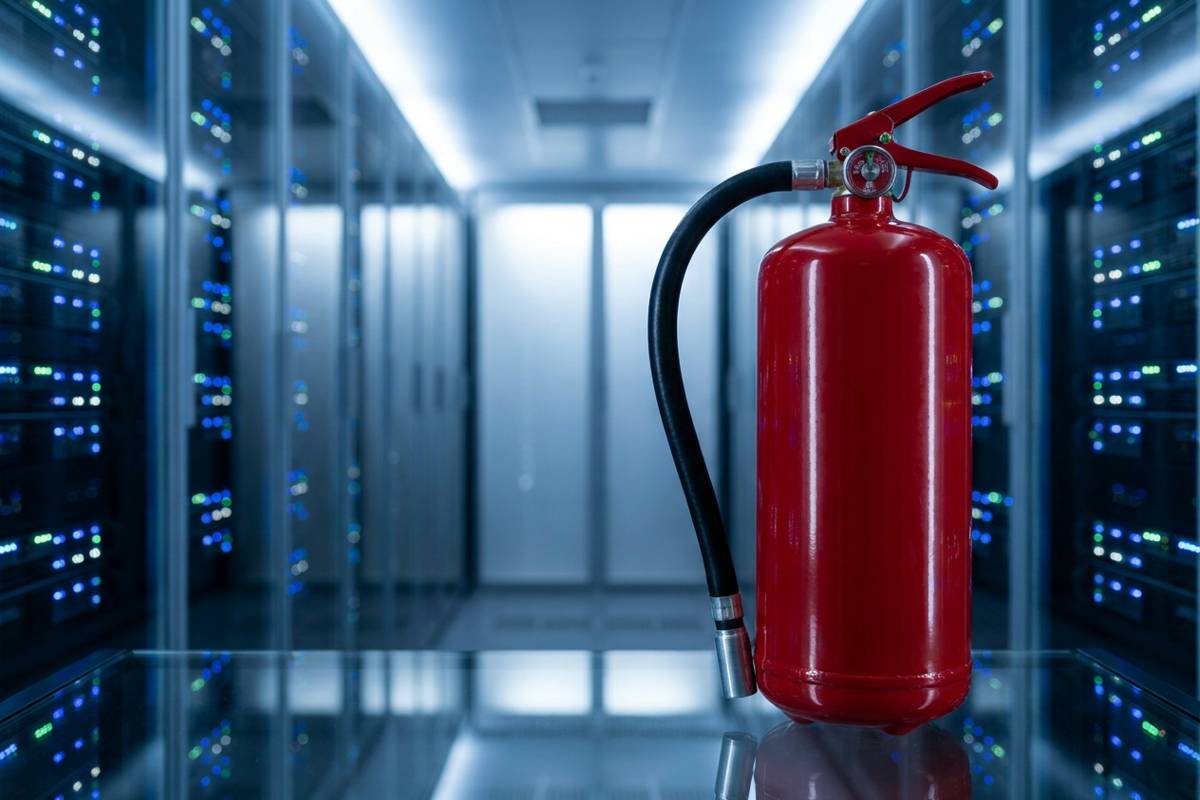
What Is a Clean Agent Fire Extinguisher?
A clean agent is a gaseous fire extinguishing agent that is electrically non-conductive and evaporates without leaving residue. NFPA 10 and NFPA 2001 recognize these agents as the cleanest portable option for protecting electronics, engines, and irreplaceable materials.
The original clean agent was Halon 1211, a highly effective firefighting gas. Production of new halon ended in 1994 under the Montreal Protocol because it depletes the ozone layer, so the industry developed replacements that perform almost as well. Today the two agents you will see most often are:
- Halotron I - a blend of HCFC-123 with argon and nitrogen, used in Amerex Halotron I units
- FE-36 (HFC-236fa) - the agent inside Amerex Cleanguard extinguishers
Both are stored as liquid under nitrogen pressure and turn to gas the moment they leave the nozzle, so nothing touches your equipment except agent.
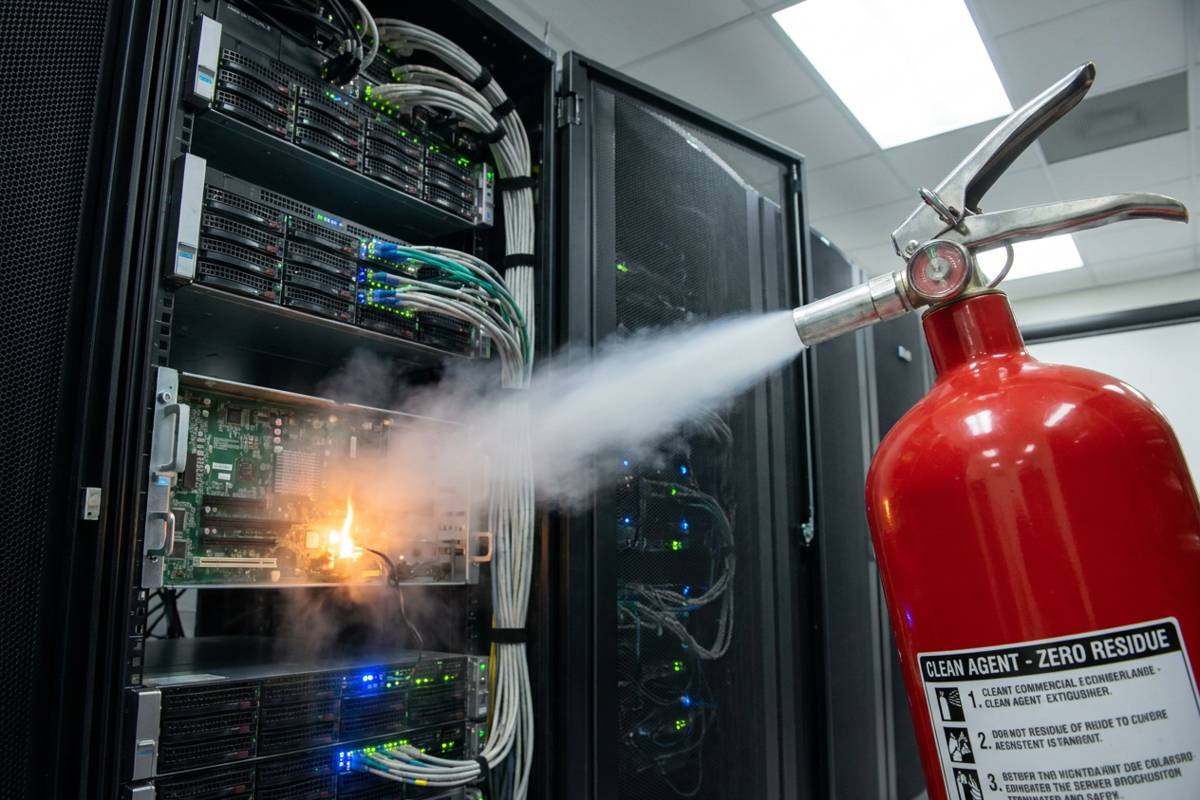
How Clean Agent Extinguishers Work
Instead of smothering a fire the way foam or CO2 does, clean agents pull heat out of the flames.
Heat Absorption
When Halotron I or FE-36 hits the fire, the hot gas chemically breaks down and absorbs large amounts of heat. This endothermic reaction cools the fuel below its ignition temperature and interrupts the free radicals that sustain combustion, so the fire goes out and stays out.
Safe in Occupied Spaces
Clean agents are engineered to extinguish fires at concentrations that remain safe for occupied spaces. The discharge does not displace oxygen to dangerous levels the way a CO2 discharge can in a small room. That matters in server and control rooms where technicians may be present when a fire starts. Live electronics survive both the fire and the suppression.
Clean Agent vs CO2 vs Dry Chemical
All three portable options handle Class B and Class C fires, but they behave very differently on the ground:
| Feature | Clean Agent | CO2 | ABC Dry Chemical |
|---|---|---|---|
| Residue after discharge | None | None | Corrosive powder everywhere |
| Discharge range | 8 to 12 feet | 3 to 8 feet | 8 to 12 feet |
| Enclosed room safety | Room-safe concentration | Oxygen displacement hazard | Safe but irritates airways |
| Class A rating | Yes, on larger units | No | Yes |
| Equipment damage | None | Static shock risk | Powder ruins electronics |
The practical difference is discharge range and room safety. CO2 works but forces you to walk within a few feet of the fire and evacuate afterward. Clean agent lets you fight the fire from a safer distance and keep working right after the smoke clears. For a deeper comparison, see our CO2 fire extinguisher guide and our full fire extinguisher types breakdown.
Where Clean Agent Extinguishers Are Used
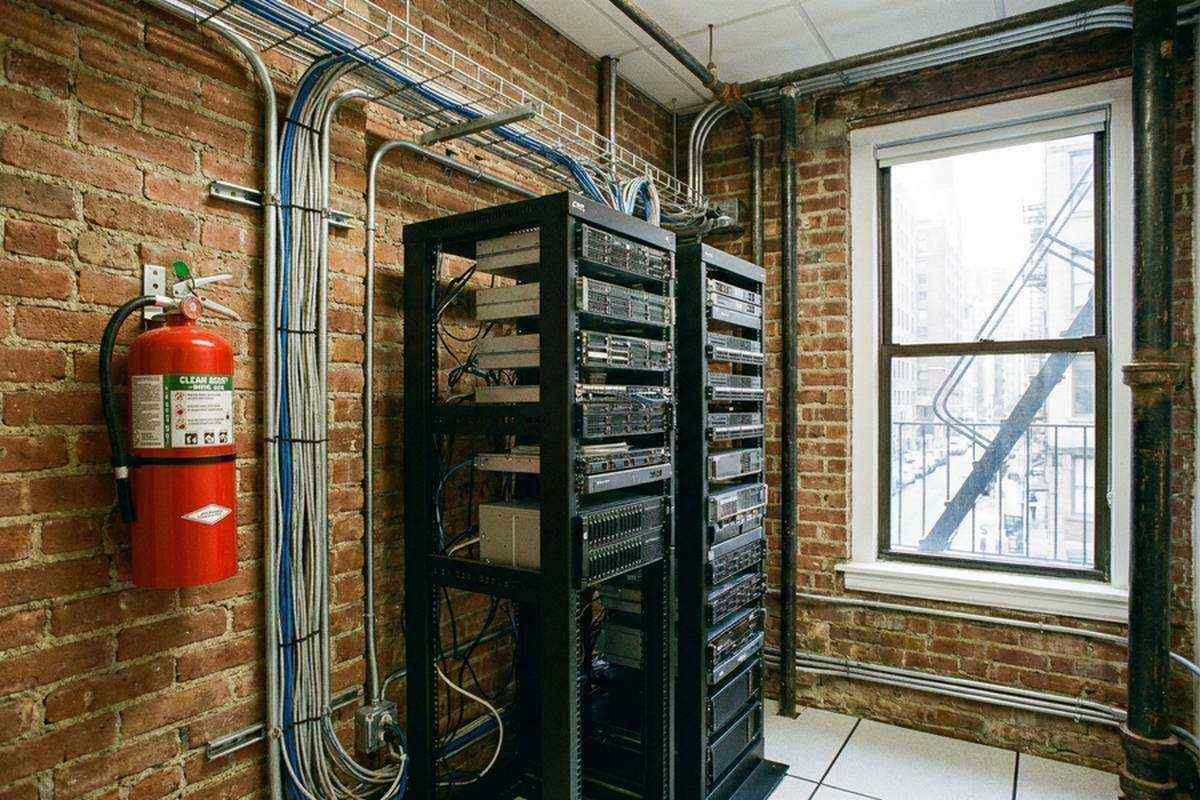
Data Centers and Telecom Rooms
Server racks, network closets, and telecom facilities are the number one clean agent application. One powder discharge can write off an entire rack of switches, while a clean agent unit kills the fire and leaves the hardware running.
Vehicles, Boats, and Aircraft
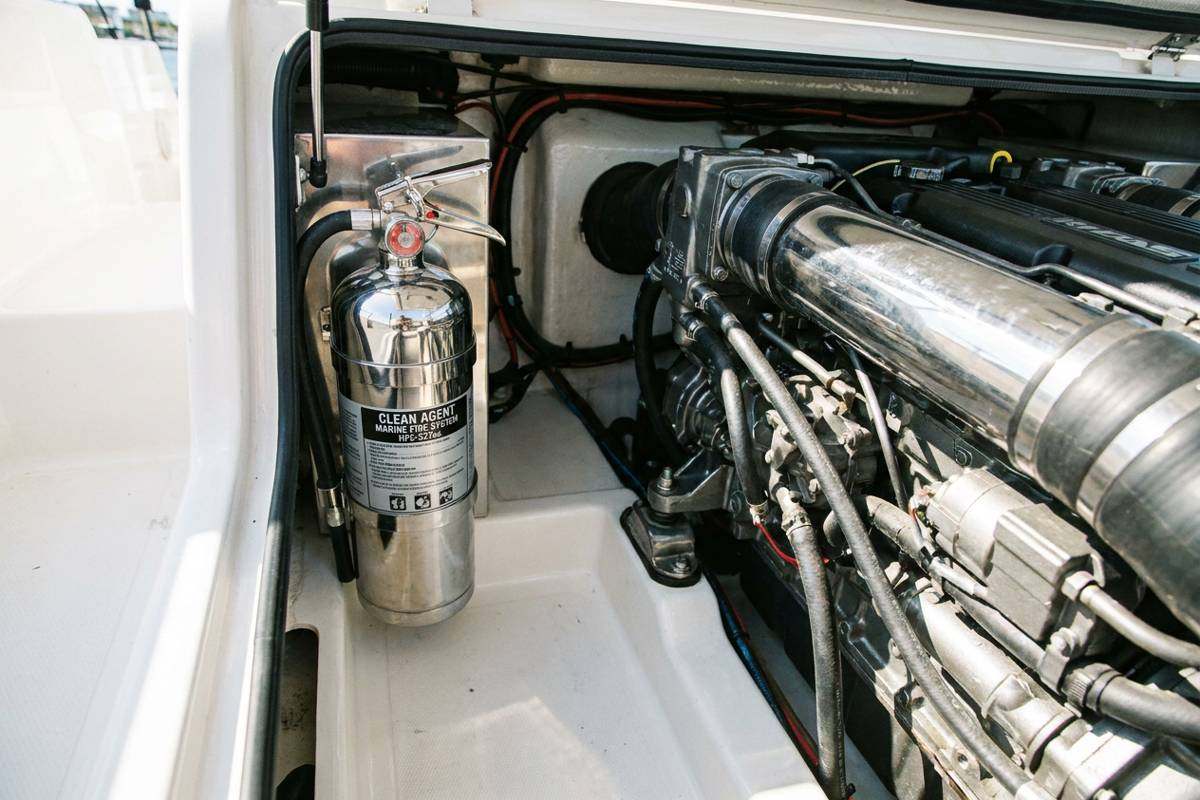
Clean agent units are the standard mobile fire suppression choice for engine compartments and cockpits. Halotron I is FAA approved for aircraft, and 2.5 to 5 lb units fit boat and RV engine rooms where powder would blind the driver.
Museums, Archives, and Medical Facilities
Libraries, archives, galleries, and MRI suites cannot tolerate water, powder, or corrosive chemicals. Clean agent discharge protects books, artwork, records, and precision medical equipment with no cleanup.
Clean Agent Sizes, Ratings, and Cost
Portable clean agent extinguishers come in a small range of sizes, and ratings climb with the cylinder:
- 5 lb Halotron I - 2-B:C rating, ideal for vehicles, boats, and small labs
- 9.5 lb Halotron I - 5-B:C rating, server closets and control rooms
- 13 lb Halotron I - 2-A:10-B:C rating, full rooms and data centers
Expect to pay more than for dry chemical. A 5 lb Halotron I unit typically runs $400 to $700; a 13 lb unit runs $1,000 to $1,500. The premium buys the only portable agent that is residue-free, room-safe, and rated for Class A on larger cylinders. For help sizing units for your building, see our guide to buying fire extinguishers in NYC.
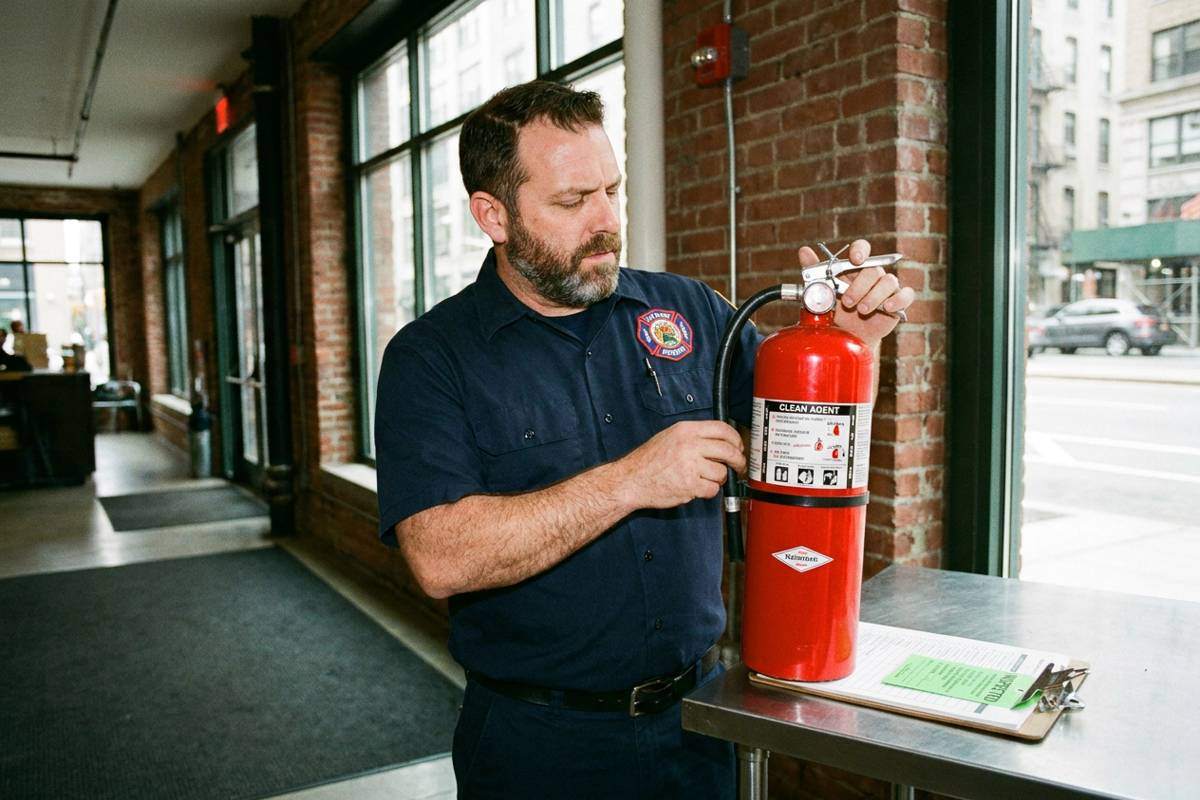
Inspection and Maintenance Requirements
FDNY and NFPA 10 hold clean agent extinguishers to the same inspection calendar as other portable units, with one key difference in pressure testing:
- Monthly visual inspection - confirm the unit is mounted, the gauge reads green, and the seal and pin are intact
- Annual certified maintenance - a licensed technician verifies agent weight, hose condition, and internal corrosion
- 12-year hydrostatic test - Halotron I and FE-36 cylinders test on the dry chemical interval, not the 5-year CO2 interval
Because clean agent units are nitrogen-pressurized, the gauge check works the same as on an ABC unit. A&J Fire performs certified fire extinguisher inspections throughout NYC and keeps Halotron I and Cleanguard units in stock at our Brooklyn shop. Call (718) 852-2762 to schedule service.
Choosing the Right Clean Agent Extinguisher
Best practice: Pair one clean agent unit with your ABC dry chemical coverage. The ABC unit protects general building spaces, while the clean agent unit lives next to the equipment that matters most.
Match the cylinder to the hazard: 5 lb for vehicles, 9.5 lb for server closets, 13 lb for full data rooms. If your building falls under FDNY or Local Law 157 requirements, document every unit on your inspection tags.