If you charge an e-bike in a hallway, run a shop with battery powered tools, or manage a building where tenants plug in scooters, you have probably searched for a lithium ion battery fire extinguisher and found conflicting advice. Some sellers push Class D units, others say ABC powder is fine, and the truth is more specific than either. As a third generation fire equipment company serving New York City, A&J Fire stocks a dedicated lithium ion battery fire extinguisher line because standard extinguishers do not stop thermal runaway. This guide explains what actually works, what fails, and how to protect your space.
Key Takeaways
- Standard ABC extinguishers knock down flames but do not stop thermal runaway, so the battery can reignite minutes later.
- Class D extinguishers are for combustible metals, not lithium-ion batteries. Buying one for a scooter or drill is wasted money.
- AVD vermiculite and encapsulator agents are the only handheld options that cool cells and suppress reignition.
- NYC logged nearly 270 lithium-ion battery fires in 2023 with 18 deaths, mostly from e-bikes and scooters charged near exits.
- If a battery is hissing, swelling, or smoking indoors, evacuate and call 911 first. No consumer extinguisher is worth your life.
If you charge an e-bike in a hallway, run a shop with battery powered tools, or manage a building where tenants plug in scooters, you have probably searched for a lithium ion battery fire extinguisher and found conflicting advice. Some sellers push Class D units, others say ABC powder is fine, and the truth is more specific than either. As a third generation fire equipment company serving New York City, A&J Fire stocks a dedicated lithium ion battery fire extinguisher line because standard extinguishers do not stop thermal runaway. This guide explains what actually works, what fails, and how to protect your space.
Why Lithium Ion Battery Fires Are Different
A lithium-ion battery fire is not a normal combustible fire. The battery is both the fuel and the ignition source, packed into a sealed metal case. When one cell fails it releases heat faster than the case can vent it, and that heat trips the neighboring cells. The result is thermal runaway, a chain reaction where each failing cell dumps energy into the next one. No ordinary cooling agent stops it, because runaway burns at extreme speed. Cell temperatures can exceed 1,000 degrees Fahrenheit within seconds, and the battery ejects flaming gases, sparks, and molten material several feet in every direction. Even after the visible flames are out, the remaining cells can still hold enough energy to restart the fire 10, 20, even 30 minutes later.
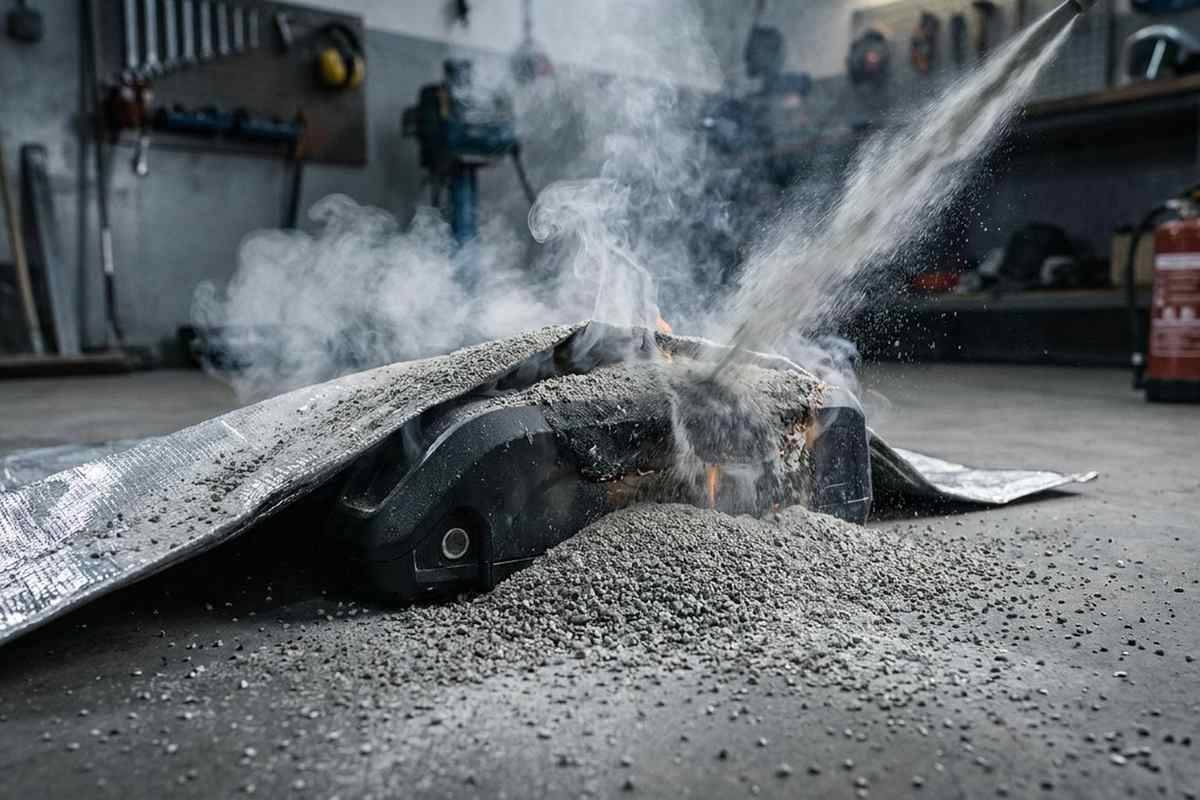
That is why fighting one is a two part problem. You need to suppress the flames and cool the battery. Almost every common extinguisher only does the first part.
What Starts a Lithium Battery Fire
Understanding the failure modes helps you pick the right protection, because every cause traces back to cell damage.
💡 Tip: Any battery that was dropped hard, swells, or smells sweet should be retired immediately. Damage can short cells days later, not just on impact.
- Physical damage. A dropped battery, a punctured case, or a scooter that tips into a door frame can short cells internally.
- Overcharging and cheap chargers. Aftermarket chargers that skip the battery management system push cells past safe voltage, especially overnight.
- Heat exposure. A battery stored next to a radiator or inside a hot vehicle ages faster and becomes unstable.
- Manufacturing defects. Low cost cells with contaminated electrolyte can fail without warning, which is why certified rechargeable packs matter.
In an apartment or workplace, most fires start while the device is plugged in and unattended. That timing matters, because it decides where your extinguisher lives and what size makes sense.
Why New York City Needs This Conversation
New York is the epicenter of the lithium-ion battery problem in the United States. FDNY responded to nearly 270 battery fires in 2023, killing 18 people, and fire officials have called these devices one of the leading causes of fatal fires in the city. Most victims were not the riders. They were neighbors trapped by a bike charging in a hallway or stairwell.

The city has pushed back hard. Local Law 39 now requires e-bikes and scooters sold or rented in NYC to carry UL 2849 or UL 2272 certification, and landlords increasingly prohibit charging in common areas. Building owners also face fire safety code pressure on equipment readiness, including the extinguisher tagging rules covered under Local Law 157.
For businesses, the exposure is bigger than a burned bike. A battery fire in a delivery fleet, workshop, or server closet can take down the whole operation. Our Brooklyn fire protection customers increasingly ask for battery specific coverage, and the question is always the same one: which extinguisher actually works on these fires?
Can a Regular ABC Extinguisher Put Out a Lithium Battery Fire?
This is the most common question we get, and the honest answer is: it can put out the flames, but it cannot put out the fire.
ABC dry chemical units are excellent all around tools, and you should absolutely keep them for trash, grease, and electrical fires. Spray one on a burning battery pack and the powder blanket will knock down the visible flames in seconds. But the chemical powder has almost no cooling ability. The cells underneath are still in runaway, still venting flammable gas, and still hot enough to reignite as soon as the powder settles.
The same logic applies to the other familiar options:
- CO2 displaces oxygen and leaves no residue, which is why server rooms love it. It provides zero cooling, so a lithium fire reignites almost immediately.
- Clean agent extinguishers have the same weakness. The gas disappears, the battery does not.
- Standard foam smothers surface flames but cannot penetrate the pack or stop the reaction inside.
A regular extinguisher is a valid first move for a small battery fire, like a drill pack on a workbench, because it buys escape time. Just understand that the fire is not out, the unit is spent, and you still need to get the battery outdoors or wait for the fire department.
What Actually Works: Agents Rated for Lithium Ion Fires
The handheld market has caught up with the problem, and two agent families now do what powder and gas cannot: cool the cells and stop reignition.
AVD Vermiculite Extinguishers
AVD, short for Aqueous Vermiculite Dispersion, suspends natural vermiculite mineral in water. When sprayed onto a battery the water flash evaporates and the mineral plates stick to the pack, forming a heat resistant crust that smothers flames, starves the fire of oxygen, and pulls heat out of the cells. Independent testing shows this fire suppression method stops reignition on small format batteries, which is why it is the fastest growing category for e-bike and tool fire protection. Canisters run from small 500ml aerosols for a camera drone or laptop up to 6 liter units for delivery bikes and charging stations.
Encapsulator Agents
Encapsulator agents, such as F-500 style concentrates, work differently. The solution encapsulates the flammable vapors released by a failing cell and drops the surface temperature fast. Fire departments use them on electric vehicle fires because they cool large packs that no small extinguisher could handle. You will mostly see these in commercial systems and FD toolkits rather than on a shelf.
Large Volume Water
Plain water sounds primitive next to high tech agents, but it is the backbone of professional response. The key phrase is large volume. A fire department can flow hundreds of gallons to cool a car battery pack. A homeowner with a bucket cannot. Flooding a small device with a steady stream from a hose can work if the battery is already outdoors and you can keep your distance, but never pour water on a battery that is actively venting inside a building.
Agent Comparison
| Agent | Knocks Down Flames | Cools Cells | Stops Reignition | Realistic Use |
|---|---|---|---|---|
| ABC dry chemical | Yes | No | No | Buys escape time |
| CO2 | Yes | No | No | Not for batteries |
| Clean agent | Yes | No | No | Not for batteries |
| Class D powder | Partial | No | No | Bulk metals only |
| AVD vermiculite | Yes | Yes | Yes | Small device fires |
| Encapsulator agent | Yes | Yes | Yes | Large packs, pro use |
How to Choose the Right Unit for Your Space
Shopping comes down to three questions: what batteries do you have, where do they charge, and who will grab the extinguisher in an emergency?
💡 Tip: Keep one AVD unit at the charging spot and one ABC unit per floor. The two protect different problems.
Match the Unit to the Battery You Own
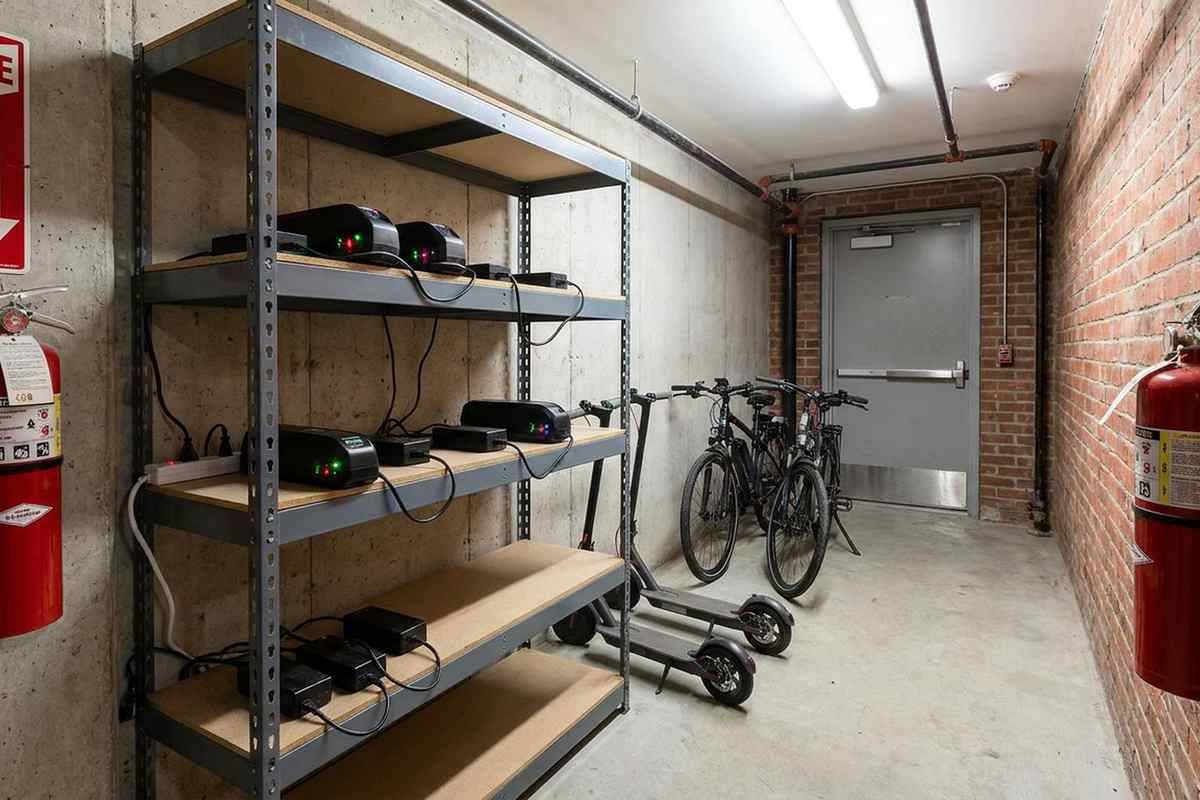
- E-bikes and scooters. A 2 to 6 liter AVD canister mounted near the charging spot is the practical answer for delivery riders and building owners.
- Power tools and small electronics. A 500ml or 1 liter AVD aerosol plus your existing ABC unit covers the workshop.
- Battery walls and storage rooms. Encapsulator systems and detection matter more than any single can. Call us at (718) 852-2762 and we will size it with you.
Skip anything marketed as a lithium fire spray without an AVD, encapsulator, or tested rating behind it. Certification and a listed rating matter, because at 2 a.m. you do not want to find out a marketing label was the only thing your extinguisher had.
For everything else in the building, keep standard units too. Our types of fire extinguishers guide covers the ABC units every floor should have, and the two categories protect different problems.
How to Respond When a Battery Catches Fire
The extinguisher is the second most important tool. The first is your judgment about when to fight at all.
⚠️ Warning: Never carry a venting or burning battery through your home or building. The gases are toxic and a flare can ignite on the move. Evacuate, close the door, and call 911.
A battery in early failure gives warning: swelling, hissing, popping sounds, a sweet chemical smell, or heat you can feel from a foot away. At that stage, unplug it if the plug is right there and not hot, then get everyone out and call 911. Do not carry a venting battery through your home.
If flames are small and contained, like a tool pack on a concrete floor, and you have the right extinguisher in reach:
- Alert everyone and keep your back to a clear exit.
- Spray the AVD agent across the pack to blanket it, not just the flames.
- Watch for reignition instead of walking away, and reapply if needed.
- Evacuate and wait for FDNY even if it looks out.
If flames are spreading, smoke is filling the room, or the battery is near a door or stairwell you need to escape through, do not fight it. Close the door behind you, call 911, and let responders with gear handle it. New York's fire deaths in these fires were overwhelmingly people who lost their exit path, not people who lacked a $60 extinguisher.
Mounting, Storage, and Ongoing Service
Where the unit lives decides whether it helps at all. Mount it on the path between the charging area and the exit, so grabbing it never puts the fire between you and escape. For landlords, that usually means inside charging rooms and delivery staging areas, never in a locked closet.
Charging habits cut your risk more than any purchase:
- Charge away from doors, hallways, and anything blocking your exit.
- Never charge unattended overnight, and replace cheap OEM chargers with certified ones.
- Store spare batteries on a hard surface away from radiators and direct sun.
- Retire any pack that was dropped hard, swells, or smells sweet.
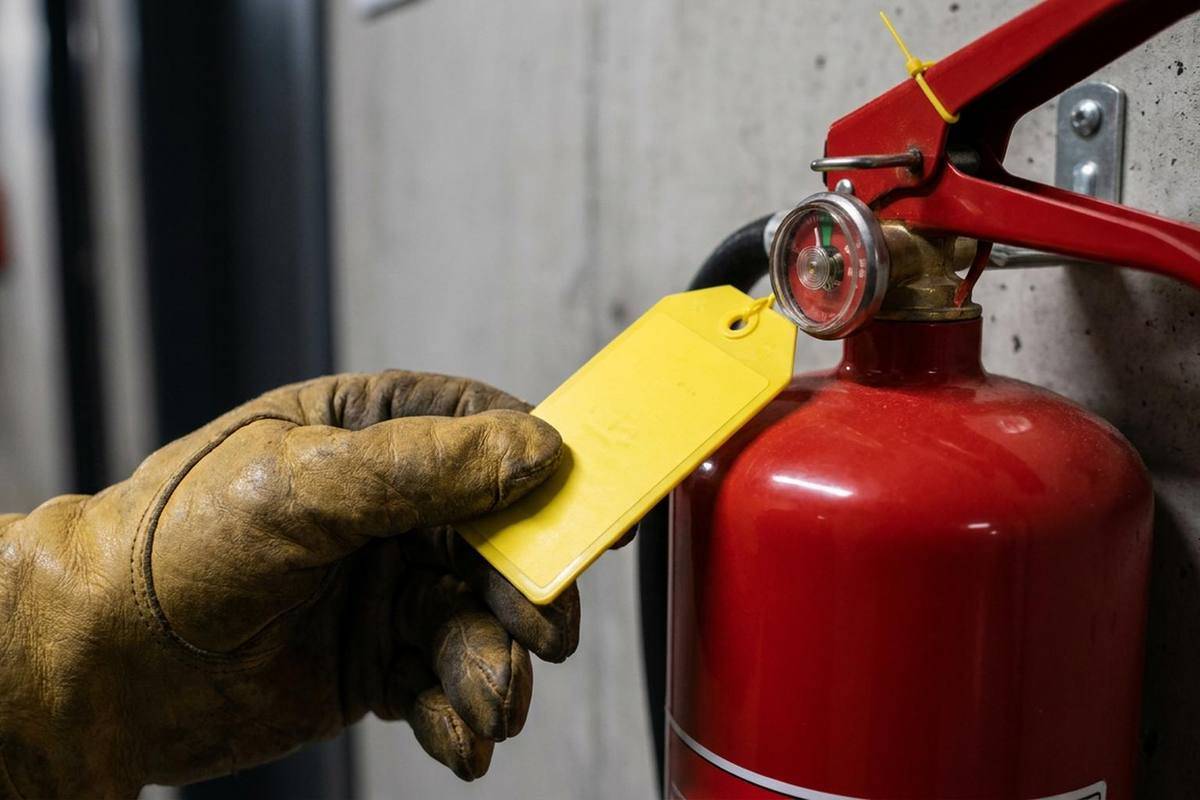
Once the right extinguisher is on the wall, treat it like the life safety device it is. New York buildings need annual service tags to stay compliant, and an untagged unit can fail inspection. Our fire extinguisher inspections team tags hundreds of Brooklyn, Queens, and Manhattan buildings every year. If you are unsure whether your site is compliant, call (718) 852-2762 and we will check your gear against current code.