Choosing the right fire extinguisher for your boat is not optional - it's a Coast Guard requirement and a critical piece of boating safety equipment. Whether you run a small fishing boat on Long Island Sound or a cabin cruiser in Brooklyn, the USCG mandates that motorized vessels carry approved fire extinguishers at all times. This guide covers everything you need: which type to buy, how many to carry, where to mount them, and how to keep them inspection-ready.
Key Takeaways
- USCG-approved Type B extinguishers are required on all motorized boats with enclosed compartments or fuel systems
- Boats under 26 feet need at least one B-I extinguisher; larger vessels need two or more
- Type ABC extinguishers satisfy the requirement if they carry a USCG approval label
- Mount extinguishers in accessible locations using approved brackets - never store loose
- Inspect monthly, service annually, and replace or test every 12 years
Why Every Boat Needs a Fire Extinguisher
Boat fires are more dangerous than most people realize. You're surrounded by water, but that doesn't help when fuel, electrical systems, and enclosed spaces combine to create a fast-moving fire that can engulf a vessel in minutes. According to the US Coast Guard, there are approximately 150-200 recreational boat fires reported each year - and many more go unreported.
The most common causes of fires on recreational boats include:
- Fuel spills and vapors in the bilge or engine compartment
- Electrical shorts from corroded wiring or overloaded circuits
- Cooking accidents in the galley with flammable cooking oils
- Heater malfunctions on boats with propane or diesel heating systems
- Battery explosions from improper charging or ventilation
Without a properly rated, coast guard approved extinguisher within arm's reach, a small fire can become a mayday situation in under 60 seconds. That's why the USCG makes carrying them mandatory - and why choosing the right one matters.
💡 Quick Reference: If your boat has an inboard engine, a closed compartment, a permanent fuel tank, or any fuel-burning equipment (stove, heater, etc.), you are required by law to carry at least one USCG-approved fire extinguisher.
USCG Fire Extinguisher Requirements by Boat Length
The Coast Guard classifies fire extinguisher requirements based on vessel length and propulsion type. Here's the breakdown every boater should know:
| Boat Length | Minimum Requirement | Common Choice |
|---|---|---|
| Under 16 feet | 1 B-I* | 1 × 2 lb ABC |
| 16–26 feet | 1 B-I* | 1 × 2 lb ABC or 1 × 5 lb ABC |
| 26–40 feet | 2 B-I or 1 B-II | 2 × 2 lb ABC or 1 × 5 lb ABC |
| 40–65 feet | 3 B-I or 1 B-I + 1 B-II | 1 × 2 lb + 1 × 5 lb ABC |
| Over 65 feet | 4 B-I or 2 B-II | 2 × 5 lb ABC |
*Non-motorized boats under 26 feet with no fuel-burning equipment are exempt. But if your boat has a motor, an enclosed fuel compartment, or a permanent fuel tank, the requirement applies.
What Is a B-I and B-II Rating?
Coast Guard ratings are different from the civilian class system. Here's what they mean:
- B-I: Typically a 2-pound dry chemical extinguisher rated for Class B (flammable liquid) and Class C (electrical) fires. This is the minimum for most recreational boats.
- B-II: Typically a 5-pound dry chemical extinguisher with a higher discharge rate and range. Provides more extinguishing agent and is recommended for larger vessels or boats with significant fuel systems.
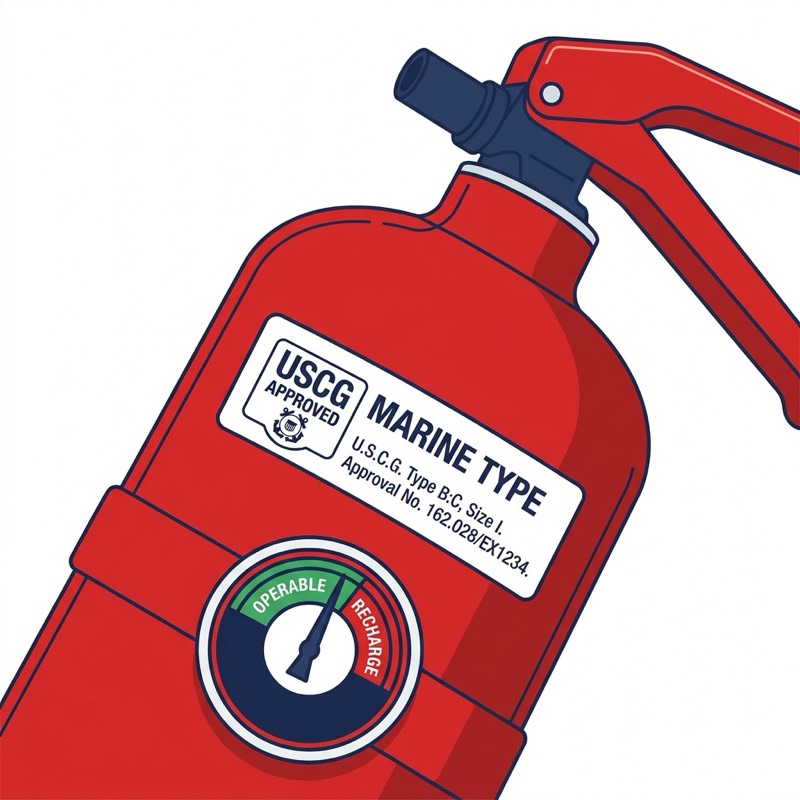
⚠️ Important: A Type B fire extinguisher for boat use must carry a USCG approval label. A standard UL-listed ABC extinguisher does NOT automatically qualify unless it also has the Coast Guard approval stamp. Always check for the USCG-approved marking before you board your boat.
ABC vs B vs BC: Which Fire Extinguisher Type for Your Boat?
When shopping for a marine fire extinguisher, you'll see several types. Here's what they mean and which one to choose:
Type B (Flammable Liquid Fires)
Type B extinguishers fight fuel, oil, and grease fires - the most common fire type on boats. This is the minimum USCG requirement. They use dry chemical agents (typically sodium bicarbonate or monoammonium phosphate) to smother flammable liquid fires quickly.
Type BC (Flammable Liquid + Electrical)
Type BC fire extinguisher units handle both fuel fires and electrical fires. Since most boat fires involve either fuel or electrical systems (or both), BC extinguishers are a practical choice that satisfies the Coast Guard requirement and gives you broader protection.
Type ABC (All-Purpose)
ABC extinguishers fight standard combustible (Class A), fuel (Class B), and electrical (Class C) fires. They're the most versatile option and widely available in portable sizes. Many boaters prefer ABC because it covers every fire type they might encounter - from a cabin cushion fire to an engine compartment fuel fire to an electrical short at the helm.
💡 Our Recommendation: A USCG-approved ABC fire extinguisher in the 5-pound size gives you the best all-around protection for most recreational boats. It exceeds the minimum B-I requirement and handles every fire class you'll encounter on the water.
How to Choose the Right Size Fire Extinguisher
Size matters more than most boaters realize. A 2-pound B-I extinguisher provides about 8 seconds of discharge time - barely enough to put out a small galley fire. A 5-pound unit gives you 12-14 seconds, which can make the difference between containing a fire and calling for help.
For Small Boats (Under 26 Feet)
The minimum is one B-I (2-pound) extinguisher. But most safety professionals - and our team at A&J Fire Extinguisher - recommend upgrading to a 5-pound ABC extinguisher. The extra 3 pounds give you significantly more extinguishing agent and a longer discharge time for minimal additional cost and weight.
For Cabin Cruisers and Mid-Size Vessels (26–40 Feet)
Carry at least two extinguishers: one near the helm and one near the galley or engine compartment. A 5-pound ABC near the engine and a 2-pound ABC in the cabin provides layered protection where fires are most likely to start.
For Larger Vessels (40+ Feet)
Follow the USCG requirements for three or more extinguishers. Consider a fixed fire suppression system in the engine room for additional protection beyond portable extinguishers.
Where to Mount a Fire Extinguisher on Your Boat
Placement is just as important as choosing the right extinguisher. The Coast Guard requires that extinguishers be readily accessible - meaning you can grab them within seconds without moving equipment or opening locked compartments.
Best Mounting Locations
- Near the helm - first place you reach for in an emergency
- Near the galley - cooking is the #2 cause of boat fires after fuel
- At the entrance to the cabin - accessible from both cockpit and interior
- Away from likely fire sources - don't mount it right next to the fuel tank or stove (you need to reach it without passing through flames)
Using Proper Mounting Brackets
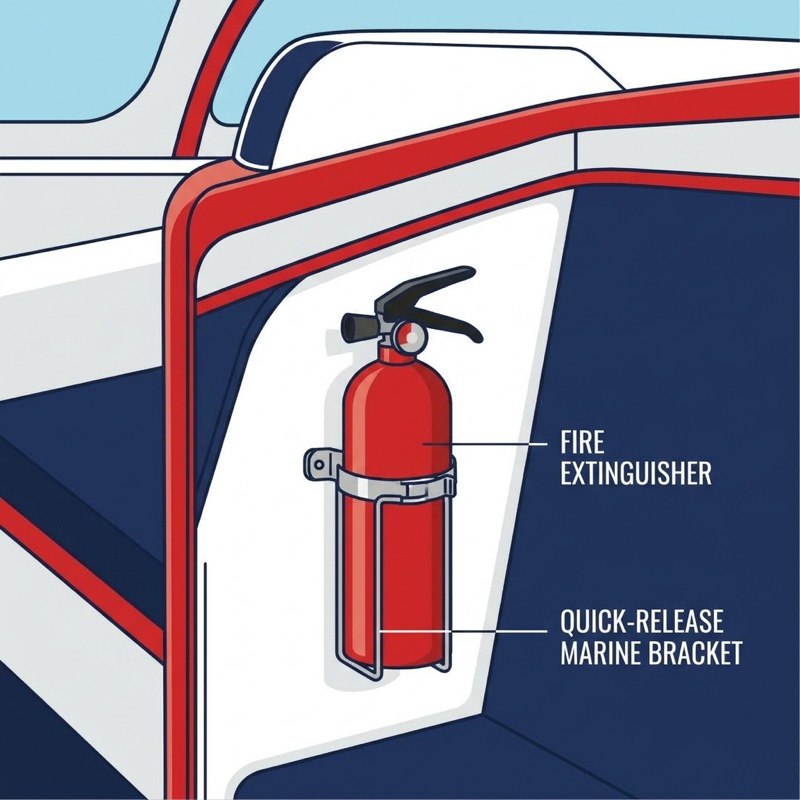
USCG-approved mounting brackets secure the extinguisher vertically with the handle at the top. Quick-release mounting brackets are preferred - they let you pull the extinguisher out fast in an emergency without fumbling with straps or clips. Avoid storing extinguishers loose in lockers or under seats, where they can roll out of reach or get buried under gear.
Fire Extinguisher Inspection and Maintenance for Boats
Owning the right extinguisher is only half the equation. Keeping it inspection-ready is where most boaters fall short. Here's the maintenance schedule the Coast Guard and NFPA recommend:
Monthly Visual Inspection
- Confirm the extinguisher is in its brackets and not loose
- Check that the pressure gauge reads in the green zone
- Verify the safety pin and tamper seal are intact
- Look for visible corrosion, dents, or damage
- Confirm the USCG approval label is legible
Annual Professional Service
Have a certified technician perform a full inspection annually. This includes weighing the extinguisher, checking the internal pressure, verifying the discharge nozzle is clear, and confirming the rated capacity is still valid. For recreational boats in NYC, A&J Fire Extinguisher provides same-day FDNY-certified inspections and tagging.
12-Year Hydrostatic Testing
Every dry chemical fire extinguisher must be hydrostatically tested or replaced after 12 years from the manufacture date. For most boats, this means replacing yours every 12 years - or sooner if you've used it, if it fails a monthly inspection, or if the gauge drops below the green zone.
Pro Tip: Write the purchase date on the extinguisher with a permanent marker when you install it. This makes it easy to track when the 12-year replacement is due. Many boaters also set a phone reminder for annual inspections.
Common Mistakes Boaters Make with Fire Extinguishers
- Buying a non-USCG-approved extinguisher. Just because it says "marine" on the label doesn't mean it has Coast Guard approval. Always look for the USCG approval stamp.
- Storing it loose instead of mounting it. A loose extinguisher can roll under equipment or get buried. Use an approved bracket.
- Mounting it next to the most likely fire source. If a fire starts at the stove or fuel system, you don't want to reach through flames to grab the extinguisher. Mount it away from hazard zones but still accessible.
- Forgetting monthly inspections. A discharged or expired extinguisher is worse than no extinguisher - it gives false confidence. Check the gauge every month.
- Not replacing after partial use. Even a few seconds of discharge can empty enough agent to make the extinguisher unreliable. Replace or recharge after any use, no matter how small.
What to Do If a Fire Starts on Your Boat
If a boat fire breaks out, follow the STOP procedure:
- S - Shut off the fuel supply and engine if possible
- T - Tell everyone on board to move away from the fire
- O - Operate the fire extinguisher using the PASS method (Pull, Aim, Squeeze, Sweep)
- P - Position the boat so the fire blows away from fuel tanks and occupied areas
If you can't control the fire within 15-20 seconds, abandon the vessel and call the Coast Guard on VHF Channel 16. No piece of equipment is worth your life.
⚠️ Safety First: Never attempt to fight a fire that's blocking your exit. If flames are between you and the door - get out. Fire doubles in size every 30 seconds on a boat. Act fast, but never put yourself at risk.
NYC Boaters: Local Requirements You Should Know
If you keep your boat in Brooklyn, Queens, or anywhere in New York Harbor, you need to meet both USCG requirements and NYC fire code standards. Here's what's different: If you also own an RV, many of the same fire safety principles apply - see our guide to choosing a fire extinguisher for your RV. For everyday driving, a car fire extinguisher provides similar peace of mind on the road.
- NYC requires fire extinguishers on ALL motorized vessels, including personal watercraft
- The FDNY conducts spot inspections at marinas and boatyards - your extinguishers must be tagged and current
- Commercial vessels operating in NYC waters must carry additional safety equipment beyond recreational minimums
- Annual inspection tags from an FDNY-authorized provider are required for commercial vessels
A&J Fire Extinguisher provides same-day FDNY-certified inspections, tagging, and mounting services for recreational and commercial boats throughout NYC. Call (718) 852-2762 to schedule a boat fire extinguisher inspection.